
I wrote about Cambridge University Press’s decision to censor some of its content in China for the London Review of Books Blog.
I wrote about Cambridge University Press’s decision to censor some of its content in China for the London Review of Books Blog.
Looking forward to reading from The Casualties in Stockholm next week. Event details here.

Thanks to Timothy A. Grosse for his generous review of China’s Forgotten People in The China Journal.


I wrote a piece on Ian Johnson’s remarkable book about the rebirth of religion in China for Literary Review.
My piece for Open Letters Monthly on the (almost) lost novel of Zdanevich who worked with Picasso, Miro Ernst and Giacometti et al, and in the mid 1970s could still be seen wandering round Paris’s Latin Quarter wearing a sheepskin coat, herding a flock of cats before him.
I’ve been working as a Royal Literary Fellow at Newcastle University for the last year, a job that involves me helping students improve their academic writing. Mainly this happens through one to one sessions in which the student and I talk about their work, usually with reference to a specific piece they’re working on. The following is a short piece on what that experience has been like for me.
This is a strange job. I work amongst academics, but am not an academic. There are superficial similarities between what we do — we sit in our offices and talk to students — but I’m not sure we have the same goals. Whereas they try to convey information to the students, my role feels more diagnostic. The students who visit me know that they, or rather their work, is unwell in some fashion, but can’t see (or at least articulate) what the problem is.
The true cause of this sickness is impossible to discern. Laziness, the education system, their parents, the decline of community libraries, the Internet, the thrill of text messaging, the fact that television has never, ever been as good as it is now: take your pick. But perhaps the aetiology is immaterial. Treatment is all that matters.
I suspect that many of the students want some easy to swallow pill that will make them all better after 7 days. Telling them to search their essays for phrases like ‘This emphasies’ and words like ‘clearly’ or ‘obviously’ will provide minor relief – and maybe reduce irritation – but it will not cure their writing of its maladies. What I recommend is more akin to physiotherapy. They need to assume new habits that may seem dull, uncomfortable and pointless and don’t appear to be doing anything useful even after six bloody weeks. They need to print out their work and slowly read through it in a quiet room. They need to read more. They need to read better.
Even if they suffer this regime of treatment there are no guarantees. Having excellent skin is no indicator of one’s internal health. Simplistic, naïve ideas can be well-expressed. And one can be many wonderful things in life without being able to write well. It’s entirely understandable if people have other priorities. There are other kinds of health.
I’m sure many doctors doubt their choice of vocation. People smoke and eat rubbish food and try to meld with their couch and then complain they are unwell. But I don’t blame the students for their problems. In some ways it’s surprising that they’re not much worse: it seems to me that often they are required to do things they haven’t been shown how to do.
I sometimes find it difficult to accept that a student’s prognosis depends almost entirely on them, how much they want to improve, how much their circumstances allow them to. I can reassure them, I can listen, but I cannot transport them to some sanatorium cum library on a Swiss mountain.
But it strikes me that perhaps this illness metaphor misses the point. To speak of recovery assumes they have fallen from some state of perfect health in which no comma was ever misplaced. They aren’t trying to get well. They, like the rest of us, are only trying to learn.

My story from Short Fiction 10 is now online.
This time: How I write.
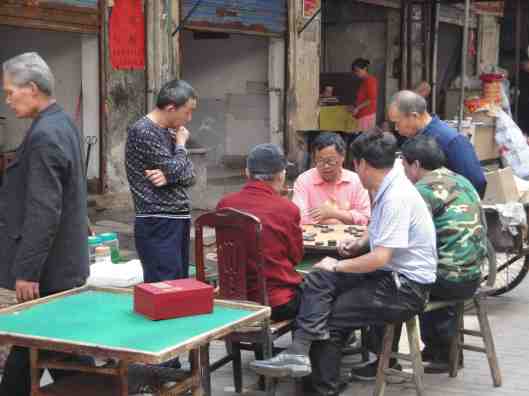
In today’s Guardian I wander round various lesser-known Chinese cities and talk to people about what it’s like to live and work in such fast expanding places. I am also asked to sample the smell of death.
The same thing, on a larger scale, is the subject of my next book, Chasing the Chinese Dream, out in September from IB Tauris.
In which I answer the burning question of WHY I WRITE. Warning: this contains my actual voice. https://www.rlf.org.uk/showcase/nick-holdstock-wiw/
I reviewed Yan Lianke’s novel The Explosion Chronicles in the March issue of Literary Review. I thought it was a bloated, prurient, timid satire.
I wrote a piece on the great Soviet fabulist Sigizmund Krzhizhanovsky for Open Letters Monthly.
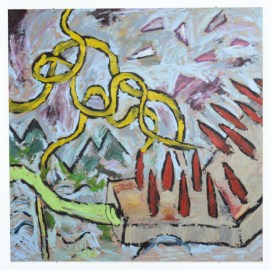
When I was a teacher in China I used to get my students to bring in items and talk about them. It was good practice for them and also meant there was only 42 minutes left of the lesson to fill. The best one was a young man who brought in a bullet and then spoke about how happy he’d felt the first time he fired a gun. This story is probably vaguely inspired by this – it’s in The Manchester Review.
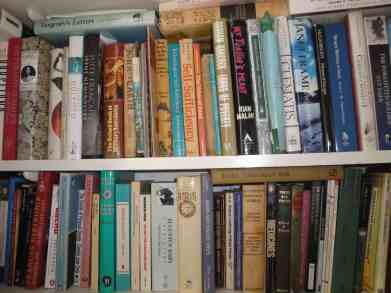
My piece on cataloguing Doris Lessing’s library is in The Guardian.

I wrote the entry on Georges Perec’s ‘W, or The Memory of Childhood,’ for this new book about imaginary places. There’s a review of it in the New York Times.

I wrote about Ron Hansen’s new novel for the LA Review of Books.
Late style arrives when you realise that you are: competent enough to write those things you wanted to write when you were twenty five; impatient enough to have one more go at going all the way; angry enough not to allow anyone else to persuade you to do something else. At the same time late […]
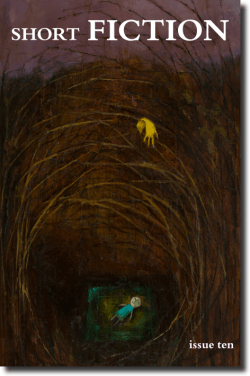
I have a new story titled ‘New Traffic Patterns May Emerge’ in Short Fiction magazine. This is how it starts:
Sally is a worried tiger because they are late. Her mother drives round the block and when they return Sally spies the perfect space — right outside the old church hall — but they cannot stop. When they come round again a dirty white van has taken the space, and this seems unfair, it was theirs. But then a parked car eases out and everything is fine.
*
Injuries, break ups, deaths of friends: these were normal, awful life events that Chris could have managed. If they’d happened over several years he might have coped. But it had been a year of four funerals and a poisoned cat. His flat had been burgled; his car stolen; he’d been punched in the face by a stranger. He had been a witness to his mother’s slow unmaking. She no longer knew his name. She lived, and she did not.
He had never cried as much, been so unable to sleep, and yet he was not depressed. He sometimes wished he were. There were pills for that, and therapy, the notion of a path that wound back to health. What he felt seemed permanent.
*
When Sally bursts through the double doors a tall girl squeals her name. All heads turn; they gather round; her tiger make up is praised.
‘I’ll see you later,’ her mother says. ‘Mrs Gray will bring you home.’
The sea of children parts for Lucas. He is wearing black jeans and a blue shirt with a green wool tie. On his head an orange paper crown has slightly split. Before Sally can say, ‘Happy Birthday’ he has launched into the breathless, delighted speech only she evokes.
“It’s the last one I saved it for you it’s like mine do you like it?’
She takes the hat. She’d prefer green. ‘It’s lovely,’ she says.
Lucas bows and offers her his arm, and in this childish, gallant way, the party begins. Fifty years later, as he walks through an airport, one of the lights will drop from the ceiling and miss him by only a foot.
‘You look beautiful,’ he says and then the music starts. Sally can’t see where it’s coming from, knows only that it’s getting louder and keeps changing its mind.
*
The traffic is bad: the bus lurches; there is no momentum. But Chris is in no hurry. Being on the bus is no worse than being at work. In both he only watches things appear and vanish. At work these are mostly words on a screen, and though it is his hand that cuts and pastes, he is not involved.
He sees broken glass, a damaged car, policemen standing still. Then the traffic starts to flow and when he arrives at the offices of Conflict Resolution he is barely late. It is a small office of only six people, and yet only Adam answers when he says, ‘Good morning’. He sits down and turns on his computer and soon the moving begins. He fixes bad text, but more arrives, as it always will.
‘Did you see the Botswana piece?’ says Adam. ‘That was a war crime. He used about ten commas per sentence.’
He nods and Adam makes a sound of disgust; for the next half an hour no one speaks. They click and type and maybe, in some small way, help to resolve conflict. He really has no idea. What was a passion is now a job he watches himself do. Even poor, jaded Adam is more engaged than that. After his kidnap, and his escape, he’ll do his job much better.
is the title of my new story in North Words Now. You can get the whole issue here. It’s free!

I write about destroying books on the RLF website.

I have a piece on rural life in China in the new Dublin Review.

I’m honoured to have been appointed as an RLF Fellow for Newcastle University for this year.

My first piece for The Guardian is a book review of Rob Schmitz’s look at life on a street in Shanghai.
The new Sokurov film about The Louvre is out soon – the trailer raises both the typical fears (that it will be pretentious) and the typical hopes (that it will be sublime).

I review China Mieville’s new novella in the latest Literary Review. My three-word verdict: ‘confused and confusing’.

Thanks to Paul French for his piece on China’s Forgotten People on his excellent blog, which has a lot of good material on the erosion of China’s visible history.
I wrote a response to Seymour Hersh’s recent piece on Syria in the London Review of Books.
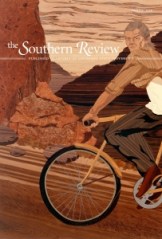
I read out my short story ‘And Then’ from the latest issue of The Southern Review.
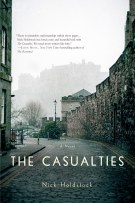
Thanks to Powells for featuring The Casualties on their Best of 2015 list, as picked by their booksellers – probably my favourite group of people to be liked by.

