
This week I wrote about China’s plans to end the one-child policy on the London Review of Books Blog.
This week I wrote about China’s plans to end the one-child policy on the London Review of Books Blog.

I’ll be at the Louisiana Book Festival in Baton Rouge on Sat 31 November.
As well as a solo event for The Casualties, I’ll also be taking part in what’s likely to be a great panel about 80 years of The Southern Review, a magazine I’m proud to contribute to. Here are a few of the stories I’ve written for them:

I have a new story in the Autumn issue of The Southern Review.
I’m quoted in today’s Financial Times in a piece on recent violence in Xinjiang.

I’m very excited about appearing at some great independent bookstores in the US and Canada over the next 6 weeks to promote my first novel, The Casualties. Thanks to all at Powerhouse in New York for a great launch for the book on September 3rd as well. I also want to thank Creative Scotland for helping fund the tour.
September 24- Box of Delights Bookshop, Wolfville, Nova Scotia
September 29 – Lunenburg Bound, Lunenburg, Nova Scotia
October 5 – Powell’s bookstore, Portland, OR, with Marjorie Sandor
October 13 – Octopus Literary Salon, Oakland, CA
October 16 – Book Passage, San Fransisco with Matthew Siegel
October 20 – Sundance Books, Reno, Nevada
Oct 31 – Louisiana Book Festival, Baton Rouge

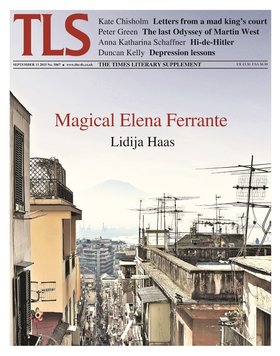
Thanks to Rian Thum for a very fair review in the Times Literary Supplement (9/11) of China’s Forgotten People in which he calls it ‘the most reliable journalistic account published in the past few decades’ and a ‘much-needed resource’.

My Edinburgh Book Festival event about The Casualties can now be listened to on the BBC Arts website (though possibly not for ever and ever. So if this link stops working, I apologise…)
is my favourite word in Steve Donoghue’s interesting review of The Casualties at Open Letters Monthly.

Thanks to Caroline Leavitt for doing a Q and A with me about The Casualties, which as usual made me realise all kinds of things about where the book came from. Shockingly, I even admit to having a broad streak of pessimism.
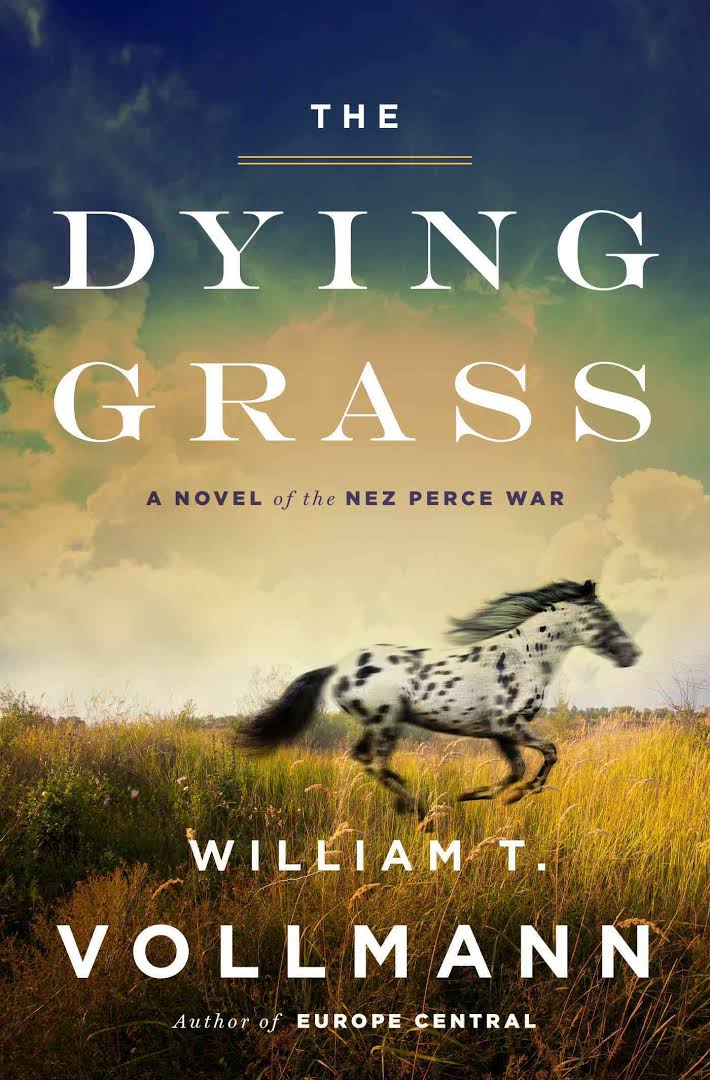
My possibly quixotic attempt to make you read William Vollmann’s incredible new book is now at the LA Review of Books.

Thanks to Writers Read for asking.
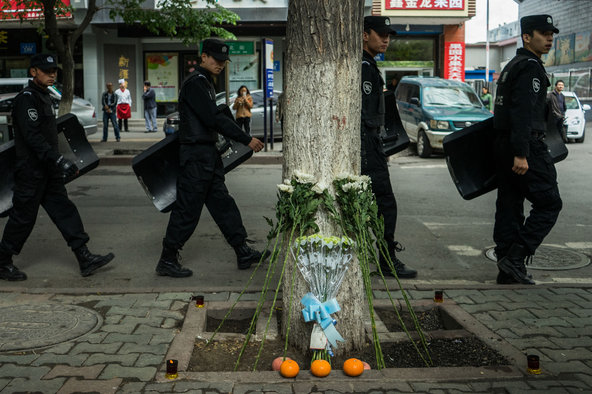
Thanks to Ian Johnson of the New York Times for the interview.
Ian Johnson writes for the NYT and NYRB on China – his work on urbanisation in China is especially well worth a look.
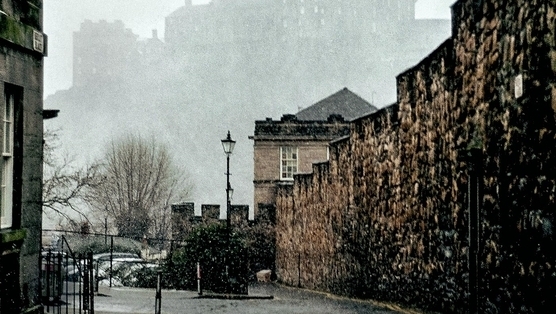
Thanks to Steve Nathans-Kelly for his review of The Casualties at Paste Magazine.

Thanks to Tom Miller, author of China’s Urban Billion, for his review of CFP in The Spectator
Lovely photos of a very interesting place – there’s also a major Sufi shrine in the cemetery and the power station looms over it all.


Last weekend I went to Gulsay Cemetery at the south end of Ürümchi, back behind the power plants right next to lowest foothill of the eastern section of Heavenly Mountains. Many Uyghur, Kazakh and Hui heroes are buried in this cemetery; people often just refer to it as “the Muslim cemetery.” Looking at the markings around you, it feels as though you are in a completely Muslim world. In the Uyghur section of the cemetery all of the signs are in the Arabic script of modern Uyghur. There is little sign in this community of the dead that this cemetery is in the largest Chinese city in Central Asia. But if you look a few hundred meters away you immediately recognize that the city is now even here: the last stop on 308 bus line. Giant earth moving machines prowl the nearby city landfill; sunlight reflects off of the CITIC…
View original post 504 more words
My fanciful attempt to channel the shade of Italo Calvino is in the new Dublin Review. It’s a piece that praises obscurity and the art of re-reading – and the idea for it was originally suggested by the novelist Rajorishi Chakraborti, who was my tutor on the University of Edinburgh Creative Writing course.
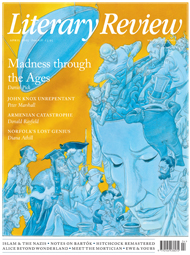
My review of Michael Meyer’s great new book on Manchuria (NE China) is in the new Literary Review.
One of the emerging trends among young Uyghur film directors is a new attention to documentary filmmaking. This approach has long been a part of Uyghur cinema, but previously it was often part of a larger public relations presentation sponsored by the Chinese Culture Ministry. These new documentary short films are independently produced on limited budgets by young filmmakers who have an intimate knowledge of their subjects.
View original post 761 more words
Yep, and it seems just right.
Another really insightful piece from this excellent blog.
Ever since Kasim Abdurehim, the founder of the private English school Atlan, took third place in the national English speaking contest in 2004, Uyghurs have found their way into the final rounds of almost every major English speaking competition in the nation. This year was no exception. The main difference is that now Uyghurs are learning how to be confident in their English ability at a younger age. It is because of people like Kasim and dozens of other award winning role models that kids like 14 year-old Tughluk Tursunjan feel confident on a national stage. Although Uyghurs represent less than one percent of China’s population, they still consistently beat Han contestants from the best schools in the country.
Tughluk, who was this year’s winner of the Junior High School division of the “Outlook of Hope” contest on CCTV was taught by an English instructor named Nemo…
View original post 787 more words
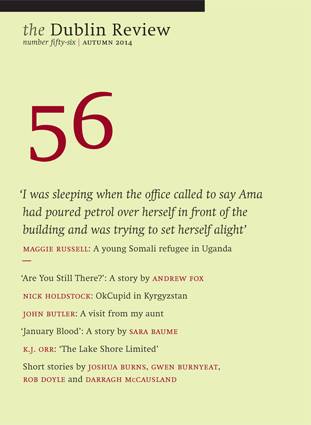
The autumn issue of The Dublin Review has a long tale of the joys and sorrows (more of those) of trying to do internet dating in Bishkek in Kyrgyzstan. Suffice to say, no weddings are currently planned.
It begins thus:
September is the perfect month for dating in Bishkek. The intense heat of the Kyrgyz summer has passed, but the days are still bright and warm. In the evening you can eat outside, then stroll through the park, without feeling the slightest chill.
Before I travelled to Bishkek, I’d been living in London for six months, and despite the many possibilities of the place I was in a dating rut. We went to the British Film Institute or the Hackney Picturehouse. We spoke sometimes of Mad Men, sometimes of Breaking Bad, always of Game of Thrones. We were witty and cutting and sometimes we kissed but even after three drinks, with our eyes shut, our tongues entwined, we remained urbane. We were youngish, smart professionals. We were polished stones.
My initial reasons for visiting Kyrgyzstan’s capital had nothing to do with dating. I wanted to do a report on a clinic that treated drug addiction by putting its patients into comas. I had nothing else planned, and knew no one in Bishkek. Three days before I was due to leave, I was checking OkCupid – not with any real conviction, more out of pathetic habit – and saw I had a message from a fifty-six-year-old woman in Uzbekistan. ‘Good face!’ she wrote, which was nice of her, but alas I had no plans to visit Tashkent. It did, however, make me wonder if OkCupid had any English-speaking women in Bishkek on its site.
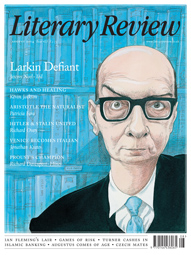
The August issue of Literary Review has my piece on Evan Osnos’ impressive book on the last decade in China (and scorn for another book). Print only! Well, and on some tablets too…

A rifle and sword tied together with a red flag over a meter of Gobi sand welcomes visitors to the Xinjiang Production and Construction Corps Museum in the city of Shihezi – 136 kilometers northwest of Ürümchi. This museum, filled with patched and dented artifacts and hundreds of large scale historical photos, is the premiere monument to the Han experience of the recent past in Xinjiang. It shows us the narrative of experience necessary to understand the history of the people who self-identify as “constructors” (jianshezhe) of Xinjiang.
The Bingtuan, as the Corps is referred to by locals, is a state-sponsored farm system that is spread across the territory of Xinjiang – an area as large as California, Nevada, Utah, Arizona, Colorado and New Mexico combined. Hundreds of regiments are still in operation 60 years after their founding. Out of this population of around 3 million military farmers…
View original post 1,139 more words

Image by Stuart Franklin (Magnum)
My piece on the Tiananmen Square 25th anniversary is the top story on Vice News today.

When I was in Guangzhou recently I had an interesting conversation with Walter Hook, CEO of the Institute for Transportation and Development Policy, who try to promote green transport solutions for cities. He had a lot of useful things to say about how China’s fast expanding cities might reduce car use so as to make decent urban spaces. For more, see my piece at china dialogue.
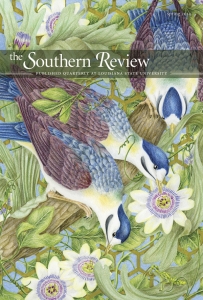
‘Octet’ is the title of my new story in the spring issue of The Southern Review. It’s an odd one, for sure. I don’t have much memory of writing it. I know I was listening to a track from ‘The Tree of Life’ soundtrack on repeat when I was working on it. I also remember walking up and down Montgomery Street, in Edinburgh, Scotland, when I saw something that made me briefly question the physical laws of our universe. But only for a moment, of course.
It starts like this:
The procedure is always the same. He fills in forms. He waits. After twenty or thirty minutes the first of the books arrives. Usually singly, sometimes on a trolley, until they form a tower. All morning his eyes pull in their words like a stove feeding itself. At one o’clock he goes to the canteen; by quarter past he’s back. He remains in his chair until he hears the voice of a man who is never tired, does not age, who may already be dead. It is a voice he hates. The library will be closing in fifteen minutes, says the man. Please return your books to the desk. With this the tower is destroyed. He must return to the present.
He leaves the library and walks down the hill until he reaches his street. At home he eats then tries to read but usually his eyes hurt. All he can do is walk the several blocks of the street, slowly back and forth. He goes over the day’s reading. He waits for the Thought.
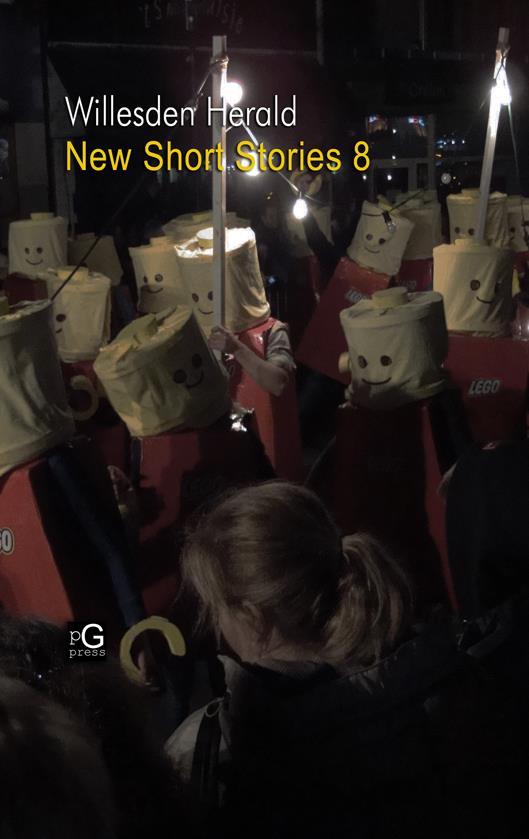
I’m amazed and delighted to have won this year’s Willesden Herald Short Story Prize.
My story, ‘Ward’, is about a young girl who gets very ill and how it changes her.
You can read it and the other nominated stories by buying the anthology which is a bargain at £5.99 (incl. postage)- the best place to buy it is here.
An extract:
She’d never had so many presents. Flowers, magazines, teddy bears and balloons, a poster of two puppies wedged in a boot. Sandra was the only visitor who didn’t bring a gift. Her presence was confusing, because she and Emily weren’t friends. Emily wondered if Sandra liked her the way she liked her classmate Maxine: quietly, from an awed distance, content to sit two rows behind. After ten minutes she noticed the way Sandra’s eyes returned to the needle in her arm, the IV line, the slowly shrinking bag. She asked if Emily was in pain, if she was going to have an operation. She wanted to tell everyone about her dying classmate.


