‘Medieval Lifestyle’

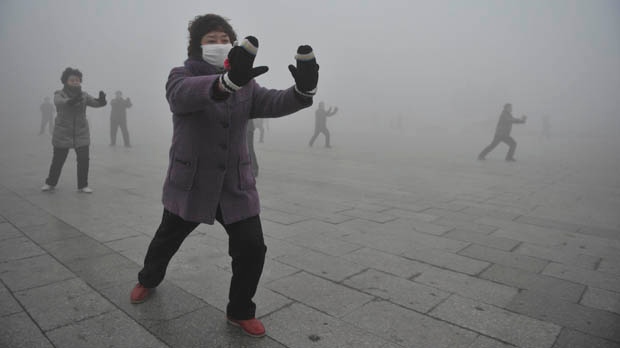
A mining project in Xilinhaote, Inner Mongolia

A mining project in Xilinhaote, Inner Mongolia

Isobel Yeung, who works for CCTV, China’s state broadcaster, recently wrote a piece for The Independent in which she argued that the Western media are misrepresenting China’s policies towards ethnic minorities in Inner Mongolia. She argued that the government aren’t trying to destroy the culture of nomadic herders by moving them into cities- they just want to improve their ‘medieval lifestyle’. Here’s my response to this in The Independent.

2013 PEN World Voices Festival

PEN.banner.300x300.v2

The program for the PEN World Voices Festival of International Literature in New York is now online, featuring many great writers, such as James Kelman, Aleksandar Hemon and Edna O’Brien. If you happen to have $1000 kicking around, I’d suggest you get a ticket for the Philip Roth Literary Gala event.

I’ll be taking part in two events in the festival, the first A Literary Safari, where I will be pursued, Running Man style, through a booby trapped labyrinth while giving a reading. The second is a more sedentary affair, though possibly equally perilous- I’ll be moderating an event on Revitalizing Endangered Languages.

Lots to check out- and if you’re not in NYC then, I’m sure a lot of it will be online on the PEN site.

Game the News

Pacman video screen shot

I have a post on the London Review of Books Blog about turning the news into computer games, including Endgame: Syria and one on cotton picking in Uzbekistan.

Immoral Holiday

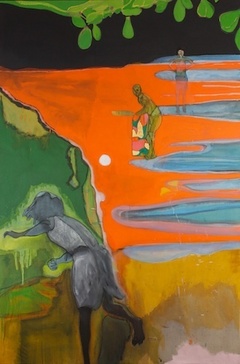
Babur and Humayun

Babur and Humayun

I have a short post on the Uzbek government’s ban on Valentine’s Day up on the LRB blog. There is also a ban in Iran, Malaysia, Pakistan and Saudi Arabia, where Valentine’s cards and celebrations are banned on the grounds that the day is a Western import that goes against their society’s values and traditions.

The Uzbek government’s alternative has been to suggest that February 14th be used to celebrate the Moghul Emperor Babur’s birthday; Tamerlane, his great-grand father, is already frequently invoked by President Karimov. Ever since its independence in 1991, Uzbekistan has been attempting to construct a nationalistic narrative of Uzbek culture and history. One of its main vehicles for doing this has been the variety performances that celebrate Independence and Navro’z (a festival with Zoroastrian roots which marks the spring equinox). However, just as few people seem to pay much attention to these gala occasions, so it seems unlikely that this year’s added invective against Valentine’s Day will have dissuaded many young people from finding ways to mark the holiday.

New story in The Manchester Review

I have a new story called ‘The False River’ in the latest edition of The Manchester Review, along with work from Kirsty Gunn, Rachel Cusk, Janet Frame and others. Their redesigned site looks great and has lots of other good work worth checking out.

West Port Book Festival

Dear Readers, I will be doing a reading with Keith Ridgway on Saturday 24th November as part of this year’s West Port Book Festival. Keith Ridgway’s latest book, Hawthorn & Child, has been getting some very good reviews, and I’m looking forward to the event. I will be reading from the novel I am currently working on, so there’s also the enticing prospect of an EPIC FAIL on my part.

You should also check out the many other FREE events in the WPBF – ranging from book binding to Turing-themed collaborations – all of which are testament to the care with which the WPBF has been programmed. It is the boutique festival of boutique festivals. Come along, enjoy the events, and help support the booksellers of West Port.

China’s Big Society

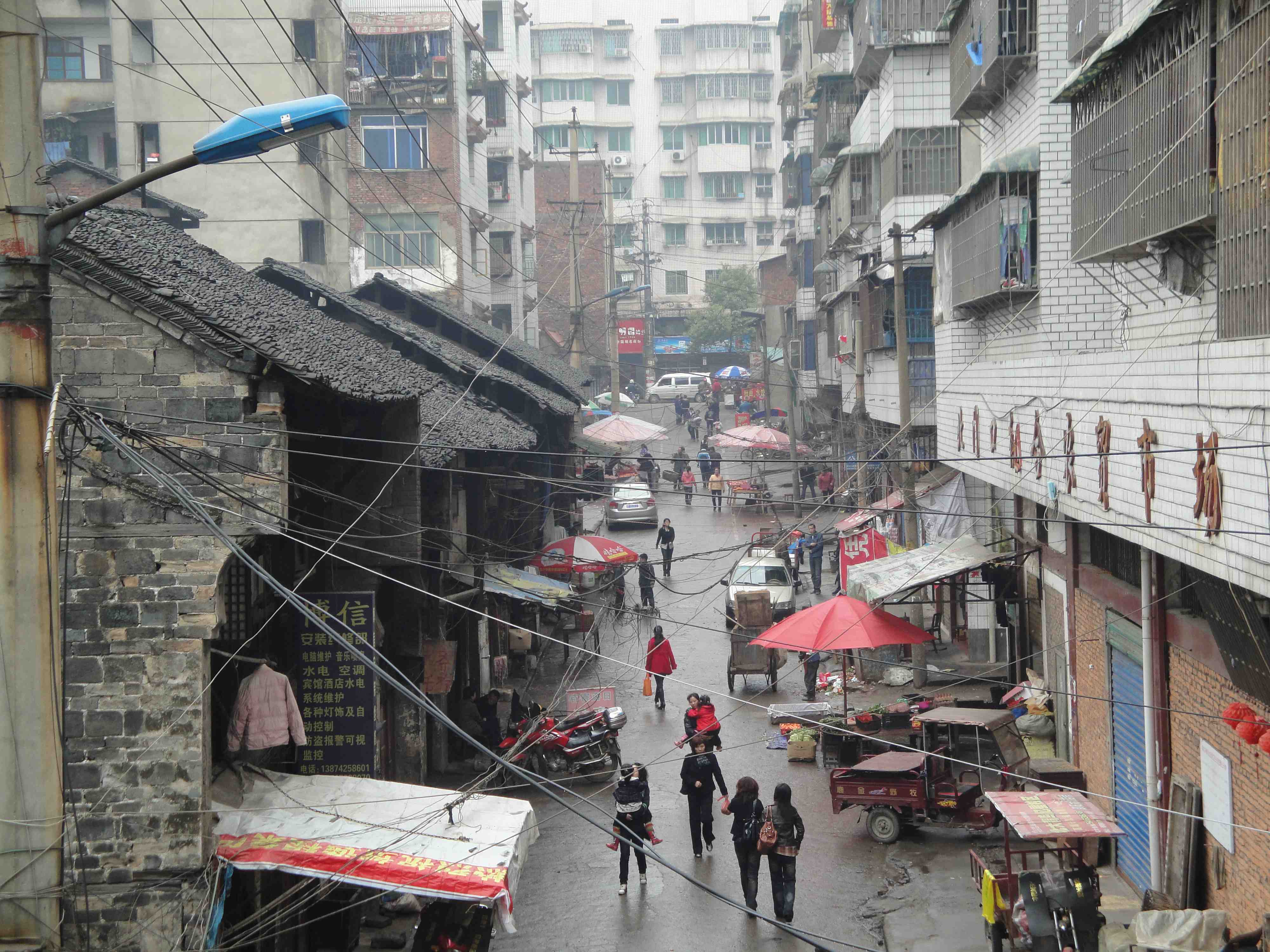
View from the old city gate of Shaoyang, 2010

In my latest post on the London Review of Books Blog I write about rubbish, murder and the gap between the cities of China’s east coast and those of its interior. For more on wonderful Shaoyang see my piece at the LA Review of Books.

‘The Reassertion of the Political’- An interview with Tariq Ali

I spoke to Tariq Ali about the the European crisis whilst in Zagreb in April- you can read the interview here.

Buttering the Tiger

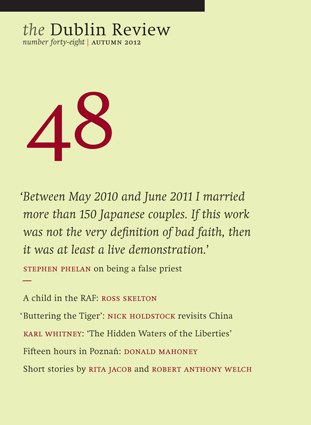
My essay on Chinese factories and corruption is in the latest issue of  The Dublin Review, along with an interesting piece about being a fake priest in Japan. I originally wrote this as the middle section of my LARB piece, but it ended up breaking free from that and hopefully works fine on its own.

The DR is one of the few magazines still interested in publishing longform pieces about foreign countries that aren’t based around conflict or suffering. As such, it deserves our support. A 4 issue subscription costs £36.

I’d also like to thank the gone, but not forgotten, and very much missed Scottish Arts Council for helping to fund the trip to China that led to the LARB piece, the  DR piece, and the afterword of The Tree That Bleeds.

Jumping the Dragon Gate


My piece on two of my former students is now up at the Los Angeles Review of Books, and features kidnapping, a cow’s vagina,’Peter Burger’ and the house of wasps. I may, perhaps, have burnt some bridges by writing this piece- in which case, dear bridges, I’m sorry. There was so much kindling I could not resist.

You can see accompanying photos here.

Review of Canada by Richard Ford

My review of Ford’s lastest novel Canada (spoiler: I liked it) is in the new issue of Edinburgh Review (no.135) along with poems by Benjamin Morris and an essay by Ryan Van Winkle, two gentlemen that are well-known to me.

Canada by Richard Ford. Bloomsbury. ISBN 9780747598602 £18.99

Richard Ford’s seventh novel is a curious hybrid. His early novels (A Piece of My Heart, The Ultimate Good Luck) were sparsely written exemplars of the dirty realism promoted by Raymond Carver and Tobias Wolff, and focussed on characters who, through poor luck and judgement, found themselves in desperate situations that built to an act of violence. The Sportswriter was a conspicuous departure in style and content, shifting the action to suburban America, and the dreamy, middle-aged ruminations of Frank Bascombe. Despite its acknowledged debts to Walker Percy’s The Moviegoer, Bascome’s method of narration had a charm and thoughtfulness that Ford sustained throughout two subsequent novels featuring the character (Independence Day and The Lay of the Land).

Canada’s opening sentences seem to align it with Ford’s earlier work: ‘First, I’ll tell you about the robbery our parents committed. Then about the murders, which happened later.’ This matter of fact statement sets up the structure of the book. In the first part Dell Parsons, a retired teacher in Canada, tells of how his family broke apart after his father robbed a bank; the second part relates what happened to him after his parents went to jail and he was sent to live in rural Saskatchewan. Though those opening sentences are attention grabbing, and promise some genre elements, they also have the effect of removing a degree of tension from the narrative. Both the robbery and the murders, when they eventually occur, are related in minimal fashion. One reason for this is because Dell believes the context is as important as the crime- their family life had both ‘the side that was normal and the side that was disastrous’, and they were inextricable. Ford’s depiction of the family dynamics — the tensions and affinity between Dell and his sister Berner; the mismatch of his parents — persuasively fuses the insight of the elderly narrator with the bewilderment of his younger self, deepening our feeling for how the two children are affected by their parents’ crime.

Despite the subject matter of the novel, the tone of the book is more in keeping with the Bascombe novels. Though this is a tale told by a man in his sixties, the five decades of Dell’s life after the murders are dealt with in only a few paragraphs near the end of the book. Canada is an attempt by a man to understand the most important events in his life, to follow his father’s injunction that he ‘find ways to make everything make sense.’ What makes Canada more than a coming of age story with thriller elements is that Dell admits that ‘making sense’ is not necessarily the same as trying to tell the truth. He excuses his younger self’s lie to his father by claiming ‘it was better than saying what was true’; he justifies another deception (this time of himself) with the rationale that ‘in all ways it seemed better to think that’, the implication being that when we try and remember our past, the truth is not always what is best for us.

Though the novel is stylistically grounded in the realism of Ford’s earlier work, Canada is more interested in how (and why) narratives are constructed. Dell slightly misquotes John Ruskin as saying ‘composition is the arrangement of unequal things’, which perhaps refers to the need for distortion in order for Dell’s tale to make the right kind of sense to himself (he might also have quoted Ruskin’s dictum regarding the process of making ‘things separately imperfect into a perfect whole’). Dell’s memories, and his mother’s prison diary, can only take him so far in his attempt to ‘make sense’ of what happened. As he says, there are ‘reasons that in the light of a later day don’t make any sense at all and have to be invented’.

Dell is constantly interrogating himself, posing questions and providing answers then undermining those answers. One example of this is his use of the idea of ‘destiny’ or fate. In the novel’s second paragraph there is a suggestion that his parents were ‘destined to end up the way that they did’, an idea developed a few pages later when Dell speaks of his father being ‘in the grip of some great, unspecified gravity’.  Later in the novel he tries to argue that ‘because very few people do rob banks, it only makes sense that the few are destined for it’, but immediately admits that he finds it ‘impossible not to think this way, because the sense of tragedy would otherwise be overwhelming to me.’ However, he goes on to exempt himself and his sister from fate, claiming they were ‘accountable only to ourselves now, not to some greater design’. By invoking fate in this selective manner, Dell is granting his parents a kind of absolution, perhaps because ‘blaming your parents for your life’s difficulties finally leads nowhere’. At the same time, he is also granting himself and his sister a level of freedom (but also responsibility).

It is this level of psychological complexity — achieved in a prose that is restrained without being sparse — that makes Canada a consistently interesting novel. My main reservation is that Ford is occasionally heavy handed in his symbolism. After the robbery, when Dell’s father’s behaviour seems strange and inexplicable, Ford has him swallow a piece of a jigsaw puzzle. A more persistent irritation is the frequency with which Dell’s interest in chess is recruited as a metaphor. There are also times when Ford’s attempts to mine significance from the ordinary verge on the portentous:

Weather means more than time on the prairie, and it measures the changes in oneself that are invisibly occurring.

Things happen when people are not where they belong, and the world moves forward and back by that principle.

These minor quibbles aside, Canada is a novel that deserves respect for its calm and thoughtful exploration of how we fashion stories about ourselves.

Interview about The Tree That Bleeds now up on China File

There’s a short video of me speaking about The Tree That Bleeds now up at China File, where there’s a lot of other great content. Thanks to Maura Cunningham for doing the interview and for editing my rambling into coherent form.

Post-Yugoslav Palimpsests

When I was in Bosnia in May I visited an old hotel converted into a refugee centre during the war.The photos and text of the place can now be seen at the CITSEE.eu website


‘Great Changes after the Liberation’

I have a new piece on the LRB Blog on Chinese propaganda comics from 1950 that some have used to critique modern China. The only thing I’d add to what I say there is that to argue that China has gone back in time is overlook the many achievements made by the PRC, albeit sometimes at catastrophic cost to its people. Despite the apparent similarities, the problems of contemporary China are those of a very different kind of society and system.

Great Expectations?

The first prize I ever won was for English at school. I was given £15 of book tokens, with which I bought all the volumes of Steve Jackson’s Sorcery!Quartet.
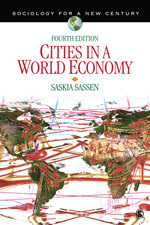
Here is the cover of the first book:

‘The Shamutanti Hills’ is a quest through a fantasy world in which magic and might are required to defeat various monsters and obstacles. This requires good judgement and a lot of luck, the latter generated (or not) by rolling two six-sided dice. Unsurprisingly, the reader fails (and dies) many times and has to start again.

Neither ‘The Shamutanti Hills’ nor its successor, ‘Khare- Cityport of Traps’ were on the school syllabus, despite their excellent spell casting system and well-pitched level of difficulty. During the prize-giving ceremony it became apparent that I was the only winner to have bought such books. The other pupils had purchased encyclopaedias, advanced math textbooks, bilingual dictionaries that required a two-handed grip. When the headmaster- a kind man with a degree in Classics from Oxford –handed me the brightly coloured fantasy books, he was obviously disappointed. Until that moment it had never occurred to my nine-year old self that with rewards might also come expectations.

This episode taught me that sometimes you have to conceal the things you enjoy, and not because they are illegal or immoral, but because they don’t fit with people’s conceptions of you. But I think it also had a hand in teaching me that things we expect to wholly enjoy are often a more mixed affair. Awards require speeches; fondue parties can drag; many cherished fantasies end in discomfort and hospitalisation. I wouldn’t go so far as to label this a depressive or melancholic worldview; but it’s one that definitely looks for the grey in every silver cloud.

This also extends to compliments (especially about my writing). What should be a form of validation just makes me feel awkward. ‘Thank you,’ doesn’t seem an adequate response, but I can never tell what else the person might expect to hear, whether they want me to talk about the story, say something about my work in general, or ask them something about themselves: I have so little idea of which would be right that I might as well roll a dice to choose. Though this is true of any encounter, the person’s kindness makes me want to give an answer they’ll appreciate, and there are just those two or three seconds in which to speak, and if I fail, there’s no chance to start again.

So when I received a phone call informing me I had been awarded a Robert Louis Stevenson Fellowship, I was slightly taken aback. Matters weren’t helped by me mistaking the voice of the woman asking if I was Nick Holdstock. I leapt to the conclusion that she was my mother, causing me to say ‘Mum? Is that you Mum?’, which caused equal confusion in her. She mastered hers more quickly and went on to say that all I had to do was decide when to go to Grez sur Loing (the small village 70km southeast of Paris where RLS fellows have been going since 1994). Feeling that more than simple gratitude was required, I replied by saying it was by far the best news I’d had in a really long time. This disclosure elicited a pause, perhaps of pity, for either the sentiment, or that I had been compelled to express it.

Though my answer might have suggested desperation, it was mainly borne of surprise. Like many artists, I’m constantly applying for fellowships, bursaries and grants; given the huge impact these can have on one’s professional life (often determining what you have to do to make ends meet), it is with more than a small amount of expectation that you await the verdict. During this period it’s easy to find oneself performing tricks of mental sleight of hand. You tell yourself that although you deserve it, and are good enough, there are many reasons why you might not get it. You tell yourself that the outcome is at least partly due to chance. Or you do the same as the subject of Lydia Davis’s short story, ‘The Fellowship’, in which two reasons are posited why the subject of the story, year after year, does not get the award: one that the person is qualified, but his/her ‘application is not good enough’; the other that the applicant is qualified ‘but not patient enough.’ If the results arrive, and one is rejected, there is thus an embarrassment of explanations to choose from, certainly no need to doubt that one’s application might have failed for reasons that the subject of Lydia Davis’s story does not even consider.

Receiving a prize or award raises an opposite, almost equally terrifying possibility: that with sufficient time and space you might actually produce something good. Having to work several jobs, or go to fondue parties, is something I have often bemoaned, both for the interruptions to work and my sang-froid (and I cannot write with burned lips). Being given a month in which to do nothing but write and eat cold French cheese was in many ways an answer to my moans. However, after the initial I-want-to-dance-till-I’m-dead euphoria had cleared, there was the worry of whether all the time and lack of interruption would actually make a difference. Perhaps I would be prey to all the clichéd monsters of distraction: the ‘fact-checking’ that leads to ‘research’, the many links that can be clicked, so that one wanders, as if blindfolded, through the great labyrinth that is the Internet. Either that or I’d be fighting my way through Sorcellerie!

It is with some relief, and just as much surprise, that I can report that these expectations (or to be precise, fears) have proved mistaken. During the last 20 days I have mostly been able to work in a steady fashion. Here are some of the sentences:

“Even the word of so many monarchs was not proof enough.”

“They felt like ants, but much faster than ants, these did not march in slow columns, these ants rode on trains.”

“The predictable vibrator was in her bedside drawer.”

“People in the newer districts rolled their eyes and groaned; in the old town, in the midbrain, lights pulsed in applause.”

My productivity has not been due to the lack of possible distractions. I could have followed the river Loing through the woods for hours, pursued the mysteries of the village— who left the decapitated snake outside the bakers?; what is really happening in the ‘vaccination centre’ where lights burn all night? —or indulged in the all too easy business of writing about the foibles of the other artists in residence. But the latter are kind and welcoming people, and it has rained most days. As for the unexplained events in the village, I know better than to pry in rural matters. I have lost too many kin in the dark woods of East Sussex (in their own way as perilous as the Hills of Shamutanti) to think otherwise.

But I think there’s a far simpler reason I’ve found it easy to work here. I hesitate to name it, but it can perhaps be found in watching the angles the swallows turn as they approach their nest. Or in the bullying tactics of the white dove that squats on top of the roof. It’s in the sound of the trees and hearing people joke in languages I do not understand. To say it stems from the removal of pressure is to approach the truth: but I don’t know if ‘expectation’ has an antonym.

Robert Louis Stevenson Fellowship

I’m very happy to say I’ve been awarded a Robert Louis Stevenson Fellowship (thank you Creative Scotland) which means I’ll be in the village of Grez Sur  Loing in France during June. Though my ostensible purpose is to work on a novel in progress,  my real goal is to recreate the atmosphere of RLS’s sojourn in the South Seas. Each morning I will convene a meeting of the elders of the village. We will toast each other with coconut milk. I will marry a snake. I will find a peace I had not thought possible, and change my name to ‘Jacques’. Finally, after weeks that will feel like years to the villagers, I will contract an exotic disease that will make me work feverishly on a manuscript I will not live to complete. For years, and generations after, the good, pure people of Grez Sur Loing will tell stories of ‘the pale one that died’.

There will be no statues.

Razing Kashgar

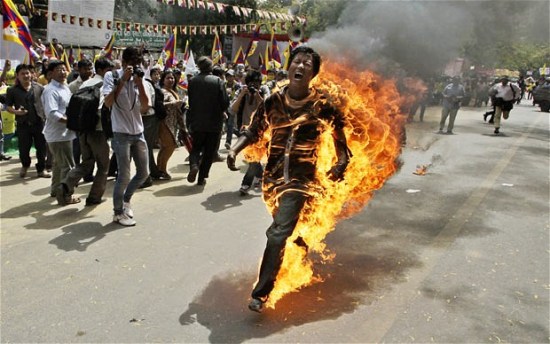
Kashgar’s Old Town, as it was…

My piece on the destruction of Kashgar’s old city is now up on the the London Review of Books Blog.

And here’s a more reportage-based piece from 2013.

For more on Xinjiang, see my book The Tree That Bleeds: A Uighur Town on the Edge.

Blockupy Frankfurt

My post on Blockupy Frankfurt is now up on the London review of books blog. Thomas Seibert was a fascinating, engaging interviewee, and I’m very grateful to him for talking to me.

Shortlisted for Commonwealth Short Story Prize

My story ‘The False River’ has been shortlisted for The Commonwealth Short Story Prize. I had completely forgotten about this, so it’s almost a shock, though a welcome one. I think the way judging works is that they pick a regional winner (mine would be Canada and Europe) then an overall one. The story in question is about a man obsessed by numbers who is driving a Greyhound bus and is very much in love. 1st round of judging takes place on May 22nd. Please cross your eyes.

Willesden Herald 2012 Short Story Prize

Once again, I am the bridesmaid in this excellent competition. My story ‘Half’ was shortlisted and appears in the 2012 Anthology, which can soon be ordered here. The Willesden Herald is a very good competition because a) it’s not expensive to enter b) it’s judged anonymously c) The word limit is usually much higher than usual (7/8000) for short story competitions and d) if you get shortlisted, you at least get a publication out of it, rather than the whole ‘honourable mention’ thing which is like being told you’re a bridesmaid without being allowed to come to the wedding.

My story is an incredibly joyful tale of acceptance, personal growth and warm, enduring love, as the begining suggests:

Ruth stood at the end of the pier, looking back at the shore. Beyond the beach, above the road, she saw the line of hotels: white castles topped with flags, slightly blurred in her vision. She squinted, but they weren’t just distant: they appeared to be retreating. As if she were at the stern of a ship that was slowly cruising away.

She touched her hair, then checked her watch. Perhaps Sam wasn’t going to come. Perhaps, despite the way he’d sounded, things had not improved.

She leaned on the railing and wanted to shut her eyes. But the pier, for all its ironwork, did not feel like something to trust, not against so much water.

Five minutes, then she’d go; the London train was at half past.

She went to the telescope and pushed a coin in its slot. She bent and peered and turned it slowly. Windsurfers, waves, a dinghy. A single swimmer on his back. Then the grey of the water blurred to the yellow ochre of sand. More sand, then the freckled limbs of a woman without hair. The woman was wearing small dark glasses. She absently picked her nose. Then she looked directly at Ruth with a stare that said, Fuck off. Ruth jumped and the telescope skipped to waves that lifted, hung, then fell. The woman had, of course, not seen her. If she moved the telescope back, the woman would be squeezing sun cream onto her speckled arms.

She turned the scope till she was seeing down the pier. A pushchair, a rubbish bin, a cloud of candyfloss. Then she raised it and saw faces. White, black, lumpy, old, then, as the shutter dropped, the face of her half-brother.

He’d told her a year ago, just after he passed the bread, right as she started to butter.

“I’m using heroin,” he said.