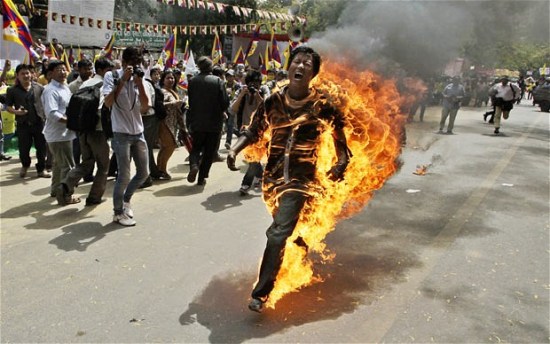
I have a short piece on the LRB Blog about the Tibetan self-immolations, of which there have been almost 100 since 2011. Click here to read.
I have a short piece on the LRB Blog about the Tibetan self-immolations, of which there have been almost 100 since 2011. Click here to read.
Here’s the review of The Tree That Bleeds from the April issue of Literary Review. Click on the images to enlarge.


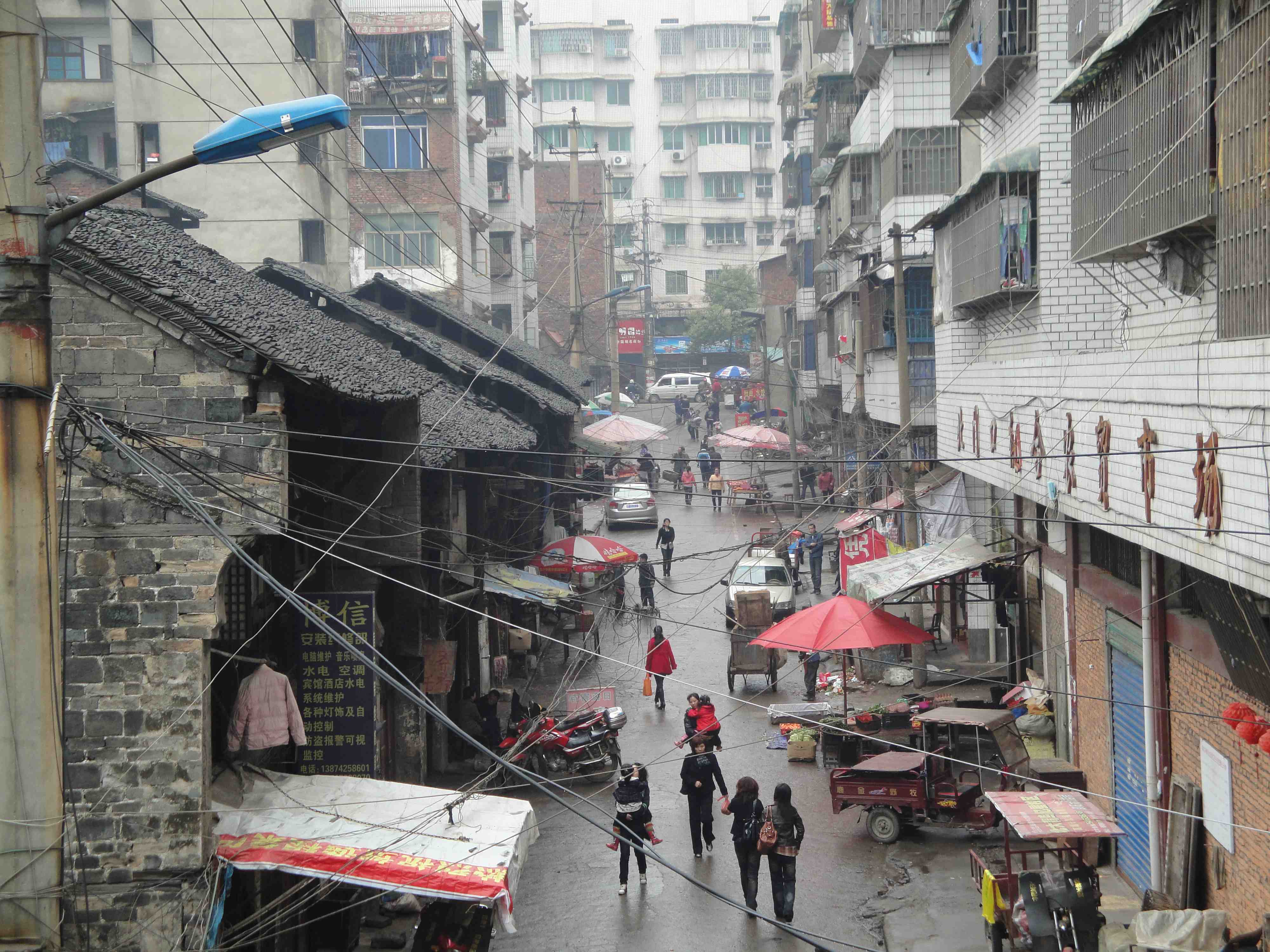
View from the old city gate of Shaoyang, 2010
In my latest post on the London Review of Books Blog I write about rubbish, murder and the gap between the cities of China’s east coast and those of its interior. For more on wonderful Shaoyang see my piece at the LA Review of Books.
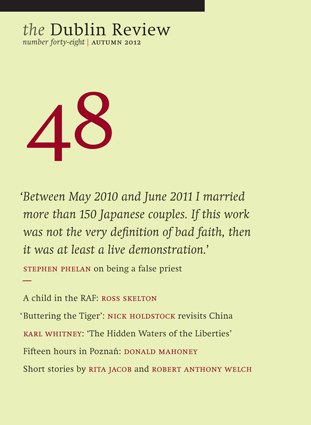
My essay on Chinese factories and corruption is in the latest issue of The Dublin Review, along with an interesting piece about being a fake priest in Japan. I originally wrote this as the middle section of my LARB piece, but it ended up breaking free from that and hopefully works fine on its own.
The DR is one of the few magazines still interested in publishing longform pieces about foreign countries that aren’t based around conflict or suffering. As such, it deserves our support. A 4 issue subscription costs £36.
I’d also like to thank the gone, but not forgotten, and very much missed Scottish Arts Council for helping to fund the trip to China that led to the LARB piece, the DR piece, and the afterword of The Tree That Bleeds.
My piece on two of my former students is now up at the Los Angeles Review of Books, and features kidnapping, a cow’s vagina,’Peter Burger’ and the house of wasps. I may, perhaps, have burnt some bridges by writing this piece- in which case, dear bridges, I’m sorry. There was so much kindling I could not resist.
You can see accompanying photos here.
There’s a short video of me speaking about The Tree That Bleeds now up at China File, where there’s a lot of other great content. Thanks to Maura Cunningham for doing the interview and for editing my rambling into coherent form.
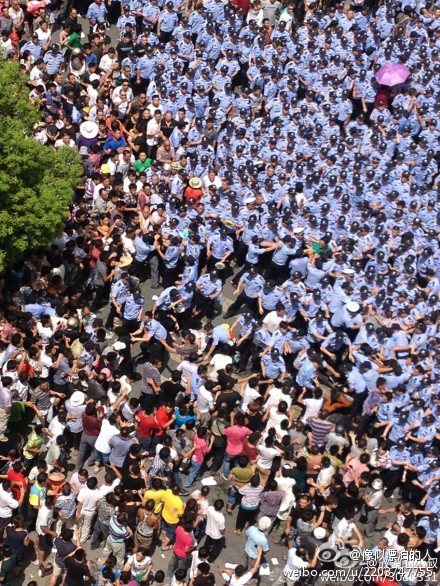
Qidong protest, July 28th 2012. Blue = police
My post on Chinese environmental protests is now up at the LRB Blog.

I have a new piece on the LRB Blog on Chinese propaganda comics from 1950 that some have used to critique modern China. The only thing I’d add to what I say there is that to argue that China has gone back in time is overlook the many achievements made by the PRC, albeit sometimes at catastrophic cost to its people. Despite the apparent similarities, the problems of contemporary China are those of a very different kind of society and system.
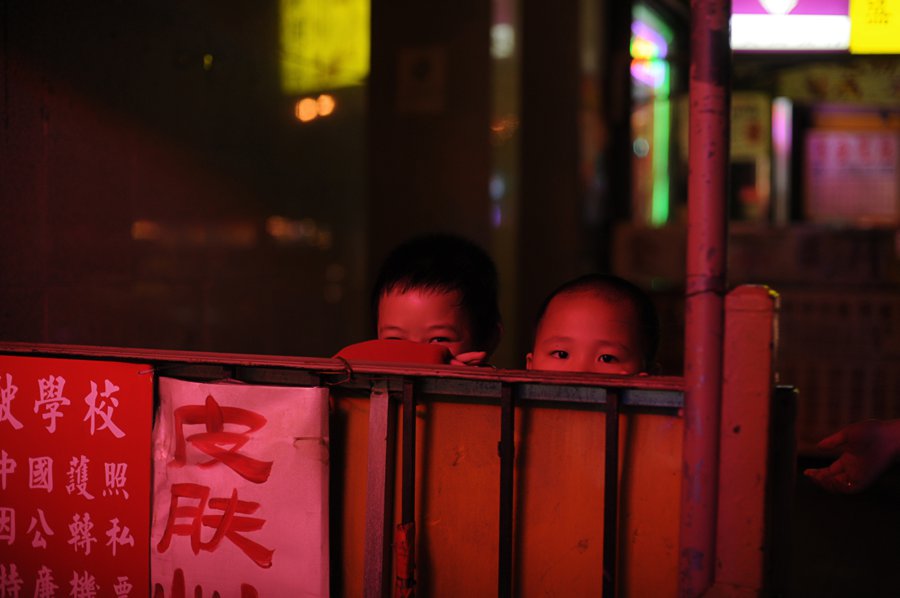
I’ll be having two kinds of fun in NYC this month. I’ll be giving a paper at the Association for the Study of Nationalities conference at Columbia University on 19th April. The paper is titled ‘Post-Conflict Identities in Xinjiang: Good, Bad and Non Muslims’ and is basically about the mean things that Uighurs I knew said about Han Chinese, Hui and other Uighurs in Yining. For example, this exchange that I had with a Uighur girl in a small village near Yining.
‘Are there any Chinese here?’
‘No, you would be able to smell them.’
‘What do they smell of?’
‘Spices, mostly chilli.’
‘What do they say you smell of?’
‘Lamb. Many Chinese, they can’t stand this smell. When they come here for the first time, they will –’ (she mimed retching) ‘when they smell this.’
Were this not fun enough, I’ll also be doing a book reading at Bluestockings in Manhattan on the 22nd. For the love of God, if you know anyone in NYC, please tell them to come.

These, and other friendly slogans are considered in my piece for The Times of India on China’s new approach to the one-child policy.

Sceptics in the Yining market
Barry Moore, the Chairman of the Scotland China Association, Glasgow Branch, was kind enough to write a review of my book for their magazine:
Book Review: Nick Holdstock, The Tree That Bleeds: A Uighur town on the edge. Luath Press, 2011 (£12.99)
The Glasgow Branch of the SCA had the pleasure of meeting Nick Holdstock at our June 2011 monthly meeting when his publishers had arranged with us to launch The Tree That Bleeds. The author gave an illustrated presentation in a commanding, energetic and enthusiastic manner and these personality characteristics are reflected throughout his dramatic story.
The account of Holdstock’s time when revisiting China in 2010 opens with the reporting of the noise of soldiers marching and chanting as they progress through the city of Urumqi, the capital of the largest Chinese province, the Xinjiang Uighur Autonomous Region. This image provides the background to a fascinating story of the year the author had spent living and teaching in the province earlier in the decade and to his underlying reason for revisiting the province: to learn about the riots which had taken place there and the associated ethnic discrimination.
Useful maps are shown at the beginning. The first locates Xinjiang as the most westerly province in China, more than 2000 kilometres from Beijing, bordered by Russia, Mongolia, Kazakhstan, Kyrgyzstan, Tajikistan, Pakistan, India, Afghanistan and Tibet. The second map shows the principal cities within Xinjiang, including Yining, southwest of Urumqi, where the author spent most of his time. After the maps are descriptive pages providing information about the unrest which has occurred in the province in 1997 and again in 2009 and offering divergent explanations of the events from the differing viewpoints of those reporting and commenting on them at the time. There follows a short description of the author’s original journey to Yining, which took him three days from Beijing. The early pages vividly provide the reader with the sense of the vastness, isolation and inaccessibility of Xinjiang, which has a total population of about 23 million, and of the confusions which arise from being in a separate time zone. Yining, with a population of about half a million, is called a border town although it is still about an hour away from the actual border with the neighbouring state, Kazakhstan.
In his description of Yining, Holdstock paints a detailed picture of the stark town where he taught and his observations on the changing character of Xinjiang’s ethnic composition are revealing. The people of Xinjiang, Holdstock tells us, are a mixture of Uighurs and Hui, (both Sunni Muslims), Han Chinese and several other ethnic minorities. He confirms that the reasons for the riots in 1997 and 2009 are complex and will not, if ever, be easily explained.
After the initial pages the book is divided into sections Autumn, Winter, Spring and Summer. In “Autumn” we are introduced to diverse and interesting characters including several American teachers with a hidden agenda; Murat and Ismail, two quirky and outspoken Uighurs teaching English; Miss Cai, the ‘foreign liaison officer’, with a colourful past; and Erkin a student, who invited the author to a wedding that provided him with a unique experience delightfully recounted. As autumn progresses, Holdstock became increasingly aware of the divergent lives lived by the different ethnic groups within the student body. So much so that each acts as if the others do not exist. A conundrum surely?
‘Winter’ finds Holdstock, discussing the hardships experienced by the inhabitants of Yining, (including himself) during the sub- zero temperatures. This season provides the author with the opportunity to hold numerous conversations with the different Uighurs and Han Chinese he meets. Through these conversations he gains (and so does the reader) a deeper understanding of different aspects of the Muslim faith and of the working lives of the Uigher people of Xinjiang.
After winter comes ‘Spring’. Spring opens with observations about the prevalent drug abuse which the author encounters. Discussions on this topic in some of his adult classes prove difficult for Holdstock and end inconclusively. He finds it impossible to determine if this is a result of student reticence or lack of knowledge brought about by the suppression of information.
The teaching year ends with “Summer” but Holdstock’s observations on local life continues, and with summer comes an explanation for his intriguing title!
The Tree That Bleeds is a fascinating book for those interested in what is happening in this remote part of China. While great insights and information are provided about Xinjiang province to Holdstock’s frustration he is unable to reach any satisfactory conclusions about the definitive causes and reasons for the riots, although the extent of the tensions and potential causes for strife are well described.
To my mind this is a book of short stories rather than a comprehensive and seamless tale but the format does not detract from what is a fascinating and elegantly expressed account of this little known Province. It raises the question – is there a sequel to be written about the future of Xinjiang Province in this fast and ever changing world where the Muslim faith grows ever more in importance? If so Holdstock is the man to write it.
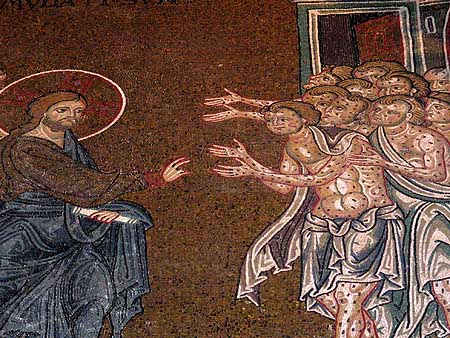
A lot of authors seem to dread their reviews, but I have really enjoyed mine. It’s not because they’ve been wholehearedly positive, far from it. All have hated my brief use of the second person. Most have criticised my intolerance, or atheism, or refusal to tie things up in a neat, conclusive bow. For me, the enjoyable parts are the misreadings (and in some cases, the inventions) of the reviewers, the sense of the mind that the book has passed through, and how it has thus been transformed.
There are many things I love about this latest Review: its strange opening sentence (‘in February 1997, a riot shook China to its core which reverberated across the world’); the talk of my ‘unquenchable and dangerous curiosity’; its claim that I encountered ‘lepers up close and personal’ (I never mention them); the idea that my ‘benign and humanistic’ approach’ is indicative of the fact that the ‘book is more of a personal odyssey of growth than anything else’ (if only); the notion that I am ‘an instigator, a fire-starter’; its accusations of pathos: ‘He cannot find the people he used to know. Like most people who revisit a place in their memory, he is both estranged from the past and painfully lost to the present time as well, he sits there somewhere, lost in limbo’.
I give this review four stars!

The brave and noble Sadur who never stabbed anyone in the back
From a new review of The Tree That Bleeds in the Asia Times Online:
“Some readers may be appalled by the author’s behavior in reporting on his fellow teachers, and I was surprised how he makes no apology for what could easily be regarded as stabbing colleagues in the back.”
At the risk of splliting hairs, it was really only one colleague.

Paramedics in Hotan after the 'incident' in July 2011
I was asked my opinion about recent violence in Xinjiang- here it is: CHINA: New Laws to Crack Down on Uyghurs – IPS ipsnews.net

My review of Sam Meekings’ The Book of Crows- a novel set in different time periods in China -is in the new issue of Edinburgh Review.
The Book of Crows by Sam Meekings (Polygon)
How did people think and speak a thousand years ago? The simple answer is: we don’t know. Without recorded speech, or transcripts, the best a historian can do is guess. So when we read a historical work of fiction what matters is not so much the accuracy of the characters’ thoughts and language, but whether they seem plausible. Sam Meeking’s second novel, The Book of Crows, attempts to ventriloquise characters from four different periods in Chinese history: a young girl in the 1st Century BCE who is kidnapped and taken to a brothel; a grieving poet in the 9th Century; a Franciscan monk in the 13th Century; and a low ranking civil servant in the early 1990s. What these disparate narrators have in common is that they encounter people determined to find a mythical book that contains the entire past, present and future history of the world.
Meekings is to be commended for his ambition in trying to weave these separate narratives together, not so much at the level of plot, but in terms of parallels between the different narrators. The poet, the kidnapped girl, and the civil servant all share a degree of fatalism, which accords with the ideas of predestination and fate raised when different characters debate whether the knowledge offered by the mythical book is more a curse than a blessing. ‘Rain at Night’, the story of the grieving poet, is by far the most affecting of the different strands. Though Bai Juyi‘s grief for his daughter is dealt with in a mostly oblique fashion, there is a delicacy and sadness to his narration. His discussion of poetry with the crown prince is an impressively nuanced scene that functions as both a literary and spiritual lesson. Though some of his expositions of Buddhist precepts feel a trifle forced (‘…for a while we shared our common experiences of finding solace in the words of the Buddha, in the first realisation of the illusory nature of the world and, therefore, of the self.’), for the most part the voice remains compelling, especially with each section’s epigrammatic closing statement (e.g. ‘I say a sutra that your shoes stay strong, that your palms stay open’).
Unfortunately, this lightness of touch is absent in the novel’s other strands. Though Meekings does well in conjuring the different places and time periods, in the main his characters fail to convince on either a psychological or linguistic level. ‘The Whorehouse of a Thousand Sighs’ is narrated in a faux-British manner that makes it very hard to believe that events are taking place in 1st Century BCE China. People speak of ‘winding us up’, being ‘pretty pissed off’, or say they ‘needed to pee’. When a cook says, ‘And knock me over if it doesn’t look longer than the bloody desert itself’, it verges on Cockney. There is also a general portentousness to these sections, not only in the dialogue (‘She didn’t just buy our bodies: she bought our lives, our hopes, our dreams, our futures’) but also in the sententious tone of the young narrator, who has a frequent (not to say unconvincing) tendency to deliver homilies such as ‘If you don’t speak of things, sometimes they get lost so deep that when you really need them the words are buried beyond your reach’ and, ‘Why can’t we keep our dreams to the present, to what we already have, instead of grasping at the future, the sky, the impossible?’
Another troubling feature about this strand is the almost romanticised treatment of a very young girl being abducted and forced to have sex with strangers. The girl rarely seems frightened, and when it comes to her first time, this is dealt with in a single, cursory paragraph.
The other two narrative strands are similarly plagued. The 13th Century monk’s expressions of prejudice and faith are so predictable that it is hard to retain interest. As for the civil servant in the 1990s (who also employs words like ‘wonky’ and ‘git’), some of his exclamations and statements are utterly implausible. ‘Thank the mighty Politburo!’ is a phrase that belongs only in propaganda. Meekings- who has lived in China –should also know better than to have his narrator say, ‘Some folks these days are nostalgic for the old Cultural Revolution’. This was certainly not the case in the early 1990s- it was far too fraught and recent a memory.
If The Book of Crows doesn’t succeed as either a collection of short pieces, or a novel (even one with a discontinuous narrative), this is partly because the attempt to recreate the thoughts and feelings of people from another time (not to mention another culture and language) must always carry a taint of the contemporary. In order for such characters and their worlds to be convincing, they need to be both linguistically and psychologically unfamiliar, so as to remove the reader from their language, time and culture. Otherwise the historical setting is what Lukacs called ‘mere costumery’. Though The Book of Crows offers us ‘curiosities and oddities’ from ancient China, its characters are too much of the present.
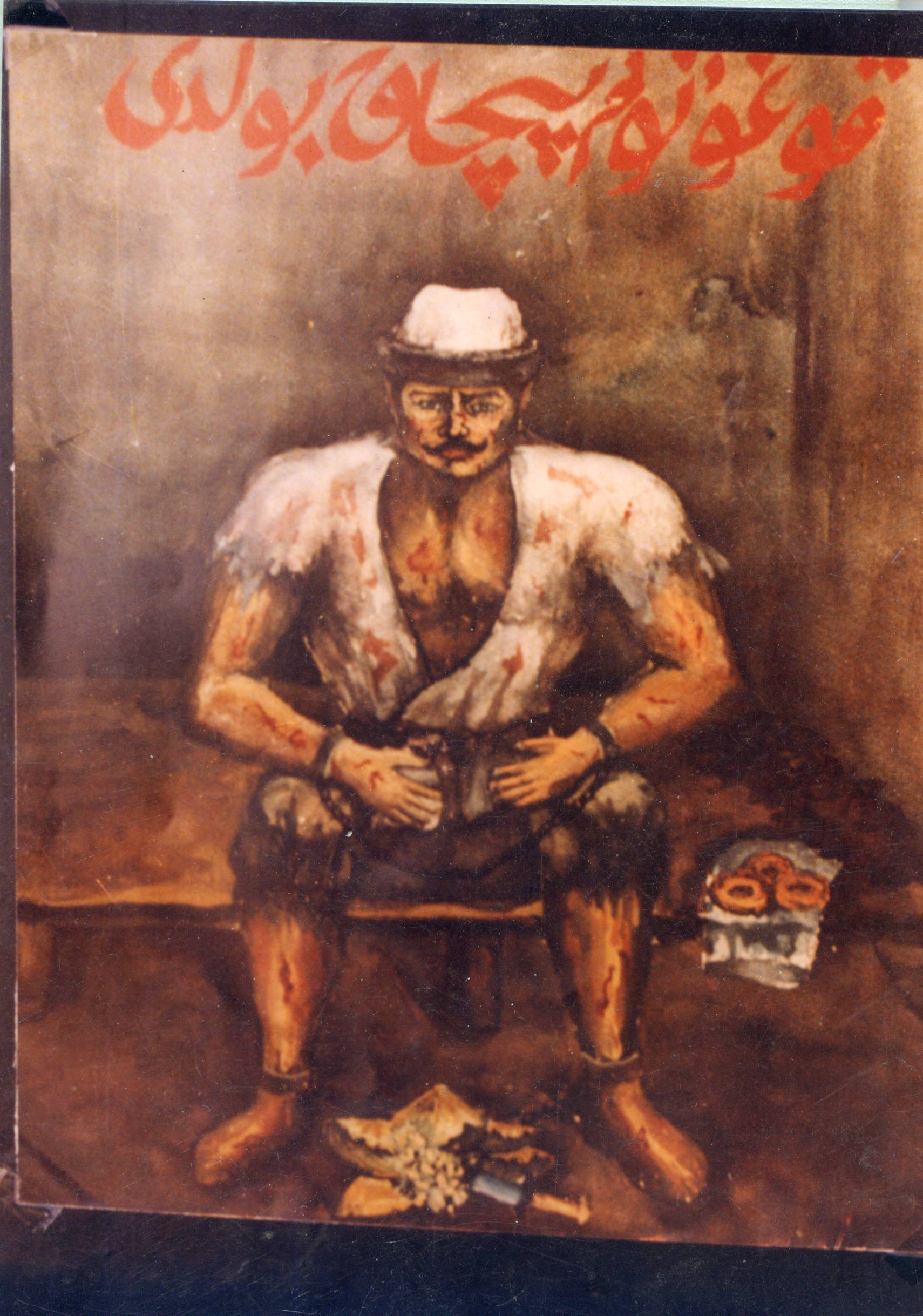
Sadur, who fought the Qing invaders, sitting in his cell, eating what appears to be a very reasonable lunch.
Here are the main reviews of The Tree That Bleeds so far- I’d like to express my gratitude to all the reviewers for their careful, thoughtful responses to the book (i.e. thank you for not giving it a mauling).
Thanks also to Scott Pack at Me And My Big Mouth for featuring it in his Quick Flicks section.
I don’t know if its gauche or amateurish to reply to some of the points they raise, but there are a few caveats- firstly, the SRB review was a pre-publication review, and some of its criticisms thus refer to an earlier version of the book (e.g. that it has no index, when the published version does- it’s first entry is ‘Awkward Sexual Moments’ (3 entries)). Secondly, that I corresponded with Josh Summers at Far West China, as he makes clear in his review. He quotes me accurately as saying that there were times when my anger gets away from me, but it might help to have the context in which I said that.
Josh asked me:
Your disdain for missionaries is readily apparent and I believe you did a wonderful job exploring the ignorant and uninformed hatred by both the Han and Uyghur. Were you hoping your reader would be able to make the connection between these two similar forms of bigotry or did you actually desire to paint such a picture of your expat co-workers?
My reply:
A tricky one. I hope I give a slightly more favourable portrait of Gabe than the others- but even now I still think there’s something unethical about a teacher using his position and access to push his ideas on students. I do think there are missionaries who do genuinely good work, but in the main I still have a problem with them being there (and not as teachers or health workers, but purely to proselytise). I think their actions endangered others. They certainly contributed to the atmosphere of paranoia and distrust (which I definitely succumbed to). Had it not been for them, it might have been easier to make more Han friends within the college.
But I can’t deny that there are moments in the book when my anger gets away from me. Believe it or not, I did tone some of this down, but in the end I left a lot of it, perhaps unwisely. I was trying to keep hindsight out of the book as much as possible, and this is one of the consequences. As is often the case with books like mine, the personal life of the narrator sometimes obscures the more interesting material. It occurs to me now that maybe some of this anger is due to the fact that of all the groups of people I tried to get to know, the missionaries were the most resistant- of all of them, only Gabe would talk about it. I don’t blame them for this, but it meant that I had little to go on in terms of understanding them and their motivatons. In some ways, I might have been better to just leave them out of the narrative. They aren’t really a significant part of what’s happening in Xinjiang, but they were a big part of my college world, and that’s why they loom fairly large.
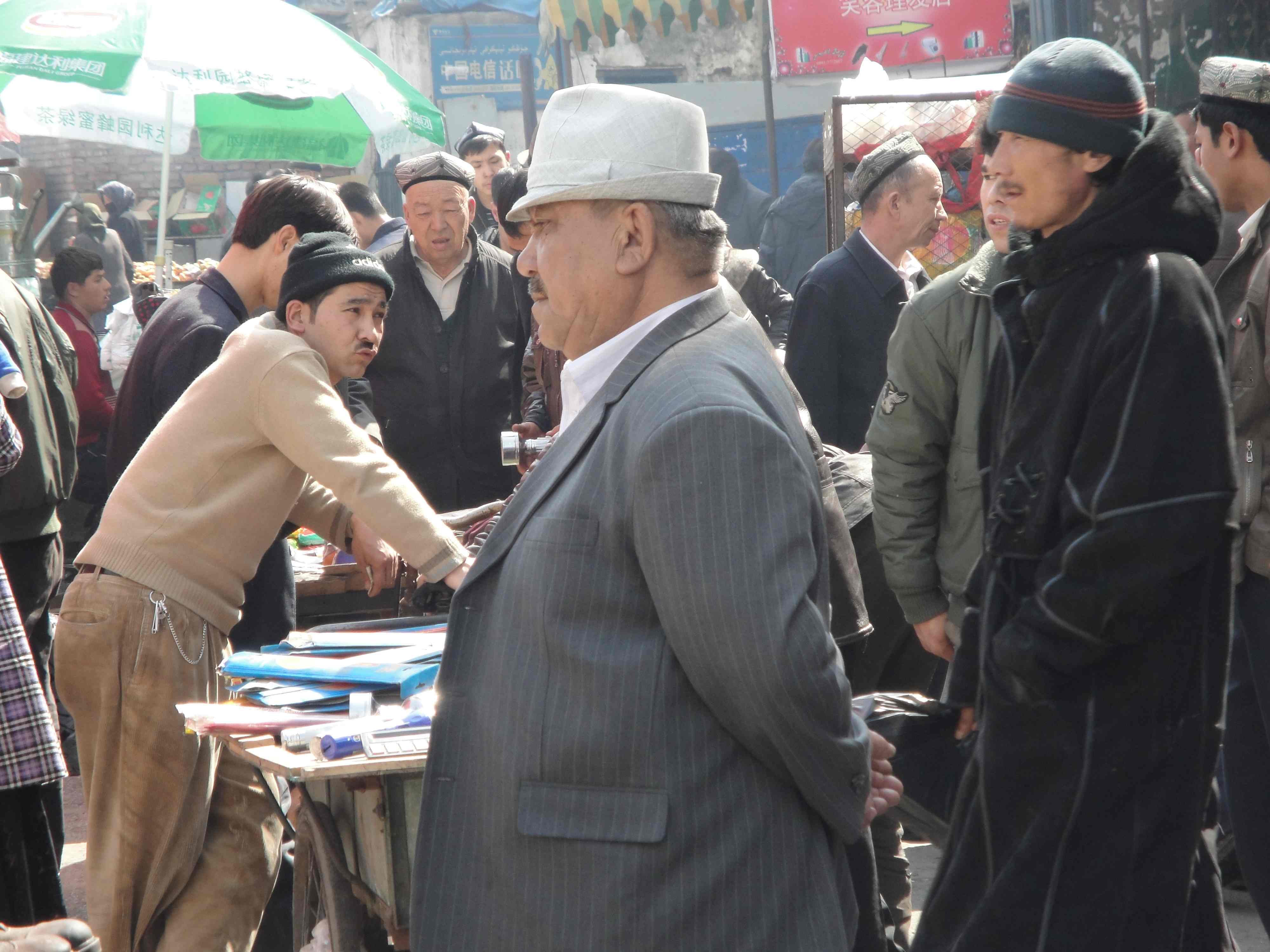
Some excellent coats in Urumqi
I’ll be at Waterstones, 128 Princes St, Edinburgh, between 6-8pm on Thursday September 29th. I will be talking about my travel/politics book ‘The Tree That Bleeds’, out now from Luath Press.
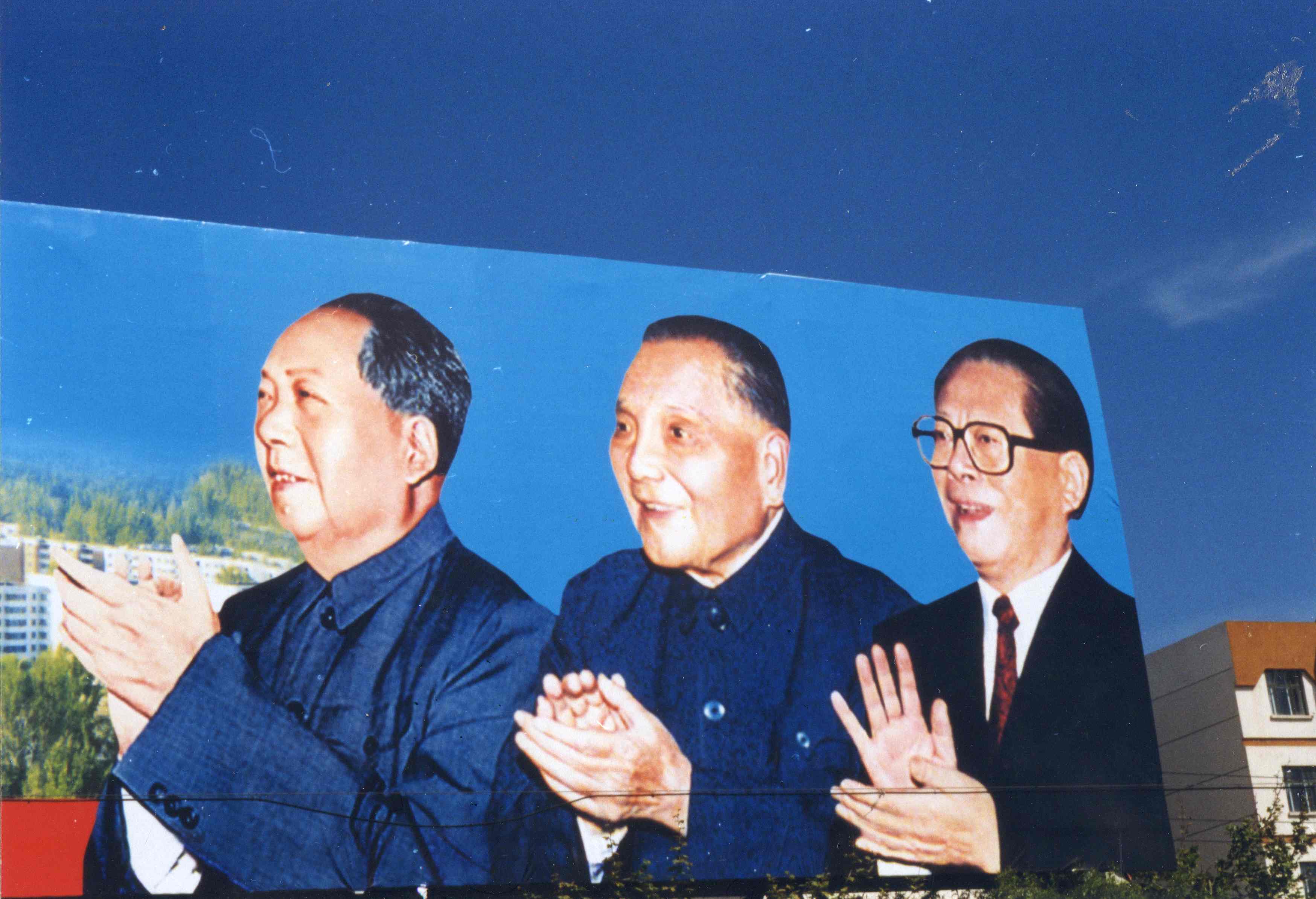
Mao Zedong, Deng Xiaoping, and Jiang Zemin approve!
The London launch for The Tree That Bleeds will take place at Arthur Probsthain, 41 Great Russell Street (just opposite the British Museum) between 6.30-8.
This is a Channel 4 report I only found the other day. It contains pretty much the entirety of the video/photo evidence for the protests, at least the stuff you can find on the internet. This, after all, was before people had camera phones, well before YouTube. It contrasts sharply with how much footage there is of the Urumqi 2009 riots.
I have a new post on the LRB Blog about some footage of the arrests that followed the riots in Urümqi in 2009. The clip shows the fairly brutal treatment of suspects, not just by the police, but by the onlookers as well. It corroborates reports from eyewitnesses who spoke to Amnesty International and Human Rights Watch.

Now up at The Chinabeat

Dear Glaswegians,
I will be launching my book in your city on Tuesday 28th June, 7.30pm at the Scotland China Association, which meets at the Garnethill Multicultural Centre, 21 Rose St, Glasgow G3 6RE.
If you live elsewhere (such as Edinburgh), please stand by. Details to follow later in the week.

On a small street in Urumqi
Coming out at the end of June…
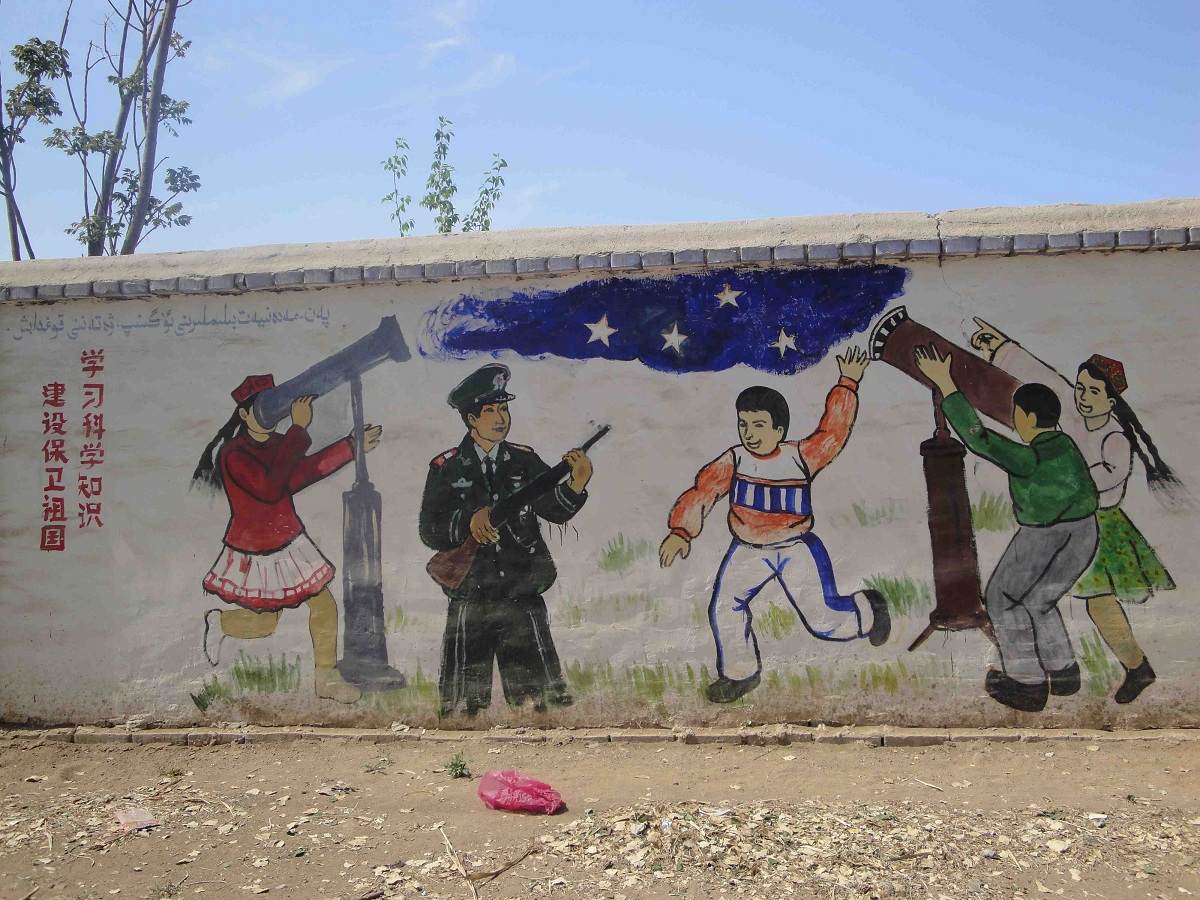
Some of the images I took in Xinjiang last year are in an exhibition in London at the University of Westminster (309 Regent St.). The exhibition runs until 14th July, for more info:
Poster Power: Images from Mao’s China, Then and Now
This gentleman was selling snake-oil in Yining market, and was doing excellent trade.
Apologies for the smallness of the video- I shot it sideways, then had to get an adult help me to rotate it (thanks Yaz!). Also thanks to A. for the following translation:
“No side effects on the human body, does not harm the skin, a universal cure for arthritis, high blood pressure, high blood cholesterol. It was prepared from boiling a mixture of various local (ethnic) herbal medicines. When you wash your body with it, it will cure and prevent back pain, leg pain, pruritus and other skin conditions resulted from the increasing cold in human body (cold here is like the 阴in the Chinese cosmic term 阴阳)”

Tue 12 Apr 2011 “The Tree that Bleeds: Xinjiang after the 2009 riots”
Tuesday, 12 April 2011 7pm for 7.30pm
The Meeting House
7 Victoria Terrace, Edinburgh
at the junction of Victoria Terrace and the Upper Row, just off the Royal Mile/Lawnmarket.
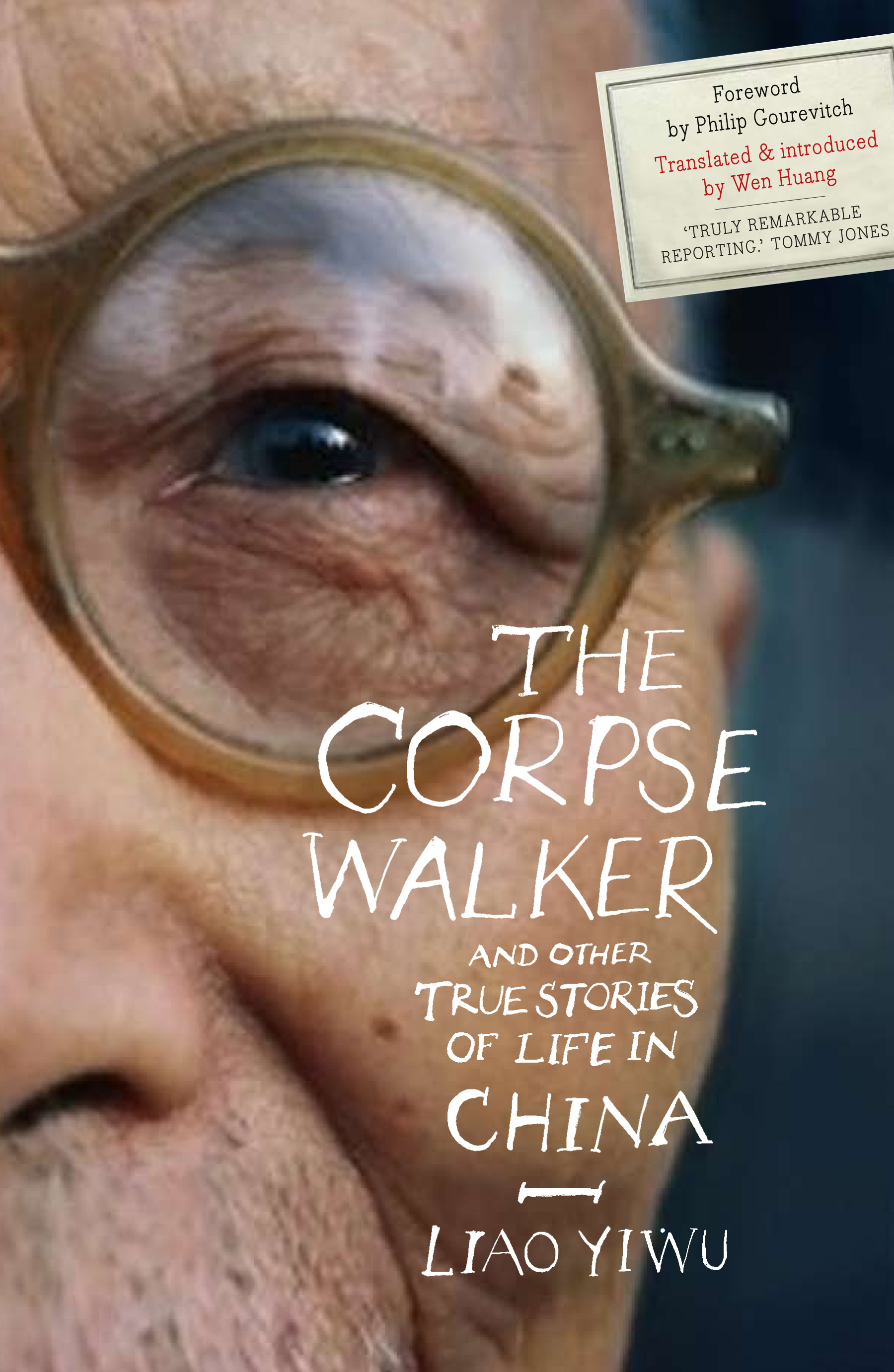
Liao Yiwu’s book is a collection of interviews with people on the margins of Chinese society. This is an extract from an interview with a man in prison for human trafficking.
LIAO: You sent your daughters to a faraway place and married them off to strangers for money?
QIAN: What do they know about happiness? My daughters are the children of a poor peasant. As long as their husbands have dicks, that’s all I care. The more often women get laid, the prettier they look. Of course with some women, after they give birth to a couple of kids, their looks are gone forever.
LIAO: How did you manage to expand your business?
QIAN: I realized that I could be pretty charming.
His other interview subjects include a professional mourner, a murderer, a beggar, a fortune teller, a thief, a dissident, a homosexual, a pimp, a former landlord and a school teacher. Most were cast out of mainstream society during the various political purges of the Mao era or are products of the tumultuous generational changes sweeping China.
Much of Liao’s work is banned in China and he is forbidden to publish. In the spring of 1989 he was given a five year sentence for publishing two poems deemed to be anti-Communist. He was released early in 1994 for ‘good behaviour’ (though with only fifty days left of his sentence. In 1998, he compiled an anthology of underground poems of the 1970s that included or made references to numerous Chinese dissidents. One of China’s vice-premiers ordered an investigation into the book, calling it a ‘premeditated attempt to overthrow the government, and… supported by powerful anti-China groups’. Liao was again detained. He currently lives in Chengdu, in Sichuan province (where many of these interviews took place).
Another reason these interviews are banned in China is that they feature people speaking candidly about the injustices of the past, and being critical of the Communist party. Here’s an interview with ‘a Rightist’
FENG: …We joined the Communist revolution so we could live a better life, have enough to eat, marry a beautiful woman and raise a family. This basic concept was totally distorted in the Mao era. All we talked about were the abstract ideas such as the Party and the People. Private lives were considered something disgraceful. You can’t marry the Party or the People, can you? We used to hear phony stuff like “So-and-so has been nurtured by the Party and the People.” What do the Party’s breasts look like?
Liao’s book is full of the kind of rich, detailed, revealing stories that don’t seem to count as ‘news’. It was perhaps for this reason that many of these first appeared in English in The Paris Review. Their site has a few extracts, some of them quite long, from interviews they’ve run. My only qualm is with the English translation, which at times is overly idiomatic (e.g. the use of words like ‘phony’ and ‘jerk’)- I would have preferred something less region specific. But this doesn’t diminish the value of these pieces, which offer perspectives on Chinese life that are seldom otherwise heard,
Extracts from interviews with The Public Toilet Manager and The Peasant Emperor here.
 Nick Holdstock