Yep, and it seems just right.
Yep, and it seems just right.
Another really insightful piece from this excellent blog.

Ever since Kasim Abdurehim, the founder of the private English school Atlan, took third place in the national English speaking contest in 2004, Uyghurs have found their way into the final rounds of almost every major English speaking competition in the nation. This year was no exception. The main difference is that now Uyghurs are learning how to be confident in their English ability at a younger age. It is because of people like Kasim and dozens of other award winning role models that kids like 14 year-old Tughluk Tursunjan feel confident on a national stage. Although Uyghurs represent less than one percent of China’s population, they still consistently beat Han contestants from the best schools in the country.
Tughluk, who was this year’s winner of the Junior High School division of the “Outlook of Hope” contest on CCTV was taught by an English instructor named Nemo…
View original post 787 more words
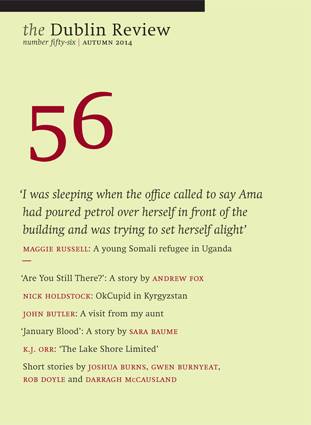
The autumn issue of The Dublin Review has a long tale of the joys and sorrows (more of those) of trying to do internet dating in Bishkek in Kyrgyzstan. Suffice to say, no weddings are currently planned.
It begins thus:
September is the perfect month for dating in Bishkek. The intense heat of the Kyrgyz summer has passed, but the days are still bright and warm. In the evening you can eat outside, then stroll through the park, without feeling the slightest chill.
Before I travelled to Bishkek, I’d been living in London for six months, and despite the many possibilities of the place I was in a dating rut. We went to the British Film Institute or the Hackney Picturehouse. We spoke sometimes of Mad Men, sometimes of Breaking Bad, always of Game of Thrones. We were witty and cutting and sometimes we kissed but even after three drinks, with our eyes shut, our tongues entwined, we remained urbane. We were youngish, smart professionals. We were polished stones.
My initial reasons for visiting Kyrgyzstan’s capital had nothing to do with dating. I wanted to do a report on a clinic that treated drug addiction by putting its patients into comas. I had nothing else planned, and knew no one in Bishkek. Three days before I was due to leave, I was checking OkCupid – not with any real conviction, more out of pathetic habit – and saw I had a message from a fifty-six-year-old woman in Uzbekistan. ‘Good face!’ she wrote, which was nice of her, but alas I had no plans to visit Tashkent. It did, however, make me wonder if OkCupid had any English-speaking women in Bishkek on its site.
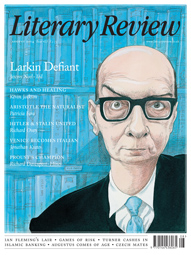
The August issue of Literary Review has my piece on Evan Osnos’ impressive book on the last decade in China (and scorn for another book). Print only! Well, and on some tablets too…

A rifle and sword tied together with a red flag over a meter of Gobi sand welcomes visitors to the Xinjiang Production and Construction Corps Museum in the city of Shihezi – 136 kilometers northwest of Ürümchi. This museum, filled with patched and dented artifacts and hundreds of large scale historical photos, is the premiere monument to the Han experience of the recent past in Xinjiang. It shows us the narrative of experience necessary to understand the history of the people who self-identify as “constructors” (jianshezhe) of Xinjiang.
The Bingtuan, as the Corps is referred to by locals, is a state-sponsored farm system that is spread across the territory of Xinjiang – an area as large as California, Nevada, Utah, Arizona, Colorado and New Mexico combined. Hundreds of regiments are still in operation 60 years after their founding. Out of this population of around 3 million military farmers…
View original post 1,139 more words

Image by Stuart Franklin (Magnum)
My piece on the Tiananmen Square 25th anniversary is the top story on Vice News today.

When I was in Guangzhou recently I had an interesting conversation with Walter Hook, CEO of the Institute for Transportation and Development Policy, who try to promote green transport solutions for cities. He had a lot of useful things to say about how China’s fast expanding cities might reduce car use so as to make decent urban spaces. For more, see my piece at china dialogue.
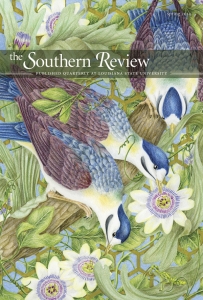
‘Octet’ is the title of my new story in the spring issue of The Southern Review. It’s an odd one, for sure. I don’t have much memory of writing it. I know I was listening to a track from ‘The Tree of Life’ soundtrack on repeat when I was working on it. I also remember walking up and down Montgomery Street, in Edinburgh, Scotland, when I saw something that made me briefly question the physical laws of our universe. But only for a moment, of course.
It starts like this:
The procedure is always the same. He fills in forms. He waits. After twenty or thirty minutes the first of the books arrives. Usually singly, sometimes on a trolley, until they form a tower. All morning his eyes pull in their words like a stove feeding itself. At one o’clock he goes to the canteen; by quarter past he’s back. He remains in his chair until he hears the voice of a man who is never tired, does not age, who may already be dead. It is a voice he hates. The library will be closing in fifteen minutes, says the man. Please return your books to the desk. With this the tower is destroyed. He must return to the present.
He leaves the library and walks down the hill until he reaches his street. At home he eats then tries to read but usually his eyes hurt. All he can do is walk the several blocks of the street, slowly back and forth. He goes over the day’s reading. He waits for the Thought.
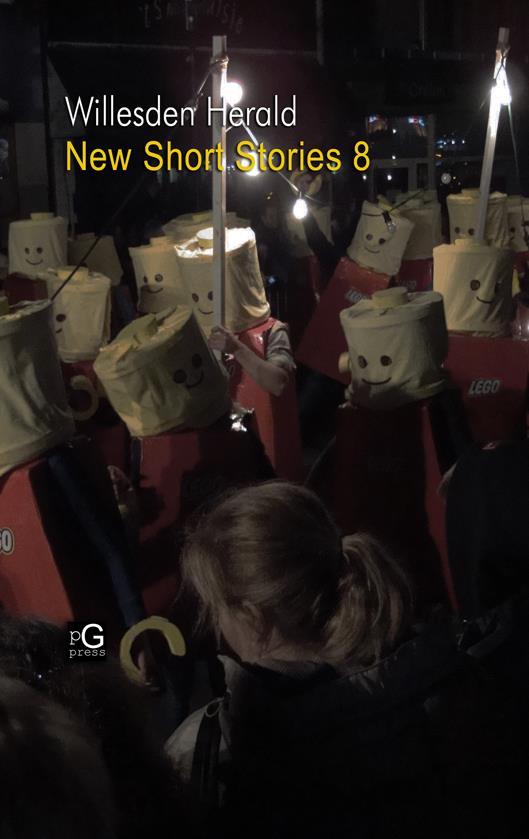
I’m amazed and delighted to have won this year’s Willesden Herald Short Story Prize.
My story, ‘Ward’, is about a young girl who gets very ill and how it changes her.
You can read it and the other nominated stories by buying the anthology which is a bargain at £5.99 (incl. postage)- the best place to buy it is here.
An extract:
She’d never had so many presents. Flowers, magazines, teddy bears and balloons, a poster of two puppies wedged in a boot. Sandra was the only visitor who didn’t bring a gift. Her presence was confusing, because she and Emily weren’t friends. Emily wondered if Sandra liked her the way she liked her classmate Maxine: quietly, from an awed distance, content to sit two rows behind. After ten minutes she noticed the way Sandra’s eyes returned to the needle in her arm, the IV line, the slowly shrinking bag. She asked if Emily was in pain, if she was going to have an operation. She wanted to tell everyone about her dying classmate.
Sean Roberts, an associate professor at Georgetown University, offers a careful, considered response to the attacks, and provides excellent context for what has happened.

My piece on a drug addiction clinic near Bishkek in Kyrgyzstan is now up at VICE.

If you think that people collect your recycling because they care about the environment, you may find my interview with Adam Minter about his new book Junkyard Planet: Travels in the Global Recycling Trade a bit surprising. Sorry about that.
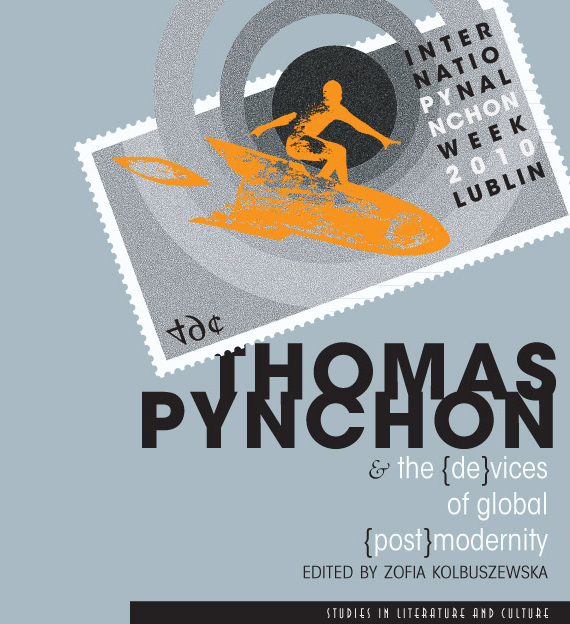
In what will probably be my only publication as a literary scholar (i.e. I wrote it ages ago, when I was still doing my PhD) I have a chapter in a beautifully designed book: Thomas Pynchon & the (de)vices of global (post)modernity.
My chapter is ‘You can’t always blame zombies for their condition’: Utopian escapes in Thomas Pynchon’s Inherent Vice‘.
Also see my piece on attending the conference that the book is based on….
(Part 1 of 2)
As has been well documented in discussions of the cultural situation in Xinjiang, many minority people in Xinjiang feel the future of their language and culture is insecure. Efforts to replace Uyghur-medium education begun in 2004 have intensified as the capillary spread of Chinese capitalism embeds its network and ideology deeper and deeper into southern Xinjiang. Although the first site of conflict was urban Uyghur schools, the extension of the railroad to Hotan has brought with it the “leap-frog development” of brand-new schools staffed by Mandarin-speaking teachers; in some cases the signs which accompany this “opening up of the West” were written in Chinese rather than the legally-required Uyghur script of the Uyghur Autonomous Region. These schools are popping up in the desert towns of Southern Xinjiang as tokens of the “sister-city” relationships established around conference tables in Ürümchi following the trauma of the…
View original post 1,314 more words
Very insightful look at the tensions within contemporary Uyghur masculinity
Hezriti Ali’s film short and music video “With Me”
Within the marriage market of the urban Uyghur community it has become almost a cliché to discuss the moral aptitude of young men in terms of their frequency of prayer. When introducing a potential boyfriend, the line given is “he prays five times a day” (Uy: u besh namazni jayida üteydu). Although this description often overlooks other moral failures such as drinking, smoking and general carousing, the overall connotation conveyed is “this guy is a good, responsible guy.” In the short film “With Me,” Hezriti Ali, another self-made migrant actor-muscian from the Southwest edge of the Taklamakan Desert, tackles this problem in an unusually subtle and implicit way.
In the ten minute narrative film which proceeds his performance of the song, Hezriti lays out the context which migrant young men face in the city. Since, as for all Chinese men…
View original post 827 more words
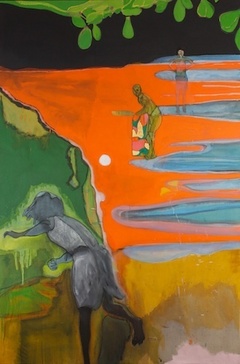
I have a review of Sven Lindqvist’s The Myth of Wu Tao Tzu up at the Los Angeles Review of Books
Great photos from Yamaliq in Urumqi

Dear Readers, I will be doing a reading with Keith Ridgway on Saturday 24th November as part of this year’s West Port Book Festival. Keith Ridgway’s latest book, Hawthorn & Child, has been getting some very good reviews, and I’m looking forward to the event. I will be reading from the novel I am currently working on, so there’s also the enticing prospect of an EPIC FAIL on my part.
You should also check out the many other FREE events in the WPBF – ranging from book binding to Turing-themed collaborations – all of which are testament to the care with which the WPBF has been programmed. It is the boutique festival of boutique festivals. Come along, enjoy the events, and help support the booksellers of West Port.
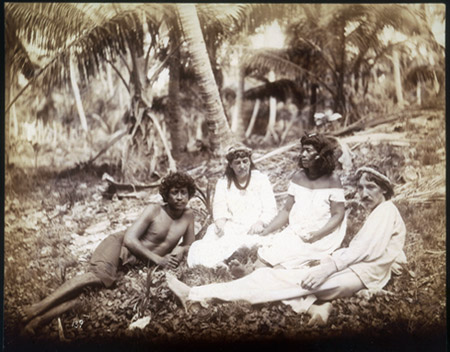
I’m very happy to say I’ve been awarded a Robert Louis Stevenson Fellowship (thank you Creative Scotland) which means I’ll be in the village of Grez Sur Loing in France during June. Though my ostensible purpose is to work on a novel in progress, my real goal is to recreate the atmosphere of RLS’s sojourn in the South Seas. Each morning I will convene a meeting of the elders of the village. We will toast each other with coconut milk. I will marry a snake. I will find a peace I had not thought possible, and change my name to ‘Jacques’. Finally, after weeks that will feel like years to the villagers, I will contract an exotic disease that will make me work feverishly on a manuscript I will not live to complete. For years, and generations after, the good, pure people of Grez Sur Loing will tell stories of ‘the pale one that died’.
There will be no statues.


Kashgar’s Old Town, as it was…
My piece on the destruction of Kashgar’s old city is now up on the the London Review of Books Blog.
And here’s a more reportage-based piece from 2013.
For more on Xinjiang, see my book The Tree That Bleeds: A Uighur Town on the Edge.

My blog on the Zagreb Subversive Forum is up now at CITSEE.EU and on the Forum website.
My story ‘The False River’ has been shortlisted for The Commonwealth Short Story Prize. I had completely forgotten about this, so it’s almost a shock, though a welcome one. I think the way judging works is that they pick a regional winner (mine would be Canada and Europe) then an overall one. The story in question is about a man obsessed by numbers who is driving a Greyhound bus and is very much in love. 1st round of judging takes place on May 22nd. Please cross your eyes.
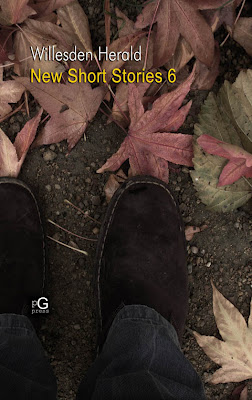
Once again, I am the bridesmaid in this excellent competition. My story ‘Half’ was shortlisted and appears in the 2012 Anthology, which can soon be ordered here. The Willesden Herald is a very good competition because a) it’s not expensive to enter b) it’s judged anonymously c) The word limit is usually much higher than usual (7/8000) for short story competitions and d) if you get shortlisted, you at least get a publication out of it, rather than the whole ‘honourable mention’ thing which is like being told you’re a bridesmaid without being allowed to come to the wedding.
My story is an incredibly joyful tale of acceptance, personal growth and warm, enduring love, as the begining suggests:
Ruth stood at the end of the pier, looking back at the shore. Beyond the beach, above the road, she saw the line of hotels: white castles topped with flags, slightly blurred in her vision. She squinted, but they weren’t just distant: they appeared to be retreating. As if she were at the stern of a ship that was slowly cruising away.
She touched her hair, then checked her watch. Perhaps Sam wasn’t going to come. Perhaps, despite the way he’d sounded, things had not improved.
She leaned on the railing and wanted to shut her eyes. But the pier, for all its ironwork, did not feel like something to trust, not against so much water.
Five minutes, then she’d go; the London train was at half past.
She went to the telescope and pushed a coin in its slot. She bent and peered and turned it slowly. Windsurfers, waves, a dinghy. A single swimmer on his back. Then the grey of the water blurred to the yellow ochre of sand. More sand, then the freckled limbs of a woman without hair. The woman was wearing small dark glasses. She absently picked her nose. Then she looked directly at Ruth with a stare that said, Fuck off. Ruth jumped and the telescope skipped to waves that lifted, hung, then fell. The woman had, of course, not seen her. If she moved the telescope back, the woman would be squeezing sun cream onto her speckled arms.
She turned the scope till she was seeing down the pier. A pushchair, a rubbish bin, a cloud of candyfloss. Then she raised it and saw faces. White, black, lumpy, old, then, as the shutter dropped, the face of her half-brother.
He’d told her a year ago, just after he passed the bread, right as she started to butter.
“I’m using heroin,” he said.

There’s a nice review of The Tree That Bleeds in the April issue of Literary Review, which doesn’t even accuse me of bigotry or treachery.

My piece on life in Cairo’s cemeteries is up at Egypt Independent.
My piece on Cairo’s rubbish collectors is now up at the London Review of Books.
Here are some more photos from the area:
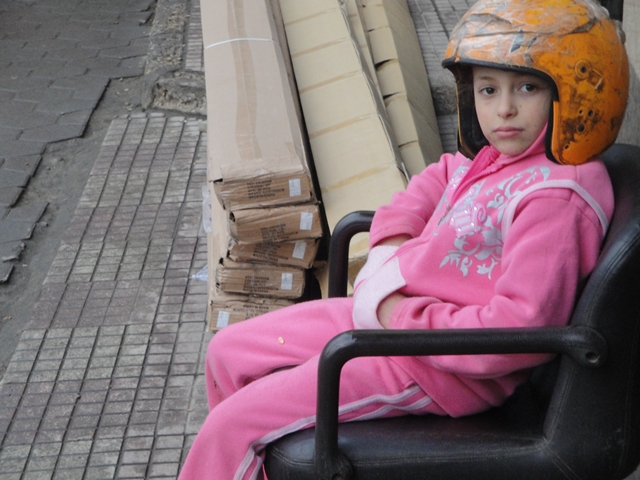
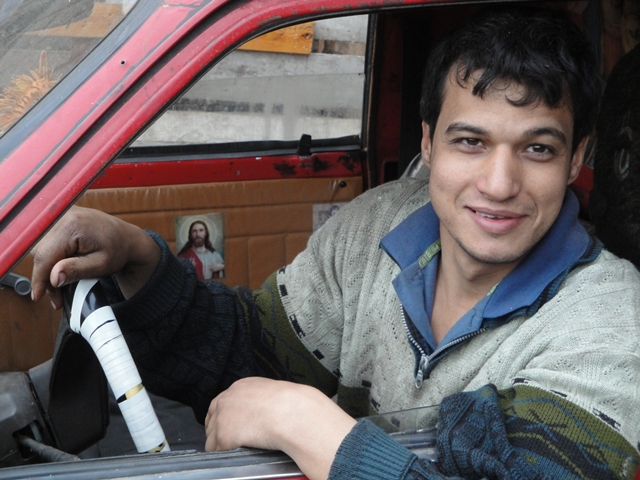

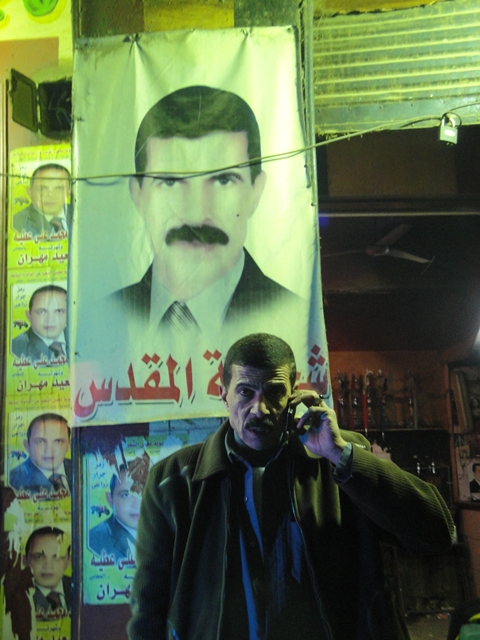


In case you were wondering, look no further:
Go to another man who is a good snake charmer, and this man will pour some water into a plate, then he makes a snake drink this. After this he puts a piece of salt in the plate with a little more water, and then makes the snake vomit the water he has drunk back into the plate. The would-be snake charmer must then drink this water. After he has done this he can handle any snake, none will hurt him.
This was the advice Winifred Blackman receved in 1924 from Sheikh Muhanni. I found this in Anthony Sattin’s excellent book,The Pharaoh’s Shadow which also contains a story of a Tree That Bleeds.
‘Tell me about the tree,’ I asked, as innocently as I could.
‘There is lots of baraka [blessing] in the tree. So much. It is the sheikha’s tree.’
‘How do you know?’
‘Twenty years ago, someone wanted to cut it down. but the sheikha appeared to them and said, “Don’t do it. This is my tree. Any my name is Sheikha Khadra.” Another time magicians came and cut the tree. It started to bleed.’
‘Red blood?’
‘Red blood,’ she said with untainted sincerity. ‘But the sheikha dealt with them. She cut off their hands.’
I waited to see if she would smile, but she didn’t.

There’s a new blog post on the CITSEE web magazine about the situation of the Roma in Europe.
One book begets another, at least that’s how it seems. You have intentions to read about Egypt, to start to educate yourself about a country you know little about but are soon going to visit. You have already bought several books, they are by your bed, but first you decide to read a book about Mongolia in the 1920s,

not because you have any pressing need to learn about this subject, but because it is a large hardback at the bottom of the pile of non-fiction you are definitely going to read (as opposed to the piles and shelves of stuff you might one day read). This book has been there so long (at least three years) that the sight of its spine induces a kind of shame, like that caused by those emails you receive from good friends, that you click on eagerly, that you enjoy, and then do not respond to for weeks, months, even though it would only take a few moments, five or six sentences, to adequately reply. And so you drag it out, dust it off, see how many pages it has, then dutifully start to read. You find yourself enjoying it. You did not know about the Czech Legion during WW1. You are amazed at the atrocities of Baron von Ungern-Sternberg. When you finish you look at the Egypt books, try to decide which to read first. You are not sure, and while you think, you look at the pile you will definitely read, then at the might-read pile, and there you find a book you only bought because it was £1, Peter Fleming’s, ‘The Fate of Admiral Kolchak’.

Again, you had had no thought to read about White Russian armies, but it does relate to what you have just read, and if you do not read it now, then when? And so you begin. You read about the armoured trains used on the Trans Siberian railway.
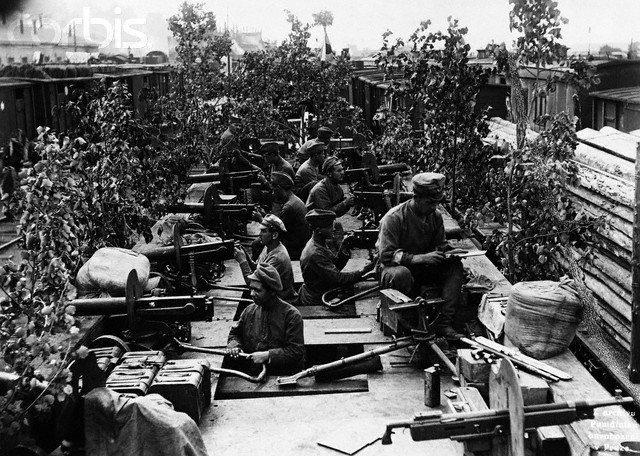
You read about rearguard actions against the Bolsheviks, and the stresses of command. This is Baron Wrangel’s description of General Slachtov, who was holding the Perekop Isthmus in the Crimea in 1920:
His face was deadly pale and his mouth never ceased to tremble, while tears streamed from his eyes… Incredible disorder reigned in his railway carriage. The table was covered with bottles and dishes of hors d’oeuvres; on the bunks were clothes, playing-cards and weapons, all lying about anyhow. Amidst all this confusion was Slachtov, clad in a fantastic white dolman, gold-laced and befurred. He was surrounded by all kinds of birds; he had a crane there, and also a raven, a swallow and a jay; they were hopping about on the table and the bunks, fluttering round and perching on their master’s head and shoulders
As for this account of the horses abandoned during the White Russians’ retreat from Omsk in 1919, you find it surreal and heartbreaking.
They were as tame as pet dogs, but nobody had time to stroke their noses. They stood in the streets ruminating over the remarkable change that had taken place in their circumstances. They walked into cafes. They wandered wearily through the deep snow. Droves of them blackened the distant hills.
After this, it makes complete sense to read a book about the Ukraine, then one about Armenia.
Tomorrow, you will write to Viktor, tell him you are well.
 Nick Holdstock