The Thorn in the Heart

Trailer for the new Michel Gondry movie, a personal look at the life of Gondry family matriarch, his aunt Suzette Gondry, and her relationship with her son, Jean—Yves. Michel examines Suzette’s years as a schoolteacher and her life in rural France.

Heaven knows when it will be out in the UK, but on the evidence of this it looks worth seeing- assuming you have any interest in the lives of actual people who are not vampires or tycoons with superpowers.

A wooden tongue

The same Noh mask at three inclinations.

From Ian Buruma’s review of the new William Vollman book in the latest NYRB:

If even our deepest desires are no more than delusions, then the objects of our desires are forever beyond our reach. But Vollmann, like most of us, though moved by the performance of Noh, is not ready for Buddhist renunciation. This, he writes, “is not what I wish to believe. I want to kiss the mask, and when I put my lips against its wooden emptiness, I want to feel a woman’s tongue in my mouth.”

The triumph of his tired eyes

I am overjoyed (yes, I am capable of it) to write that my colleague, friend and co-conspirator Ryan Van Winkle has been awarded the Crashaw Prize by Salt Publishing.

I will let you know when you can purchase his debut collection.

Now he will be buying me drinks.

This and that

A few things worth a look-

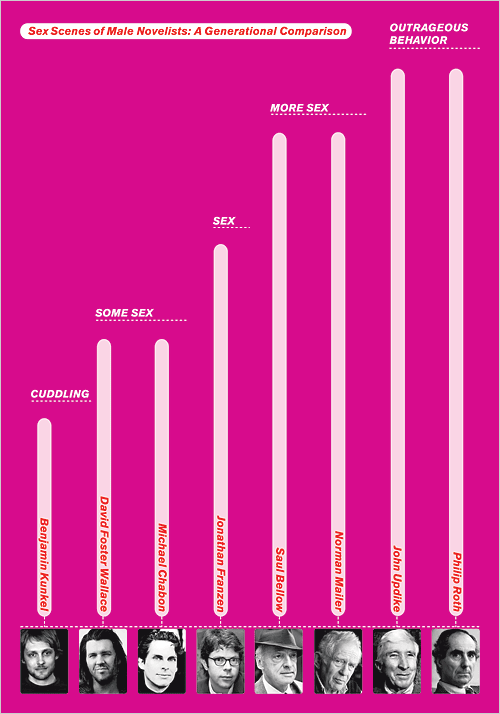
William Vollmann’s review of Ted Conover’s ‘The Routes of Man’; a new take on Salinger’s ‘A Perfect Day for Bananafish‘; the Great Male Novelists compared; why it isn’t worth being on Amazon sometimes; clip from the new Walker Percy documentary; and Zadie Smith’s rules for writers.

Recycle

During the 2008 US Presidential Election, The Onion ran a series of blog pieces purporting to be by Don Delillo (whose new novel Point Omega is just out), commenting on the political conventions in Minneapolis. There were several reasons why this seemed unlikely. The first was that The Onion is a satirical newspaper, famous for having articles whose headlines are punchlines in themselves (‘Massive Earthquake Reveals Entire Civilisation Called “Haiti”‘; ‘Man Who Enjoys Thing Informed He Is Wrong’), whereas Don De Lillo— one of the most lauded authors of his generation —has rarely been associated with either comic writing or direct political comment. The second was that the tagline for the author read ‘Master of Postmodern Literature’- surely too immodest a title to be taken seriously. Though an entirely accurate (and respectful) bio accompanied each piece (‘Don DeLillo is considered one of America’s greatest living novelists. His works explore themes of consumerism, alienation, and decontextualization, and include such towering postmodernist classics as White Noise, Mao II, and Underworld’), and though I wanted to believe that Don Delillo was writing for The Onion (The British equivalent of J.G. Ballard writing for Private Eye), in the end what convinced me that this could only be a fond parody was that one of the pieces began ‘He speaks in your voice, American’. This is the opening phrase of Underworld,  Delillo’s best-selling (and most praised) novel to date,  and thus not a phrase he seemed likely to re-use.  However, after reading through the pieces again, I had to conclude that they were at the very least a fair imitation of Delillo’s style:

In the air, invisible information. Uploads, downloads. Waves and radiation. Surrounding us both, on every side of the lobby, dozens more do exactly the same, typing with their thumbs into tiny silver death machines.

Whilst I hoped that this was a piece of self-parody, a wink at the notion that in postmodernity every text is a pastiche, even if it is only of your own work, I and most other commentators concluded that it had to be a hoax. The only indication to the contrary was an item in the New Yorker, said ‘to be from the writer himself.

Yes, I posted a blog for The Onion, but this was four years ago at the Republican Convention in New York. Evidently the report has been orbiting the blogosphere all this time. Note the prophetic reference to Sarah Palin.

All this did was muddy the waters, albeit of a debate that was somewhat less pressing than the questions being asked of the US electorate. Even if Delillo had written those pieces, and thus reused his opening phrase, did it really matter? The answer, I decided, was that it did not. And then Obama won.

But yesterday, whislt reading a collection of tributes to the late David Foster Wallace, I came across a piece by Delillo. At the end of his moving and appreciative eulogy (the pieces were first read out on 23 October, 2008 at New York University) there is a familiar phrase.

The words won’t stop coming. Youth and loss. This is Dave’s voice, American.

The idea that one should always avoid repetition in one’s work may be helpful for begining writers (‘the big dog chased the big man into the big field’ is probably not a good sentence) but done deliberately, as for example, throughout Faulkner’s work, repetition can be a very effective device.  Whilst there is an argument that a writer should always be looking for new ways to test the language, it is also true that sometimes the best way to express something has been said before, not only by others, but also oneself.

Beheaded by a laser beam

I haven’t been able to watch TV news in years, mostly due to the sterling efforts of Mr Chris Morris on programs such as The Day Today and Brass Eye.

But we all need booster shots, and here is one courtesy of Mr Charlie Brooker.

‘Non-buyers of carrots and turnips’

From left: Erik Ross, Lillian Ross, Matthew Salinger, J. D. Salinger, and Peggy Salinger, in Central Park.

The first rash of obituaries for J.D. Salinger seemed to add little to what we had known for years. That he had removed himself from the world (at least, the literary one) for decades, only emerging to defend his privacy, albeit sometimes at the cost of it. That he had been writing…  something during this time, but what this was, and whether we might dare to hope to see it, was no more certain than it had been for the last four decades.

However, now that the news cycle has moved on slightly (and perhaps also now that it is clear that this is not a hoax), people who had known Salinger are starting to come forward. Some of these are fairly minor, as one might expect from people who only had glancing, professional contact with Salinger (such as  Tim Bates, who corresponded with Salinger whilst working at Penguin, in the far distant days before he was my agent for a brief time. About this, let it merely be said that, like Salinger, I too remember him in my nightly prayers) whilst others are from people with a deeper connection, such as Lilian Ross of the New Yorker, who talks of his love for Emerson’s dictum that

“A man must have aunts and cousins, must buy carrots and turnips, must have barn and woodshed, must go to market and to the blacksmith’s shop, must saunter and sleep and be inferior and silly.” Writers, he thought, had trouble abiding by that, and he referred to Flaubert and Kafka as “two other born non-buyers of carrots and turnips.”

Ross’ piece is the first one to make me recall what I prize most in Salinger- not the talk of phonies and fakes, but the unswerving belief in innocence. What I would like to be able to call Goodness. There are whole clusters of feelings  we spend most of our adult lives avoiding, because of the risks they involve, because we lack the opportunity, or courage- these are what Salinger gives voice to. These are why it is worth reading (and re-reading) Franny & Zooey, Seymour: an introduction, and For Esme with Love and Squalor.

J. D. Salinger holding Lillian Ross’s son, Erik, and perhaps a little tiger too

Lynch’s Interview Project now free

There are now 80 (and counting) of these short interviews with ordinary people all over the US. Though I have only seen a few so far, each has the ring of the genuine. Each will only take 3-4 minutes of your time. I reccommend no. 67 (James Flory) as a place to start.

Wyatt Mason on Celine

Wyatt Mason, whose Sentences blog for Harpers is much missed, writes in the NYRB about Céline, not least his anti-semitism, one of the more virulent strands of his misanthropy.

To read any single novel by Céline is to receive, in a bracing style, a hysterical primer on the abjection of being. To read them all is to register a unique species of racism: a hatred not of particular elements of humanity but of the human race as a whole. Thus Jean Giono said of Céline’s writing, “If Céline had truly believed what he wrote, he would have killed himself.”

How do you catch a hold of yourself before it’s over?

Trailer for Win Riley’s forthcoming documentary about Walker Percy, appropriately featuring Richard Ford, who has spoken often, and eloquently, about the influence of Percy’s The Moviegoer on The Sportwriter.

Coming to a shelf near you…

I have a piece on the London Review of Books blog about the use of video trailers for literary fiction. It features a wonderful animation for Kazuo Ishiguro’s Nocturnes, and also one of Pynchon giving a monologue.

DFW story in The New Yorker

I can’t recall the last time I saw a story in the New Yorker by a writer I hadn’t heard of (i.e. someone like me). From what I gather, a lot of the ‘biggest’ (by which I mean prestige, not size) writers have exclusive contracts with them, so there is really no reason for them to ever look in the virtual slush pile- I’m amazed they even accept unsolicited fiction.

This, however, is not to complain. All the fiction they publish is available free online, which is why I am able to urge you to click your way to the late David Foster Wallace’s beautiful, sad, and very genuine story ‘All That’ which I’m guessing is an extract from his unfinished novel, The Pale King, due in April 2011.

Entitled

I’m currently reading (and much enjoying) Frank Kermode’s (1967) The Sense of an Ending, which is about how narratives, both spiritual and profane, use their respective ends (often death, and the Apocalypse) to structure themselves.

The age of perpetual transition in technological and artistic matters is understandably an age of perpetual crisis in morals and politics. And so, changed by our special pressures, subdued by our scepticism, the paradigms of apocalypse continue to lie under our ways of making sense of the world.

There’s a piece on him in today’s Guardian, and he’s also giving a talk on ‘Shakespeare and the Shudder’ on February 8th at the British Museum. He has two new books coming out, one on E.M. Forster, the other a collection of pieces from the LRB.

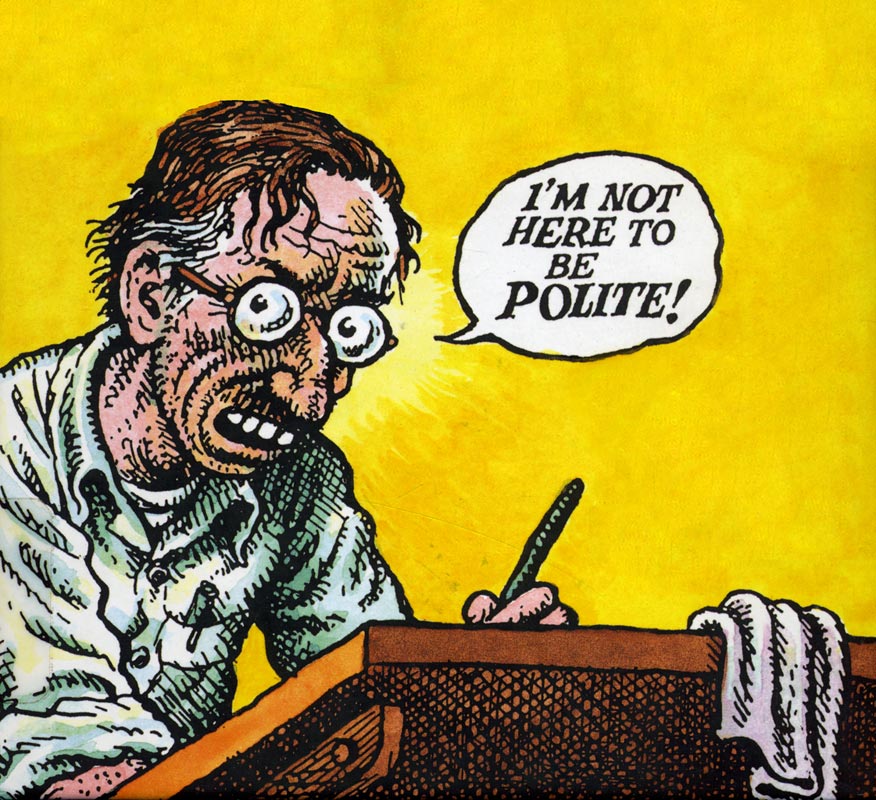
Crumb and Speigelman talk comics

A very enjoyable account of their conversation from The Rumpus:

Spiegelman has drawn Santa pissing in the snow next to a “Remember the Homeless” sign, Bill Clinton getting a blowjob in front of a firing squad. In regard to a published New Yorker cover depicting a Hassid kissing an African-American woman, Spiegelman says a girl wrote him a letter saying how nice it was for him to have drawn Abraham Lincoln kissing a slave.

A Working Life

A friend of mine, Erlend Clouston, has been writing a series of wonderful pieces for The Guardian about some of the less glamorous and yet most essential jobs in Scotland. I particularly reccommend the piece on the The Forth bridge painters and the one about a marine engineer on the Calmac ferries.

For some reason, these have appeared in the Money section of the Guardian, rather than in G2, perhaps because they have insufficient celebrity or scandal content. By putting them in a section which few of us read, the Guardian seems to be affirming the notion that these jobs, though essential, are better off unseen.

Cormac McCarthy Interview

Cormac Mccarthy, mid-1960s

A rare, intriguing, and somewhat provocative interview with Cormac Mccarthy and ‘The Road’ director John Hillcoat at the Wall Street Journal.

I don’t find it surprising that he describes the ‘800-page books that were written a hundred years ago’ as ‘indulgent’, though I cannot agree. McCarthy has said he has no interest in authors who do not ‘deal with issues of life and death’, but it seems to me that there are other, equally valid concerns for an author, some of which cannot be dealt with in a concise manner.

Great corrections #1

fowl1

From a review of the new Jonathan Safran Foer book about vegetarianism in the Nov. 9th New Yorker:

Correction, November 4, 2009: The number of chickens currently being raised in the United States is nearly two billion, not four hundred and fifty billion, as originally stated.

I like that no one noticed this- I wonder how many chickens it would take to fill the US- can someone please do the math?

Too long in the library #3

Pablo-Picasso-The-Dream-7558

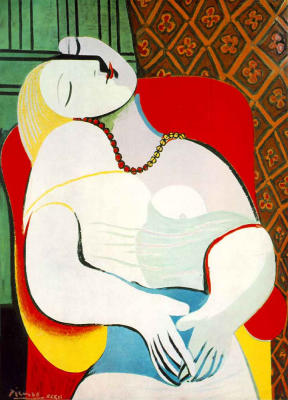
The Dream by Pablo Picasso

When people ask me what my PhD is about (almost a weekly occurence), my current answer is that it’s on Thomas Pynchon and [blank]. At the moment I’m trying some different words in this space- ‘visions’, ‘utopia’, occasionally ‘time’. The combination of these words led me to Frederic Jameson’s Archaelogies of the Future, a book about the constructions and uses to which utopias have been, and might be, put. Though I have a passing familiarity with Jameson’s work from his reviews in the LRB, this is the first time I have been exposed to a book-length display of his erudtion. He quotes this passage by Freud about creativity as a kind of wish fulfilment:

You will remember how I have said that the day-dreamer carefully conceals his phantasies from other people because he feels he has reasons for being ashamed of them. I should now add that even if he were to communicate them to us he could give us no pleasure by his discolsures. such phantasies, when we learn them, repel us or at least leave us cold… The essential ars poetica lies in the technique of overcoming the feeling of repulsion in us.

Jameson puts this is in simple terms I think we can all relate to.

Anyone who compares the fascination we often feel for our own dreams with the boredom that suddenly overcomes in listening to the account of another will know what Freud means.

Art, then, consists of disguising and softening the egotistic content of such day dreams or phantasies, by bribing the reader, viewer, or listener with aesthetic pleasure. In my opinion, there is nothing that needs more disguising than a dream itself. But in their efforts to make the dreams of others interesting, most writers or film makers usually end up with too simplified a product, whose symbolism is too overt. The demons our heroine is pursused by are those we have already seen.

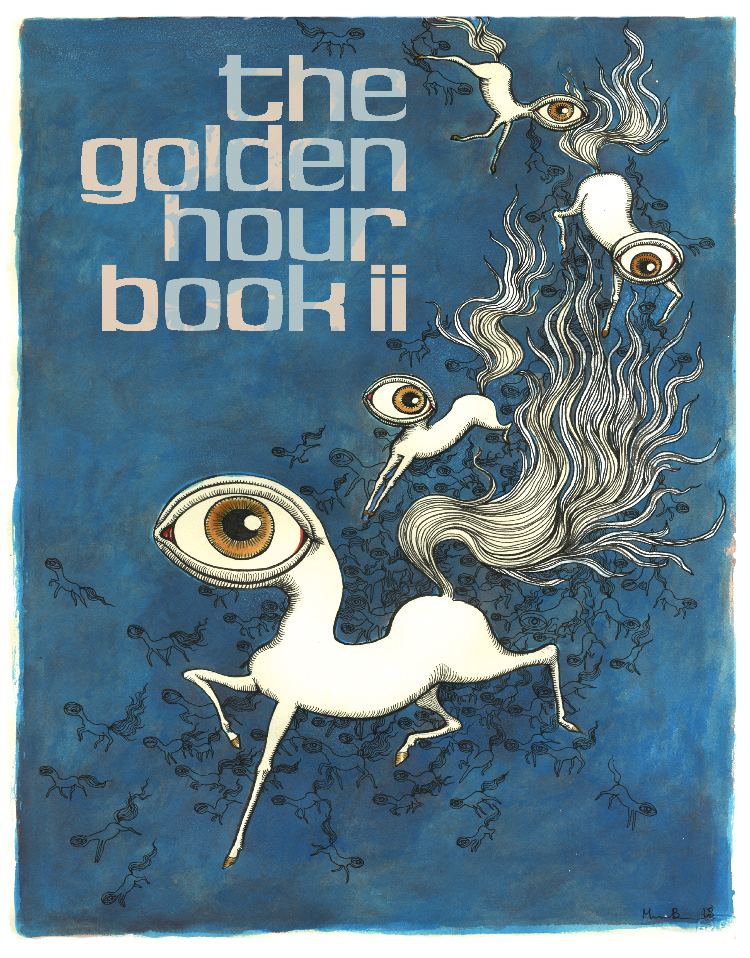
The Golden Hour Book Vol. 2

cover_web

Now on sale from Forest Publications, the latest volume of prose, poetry and music (it comes with a CD) from the monthly Golden Hour cabaret at the Forest Cafe in Edinburgh.

It features contributions from Andrew Philip, Alan Gillis, Robert Alan Jamieson, Kapka Kassabova and myself. Ron Butlin, Edinburgh’s current Makar, had this to say about it

‘There is genuine wit, deep feeling and real entertainment in this most enjoyable volume. Light-hearted and serious by turns, ‘The Golden Hour Book Volume II’ contains some of the best and freshest new writing I have come across for quite a while.’

You can now also buy Stolen Stories (an anthology I c0-edited) from the Forest Publications site, as well as many other fine publications.

Interview with Mary-Kay Wilmers, editor of the LRB

51zjkpr+LpL._SS500_

Today’s Guardian has a detailed profile of Mary-Kay Wilmers, editor of the LRB, which reveals that she was the person who came up with the title for Oliver Sacks’ book, The Man Who Mistook His Wife For a Hat. The Eitingons, a memoir of her family, will be out in November.

‘We play football, we play soccer — We keep matzohs in our locker’

newark_coleman01

Very odd story about Philip Roth joining a tour of Philip Roth’s, Newark. If this were in one of his novels, no one would recognise him and he would be chased away from his old haunts, forced to wander through back alleys in dejected irony.

Reviewing by numbers

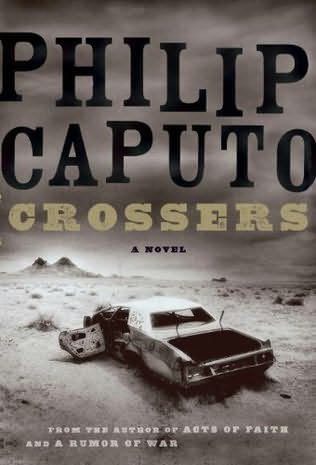
n305873

There’s a chance of me doing some reviewing in the near future, so I am of course paying particular attention to such pieces, especially the lead sentence. The following, from William T. Vollmann’s review of Philip Caputo’s Crossers, seems like it could be endlessly reused, with only the author’s name altered.

Once when I was so weak with amebic dysentery that all time not spent on the toilet was passed in bed, I found in my host’s house one book in a language I could read. It was one of those storm-tossed but ultimately upbeat women’s romances, a genre I had not yet sampled. I read it, then read it again and again, since there was nothing better to do. If I ever have the luxury of repeating such an experience, I hope to do so with a Philip Caputo book.

All I would need after that is a plot summary and a few sentences of mostly unsubstantiated opinion. That usually does the trick.

Vasectomania, and other cures for sloth

A rebellious monkey refuses to give up its glands

A rebellious monkey refuses to give up its glands

Cabinet magazine issue 29 has a fascinating article on the use of monkey glands by Christopher Turner.

The physiologist Serge Voronoff, a Russian working in Paris, was one of the most infamous of the gland doctors. He thought that the lazy, mentally disabled, run-down, and aged could be revitalized by testicular transplants. Many wealthy men underwent the costly surgery; Voronoff transplanted the testes of executed criminals into millionaires. Legal contracts were drawn up with prospective donors, but apparently willing individuals were in such short supply that what one scientist called a “despicable trade in organs” began to develop. According to one newspaper, men were even being mugged for their testicles, “knocked unconscious and then robbed of the long-sought-for organs.”

Voronoff solved this crisis by slicing and grafting the testicles of monkeys onto those of the men who sought his treatment. In his book, Rejuvenation by Grafting (1925), Voronoff promised the patients who acquired his monkey glands that they’d be able to work longer, and that they would be blessed with improved memories, eyesight, and sex drives. He set up a special breeding center on the Italian Riviera for chimpanzees, gorillas, and orangutans that was run by a former circus-animal keeper.

Genteelisms

David Foster Wallace was a contributing author to the Oxford American Writer’s Thesarus. This is his note on the word ‘pulchritude’

A paradoxical noun because it means beauty but is itself one of the ugliest words in the language. Same goes for the adjectival form pulchritudinous. They’re part of a tiny elite cadre of words that possess the very opposite of the qualities they denote. Diminutive, big, foreign, fancy (adjective), colloquialism, and monosyllabic are some others; there are at least a dozen more. Inviting your school-age kids to list as many paradoxical words as they can is a neat way to deepen their relationship to English and help them see that words are both symbols for things and very real things themselves.

In the above clip, he responds to the use of phrases like ‘prior to’ and ‘at the present time’, and even finds time to take a swing at ‘utilise’ and ‘individual’.

WARNING: you should only bother watching it if you’re interested in, you know, words.

More on DFW and the Thesarus at Maud Newton

Scottish Journey

Canongate Tolbooth

Canongate Tolbooth

The pleasures of travel writing are obvious. We visit places, and meet their inhabitants, with none of the trouble, expense (and sometimes, danger) a real trip might entail. There is no risk of missed connections, inclement weather, of being hurt or robbed (and even if these mishaps occur, it is not to us, which makes them enjoyable). Best of all, there is no chance of boredom, of knowing you are wasting more time and money than usual. In place of the meaningless sequence of events that make up most trips, there is always a purpose, better still, a narrative. In travel books, things are always done for a reason (even if it is only so they can be written about).

Consider then the added appeal of the out of date travel book (by which I mean those that are non-contemporary). One is transported in not just space, but time as well. One need not resent the author for showing oneself up by virtue of having gone somewhere, and done something, which one could easily have done, given enough nerve or imagination.

Edwin Muir’s Scottish Journey, based on his travels in 1934, provides all these pleasures, plus the added one of being about the place I currently live in.

The first sight of Edinburgh after an absence is invariably exciting. Its bold and stony look recalls ravines and quarried mountains, and as one’s eye runs up the long line of jagged roofs from Holyrood to the Castle, one feels that these house-shapes are outcroppings of the rocky ridge on which they are planted, methodical geological formulations in which, as an afterthought, people have taken to living… Perhaps it is the height of the houses, the great number and smallness of the windows, and the narrowness of the space in which one has to walk that give [a] sense of watchfulness and sinister familiarity. But there is in it, too, something of the terror of narrow rocky passes in savage and possibly inhabited regions.

Often, he articulates thoughts that have gurgled in my own mind:

Nowhere that I have been is one so bathed and steeped and rolled about in floating sexual desire as in certain streets of Glasgow and Edinburgh.

The joy of his book (for me at least) is that it is both familiar and strange (a contradictory combination that one, from habit, declines to believe is possible, until it occurs with particular force, from sentence, to paragraph, then page). One sees the city as it was, as it is, as it may perhaps shall be. There is an awareness of what has survived amidst the spill of change.

Edinburgh has a style, and that style was at one time, indeed as recently as a century ago, the reflection of a whole style of life. While the city itself remains, this style of life has now been broken down, or rather submerged, by successive waves of change which were first let loose during the Industrial Revolution, an event that has on a large scale swept from the great towns of Europe the character they once possessed. the waves have almost completely submerged London; but Edinburgh, being a high, angular place, is more difficult to drown. So it presents outwardly the face it had a hundred years ago, while within it is worm-eaten with all the ingenuity in tastelessness which modern resources can supply.

Hear, hear, one thinks, but does not say (after 9 years, still not feeling one has the right).

So although Edinburgh is Scottish in itself, one cannot feel that the people who live in it are Scottish in any radical sense, or have any essential connection with it. They do not even go with it. They look like visitors who have stayed there for a long time.

There is still this air of transiency, of people who were passing through but never made it out the other side. As I mentioned earlier this year, I do still (occasionally) try and move on. It may happen. It may.

Sale of stuff

In a rearguard action to gain some shelf-space (and to support various legal ‘habits’) I’m selling some magazines and anthologies I’ve been in. I only have a few copies of each, so fortune will favour the bold.

For £6 (+£1 postage, UK only) you can get a copy of The Southern Review, which my story ‘The Ballad of Lucy Miller’ appeared in. Here’s a short Review of it.

tsr_spring2009

For the same price, there’s the Edinburgh Review special issue on China that has a non-fiction piece about Xinjiang.

124

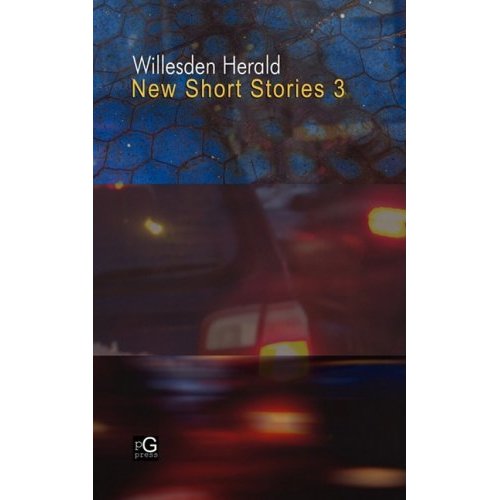
For £7 ((+£1 postage, UK only) you can buy a copy of the Willesden Herald Anthology that features my story ‘Amy’, and a fine story by Jo Lloyd entitled ‘Work’. There’s a review here.


41dOHV+K4fL._SS500_

Payments only accepted by PayPal. Send the £7 or £8 to nholdstock@hotmail.com