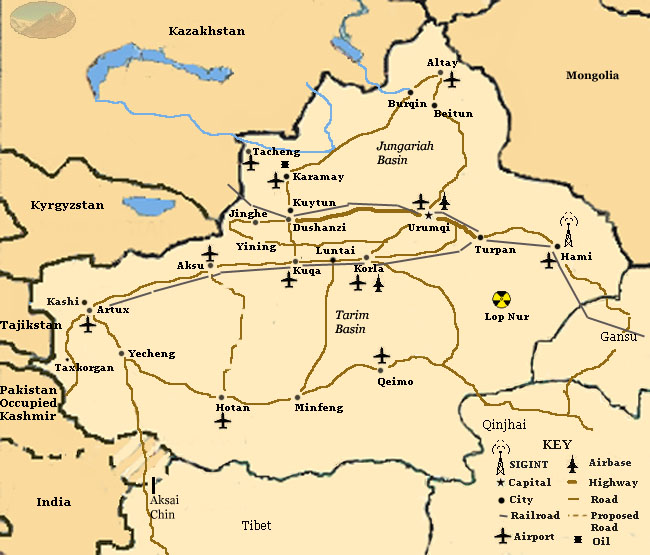
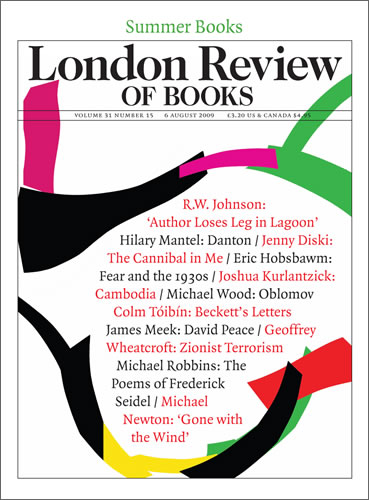
I have a new entry on the The London Review of Books Blog about the recent arrests of some alleged bomb makers in Aksu.
Genteelisms
David Foster Wallace was a contributing author to the Oxford American Writer’s Thesarus. This is his note on the word ‘pulchritude’
A paradoxical noun because it means beauty but is itself one of the ugliest words in the language. Same goes for the adjectival form pulchritudinous. They’re part of a tiny elite cadre of words that possess the very opposite of the qualities they denote. Diminutive, big, foreign, fancy (adjective), colloquialism, and monosyllabic are some others; there are at least a dozen more. Inviting your school-age kids to list as many paradoxical words as they can is a neat way to deepen their relationship to English and help them see that words are both symbols for things and very real things themselves.
In the above clip, he responds to the use of phrases like ‘prior to’ and ‘at the present time’, and even finds time to take a swing at ‘utilise’ and ‘individual’.
WARNING: you should only bother watching it if you’re interested in, you know, words.
More on DFW and the Thesarus at Maud Newton
An army with no uniforms
I have a letter in the new LRB (dated September 24) which expands on one of the major causes of unrest in Xinjiang: the massive resettlement of Han Chinese in the province, many of whom are part of the Xinjiang Production and Construction Corps, a paramilitary organisation that has a controlling presence in both agriculture and industry in the region. I also respond to the claim (made in a letter responding to my piece) that the reports of atrocities during the riots in Urumqi in early July were in all liklihood true.
When I lived in Xinjiang I thought I understood how pervasive the XPCC presence was. In the process of doing only mild research, I have come to realise that I still underestimated the extent of their influence- they have their own TV station, they have built their own cities, and even have a parallel education system, from primary schools all the way up to university. Although parallels are often drawn between Xinjiang and Tibet, perhaps an equally instructive one could be drawn between the Israeli settler movement and the activities of the XPCC.
Scottish Journey
The pleasures of travel writing are obvious. We visit places, and meet their inhabitants, with none of the trouble, expense (and sometimes, danger) a real trip might entail. There is no risk of missed connections, inclement weather, of being hurt or robbed (and even if these mishaps occur, it is not to us, which makes them enjoyable). Best of all, there is no chance of boredom, of knowing you are wasting more time and money than usual. In place of the meaningless sequence of events that make up most trips, there is always a purpose, better still, a narrative. In travel books, things are always done for a reason (even if it is only so they can be written about).
Consider then the added appeal of the out of date travel book (by which I mean those that are non-contemporary). One is transported in not just space, but time as well. One need not resent the author for showing oneself up by virtue of having gone somewhere, and done something, which one could easily have done, given enough nerve or imagination.
Edwin Muir’s Scottish Journey, based on his travels in 1934, provides all these pleasures, plus the added one of being about the place I currently live in.
The first sight of Edinburgh after an absence is invariably exciting. Its bold and stony look recalls ravines and quarried mountains, and as one’s eye runs up the long line of jagged roofs from Holyrood to the Castle, one feels that these house-shapes are outcroppings of the rocky ridge on which they are planted, methodical geological formulations in which, as an afterthought, people have taken to living… Perhaps it is the height of the houses, the great number and smallness of the windows, and the narrowness of the space in which one has to walk that give [a] sense of watchfulness and sinister familiarity. But there is in it, too, something of the terror of narrow rocky passes in savage and possibly inhabited regions.
Often, he articulates thoughts that have gurgled in my own mind:
Nowhere that I have been is one so bathed and steeped and rolled about in floating sexual desire as in certain streets of Glasgow and Edinburgh.
The joy of his book (for me at least) is that it is both familiar and strange (a contradictory combination that one, from habit, declines to believe is possible, until it occurs with particular force, from sentence, to paragraph, then page). One sees the city as it was, as it is, as it may perhaps shall be. There is an awareness of what has survived amidst the spill of change.
Edinburgh has a style, and that style was at one time, indeed as recently as a century ago, the reflection of a whole style of life. While the city itself remains, this style of life has now been broken down, or rather submerged, by successive waves of change which were first let loose during the Industrial Revolution, an event that has on a large scale swept from the great towns of Europe the character they once possessed. the waves have almost completely submerged London; but Edinburgh, being a high, angular place, is more difficult to drown. So it presents outwardly the face it had a hundred years ago, while within it is worm-eaten with all the ingenuity in tastelessness which modern resources can supply.
Hear, hear, one thinks, but does not say (after 9 years, still not feeling one has the right).
So although Edinburgh is Scottish in itself, one cannot feel that the people who live in it are Scottish in any radical sense, or have any essential connection with it. They do not even go with it. They look like visitors who have stayed there for a long time.
There is still this air of transiency, of people who were passing through but never made it out the other side. As I mentioned earlier this year, I do still (occasionally) try and move on. It may happen. It may.
No reason other than the image
Politically Dangerous
I’ve written an update on the situation in Urumqi for the London Review of Books Blog.
Willesden Herald competition
The Willesden Herald short story competition is now open, and worth entering for several reasons.
Firstly, in addition to three prize-winners, they put out an anthology that features the top 10 stories, so unlike many other competitions, there’s a chance of publication even if you’re not in the top 3 (which I wasn’t last year).
Secondly, though you have to pay to enter this year (as opposed to the previous years, when it was free), it’s only £3, far less than competitions like the Bridport prize (about which I should also like to say that no one who places highly in it seems to be ever heard from again).
Thirdly, if we have even a passing interest in having any sort of literary culture that does not revolve around celebrity-written memoir or novels, we’re going to have do some work ourselves. Which means buying literary magazines and supporting small presses, not dutifully, or because we feel we should, but because there’s a lot of good work out there which will otherwise be ignored (especially if, as Mr James Kelman said earlier this week, it falls outside the more heavily-marketed genres).
Sale of stuff
In a rearguard action to gain some shelf-space (and to support various legal ‘habits’) I’m selling some magazines and anthologies I’ve been in. I only have a few copies of each, so fortune will favour the bold.
For £6 (+£1 postage, UK only) you can get a copy of The Southern Review, which my story ‘The Ballad of Lucy Miller’ appeared in. Here’s a short Review of it.
For the same price, there’s the Edinburgh Review special issue on China that has a non-fiction piece about Xinjiang.
For £7 ((+£1 postage, UK only) you can buy a copy of the Willesden Herald Anthology that features my story ‘Amy’, and a fine story by Jo Lloyd entitled ‘Work’. There’s a review here.
Payments only accepted by PayPal. Send the £7 or £8 to nholdstock@hotmail.com
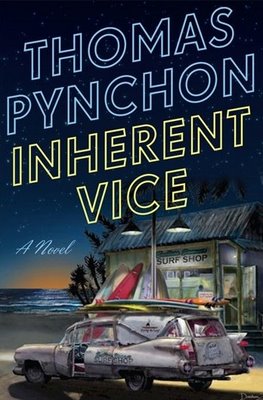
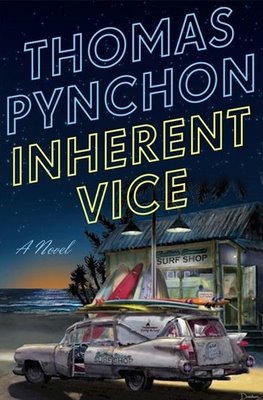
Inherent Vice, Chapter 6
PLOT
Doc has lunch with Deputy DA Penny Kimball, with whom he’s having a low-key affair. For the most part, she questions him about Wolfmann and Sasha’s disappearances and the murder. She also asks about two stewardessess, Lourdes and Motella (or as Pynchon puts it, ‘stewardii’), and their connection to two guys named Cookie and Joaquin. Finally, she passes him onto the FBI, who question him, also about the stewardii. When he meets up with them later they go to Club Asiatique, where Doc meets up with the not-deceased Coy Harlingen, who warns him about the Golden Fang, a shadowy organisation based around a boat of the same name.
As I may have mentioned before (and will doubtless do so again), after a while it is hard to take anything in Pynchon’s novels literally. Everything starts to seem ominous, symbolic, a synedoche of the vast, but perhaps not entirely organised conspiracy that may (or even worse, may not- which would mean we were (gulp) responsible for the ills of the world) be in operation. So it is with Penny’s take on Doc’s frequent passing-out (p.69-70), most notably before Glen Charlock’s murder (in Chapter 2. Or 3).
“Besides, maybe you did do it, has that crossed your mind yet? Maybe you just conveniently forgot about it, the way you do so often forget things, and this peculiar reaction of yours now is a typically twsited way of confessing the act?”
On the simplest level, this is about Doc trying to evade responsibility, which is perhaps all that he can do. Pynchon’s characters are often cursed with the knowledge of what needs to be done, what should be stopped, but usually have neither the idea, means or opportunity of how to do so. In the face of such impotence, who can blame them for taking recourse in whatever comfort comes to hand? As Coy comments on page 86.
Only one or two of the old crew are left, and they’re suffering, or do I mean blessed, with heavy Doper’s Memory.
But since this is a historical novel, Pynchon may be suggesting that this kind of thinking is what has led to our twisted present. Also, that we need to do the opposite, to prevent things from getting worse (no one should ever doubt that this is possible).
On page 70 there’s a brief, almost summary-like passage about the case against trust.
He wished he could believe her more, but the business was unforgiving, and life in psychedelic-sixties L.A. offered more cautionary arguments than you could wave a joint at against too much trust, and the seventies were looking no more promising.
On page 73 there’s a mention of a ‘demonstration against NBC’s plans to cancel Star Trek‘, which, even more the passage discussed above, could be there for period detail, for plain fun (‘a convoy of irate fans in pointed rubber ears’) or as a nod to the death of utopian visions. We may never know.
There is a further attempt to make Doc an informer on p.75
More images of concealment on p.80.
At night it [Club Asiatique] seemed covered, in a way protected, by something deeper than shadow- a visual expression of the convergence, from all around the Pacific Rim, of numberless needs to do business unobserved.
Inherent Vice Chapter 5
PLOT: Doc goes to visit Wolfmann’s wife, who lives in a luxurious house and has the requisite beefy yoga instructor with whom she may be in league. Just to compound her potential villany, she has an ‘English smoker’s voice’ (p.55). Unsurprisingly, he doesn’t discover much except for a rack of pornographic ties.
p.55/56- Doc pretends to be from an organisation called MICRO, the ‘Modern Institute for Cognitive Repatterning and Overhaul’. We can read this as a continuation of the not especially subtle linking of computers with the less permissive times to come. But I think there’s another side to this, namely the optimism with which some looked forward to a machine-orientated future, one where people would have more time for themselves (which, now that I write this, suddenly doesn’t seem such an absolute good), be ‘freer’ etc. This dream, alas, seems to have gone the way of that of the counter-culture.
The idea that everyone‘s dreams are spiralling away from fulfillment is even partially extended to the police. On page 57 the LAPD are getting in some ‘last minute catering before their federal overlords showed up’ and then on page 65 a uniformed cop who is riding with Bigfoot is listening to them
way too attentive, maybe even, if you wanted to be paranoid about it, as if he was undercover, reporting to some other level inside the LAPD, his real job basically, to keep an eye on Bigfoot…
It is not just the subculture of stoner-hippiedom that is going to lose out, but also those who support the status quo (no ‘system’ ever being concerned with the greatest good for the greatest number).
A fine joke on p. 58 about misattributing a quote from Robert Moses (who the Pynchon wiki says was “master builder” of mid-20th century New York City, Long Island, and Westchester County, New York. His career is summed up by his sayings “cities are for traffic” and “if the ends don’t justify the means, what does?)
You get that first stake driven, nobody can stop you.
to Van Helsing, the vampire hunter. In addition to being funny, this links the disparate enterprises of real estate, urban planning and perhaps surveying (see Mason & Dixon) to dark and unholy practices, the sucking of lifeblood etc.
Extended reference to John Garfield on p.58-59 (liberal actor who refused to name names when called before the House Committee on Un-American Activities, which led to his ruin).
Doc has a sudden erection on p.59 at the mere mention of Ida Lupino.
Every time her name comes up, so does this.
This recalls the conditioned erections of Tyrone Slothrop in Gravity’s Rainbow.
Finally, I am indebted to the Pynchon wiki for decoding ‘Arrepentimietno’ on page 62.
Spanish: n. repentance, penitence, contrition–all concepts important to Inherent Vice. There’s also a cool trilingual pun here: “pentimento” (now an English word, but from the Italian for ‘repent’) refers to an image in a painting that was painted over but then, with time, begins to show through the top layer of represented images.
‘A profound lesson in blood’
I have a new piece about Xinjiang at Eurozine, which is a bit more speculative than my piece in the London Review of Books. It also fills in some of the gaps of the last few years, between the time I left Yining (2002) and the Urumqi riots in July.
These are not my twisted words
One day, when I am too bloated with fame and adulation and the blurbs on my back-covers, I shall no doubt be comissioned to write 500 words on why I love Radiohead. Thankfully, for all concerned, that day remains far distant.
It is definitely much more fun to dance about architecture.
And to download (legally and for free) their new song here.
Inherent Vice, Chapters 3 & 4
These are both very short chapters that mainly convey plot (that Bjornsen and Mickey G are close friends, and that Doc used to be a repo man).
Chapter 4 has this interesting passage:
Suddenly he was on some planet where the wind can blow two directions at once, bringing in fog from the ocean and sand from the desert at the same time, obliging the unwary driver to shift down the minute he entered this alien atmosphere, with daylight dimmed, visibility reduced to half a block, and all colors, including those of traffic signals, shifted radically elsewhere in the spectrum. (p.50)
Once again, Pynchon is describing an altered state of perception, this time the product of two elements that he has previously singled out (sand, in the references to the beach and the desert, and fog, or rather its polluted equivalent, smog). The aim here, as perhaps before, is to defamiliarise the setting, to highlight a loss of vision, certainly immediate, perhaps also on a grander scale (Doc here, as in Chapter 2, is driving whilst experiencing this).
The other point of interest is the ARPA, a forerunner of the Internet, which is described as looking like a ‘science fictional Christmas tree’ (p.53), which is a more positive image than the mention of precursors to search engines in Chapter 2, which should caution us not to confuse Pynchon with a technophobe.
There is also a not particularly subtle aside about the only weapon Doc carrying when he was a repo man was a truth serum that looked like a set of drug ‘works’. What is more interesting is that he never ended up using it.
It wasn’t long before he noticed how many of the delinquents he and Fritz visited seemed unable to keep their eyes off of it. He understood that if he was lucky, he might not have to so much as unzip it (p.52).
‘Lucky’ could be read as being ironic- that maybe it is not wholly fortunate to avoid the truth (though there are of course many good reasons why people work so hard at their denial). There is a fundamental dilemma in trying to analyse these kinds of passages, not just in Pynchon, but also in postmodern literature in general, which is that of tone. As Linda Hutcheon has pointed out, it is often difficult to know just how much of an ironical attitude we should assume on the part of the author. Sometimes this means we just have to read more carefully; at other times, all we have to go on are our preconceptions.
The Rumpus
Seth Fischer writes a good piece about the continuing pariah status of the short story (in publishing, at least) at The Rumpus, a great site which I urge you to check out, not least because, along with sections on Art, Music, Books and Politics, it has the decency (yes, that is the word, I think) to have one for Sex as well. Peter Orner’s column is also particularly good.
Inherent Vice, Chapter 2
PLOT
Doc goes to Channel View Estates to find Glen Charlock, Tariq’s friend (and Wolfmann’s bodyguard). On arriving the scene morphs into a brothel, then Doc loses consciousness, only to wake up with Charlock murdered and himself a suspect. Bigfoot Bjornsen of the LAPD eventually releases him, then tries to persuade him into becoming an informer. Mickey is reported as missing, as is Shasta. Doc gets a call from a woman named Hope Harlington, asking him to try and find her dead husband Coy.
The chapter opens with a description of the different kinds of vehicles on the freeway, what amounts to social typology, all of whom are subject to
the white bombardment of a sun smogged into only a smear of probability, out in whose light you began to wonder if anything you’d call psychedelic could ever happen or if- bummer!- all this time it had really been going on up north.
There is lot to unpack here. First, a general proposition about the unreliability of knowing even something as concrete (and natural) as the sun (and light, for Pynchon, is a frequent image- e.g. the frequent mention of splitting and refraction in Against the Day); then there is the uncertainty that in such light, which has been filtered through smog (an industrial product), anything psychedelic can happen. Before we go any further, let’s define some terms.
Psychedelic adj. 1a Expanding the mind’s awareness. (Oxford Concise English Dictionary)
My feeling, then, is that we shouldn’t get too hung up on the drug use in itself. What perhaps matters more is their effect (and also, I guess, that they are prohibited, controlled substances). I would like to plop down the opinion that this passage is about how constricted our awareness is in the modern world, how everything is mediated and controlled by the technological web (as also symbolised by the cars which everyone, despite differences in age, wealth and status, are driving) we have enmeshed ourselves in. The only snag is that I have no frakkin’ idea what that bit about ‘going on up north’ means.
There is a recurrence of the epigraph on page 20, but instead of beach, there is now ‘desert beneath the pavement’ , a much starker image, with connotations of ruin (past, future, imagined, actual) and sterility.
Doc, after realising that the ‘Pussy Eaters Special’ does not require his participation, experiences a spatial distortion and passes out. It’s too early to say whether this blackout is mainly for the purposes of plot (it also makes the transitions between scenes much simpler) or whether it is motivated (as a kind of avoidance, denial etc).
Nice piece of irony on page 24. Bjornsen, after being exposed as an avid collector of ‘all kinds of Wild West paraphenalia’, is quick to agree with Doc that it is a ‘man’s own business what he puts in his pick-up’ (p.25), yet constantly mocks Doc’s drug use and calls him ‘hippie scum’.
Hilarious notion of Donald Duck having to shave his beak (p.28).
When Bjornsen explains the murder on TV (p.30), he concocts a story about it being from some civilians taking place in a ‘training exercise in anti-guerrilla warfare’, what he calls a ‘harmless patriotic scenario’ gone tragically wrong. In addition to satirising the media’s need to make everything into a synecdoche (a crime one could never accuse a literary analyst of), Pynchon may also be making a wider political comment on American militarism.
Ominous predictions on page 32 and 40- the former from Bjornsen about Nixon having ‘the combination to the safe’, the latter from Doc about it being ‘perilous times, astrologically speaking, for dopers’ who’d been born between ‘Neptune, the doper’s planet, and Uranus, the planet of rude surprises’. Which I think we can also take as meaning that the counter-culture is about to be shit on.
Story Shop
Pynchon narrates trailer for Inherent Vice
Yes, apparently so, according to Penguin.
For my money, better than a photo, hearing the old master’s voice.
Still feels strange to have a trailer for a book.
Inherent Vice, Chapter 1
By way of introduction, let me say that my aim here is simply to record the experience of reading IR– the thoughts and associations that occur, and presumptuously, the pleasure of it -not to attempt to deliver any kind of verdict or review (at least not until the end). I’ll be reading each chapter twice, once in a normal fashion, the second time with an eye for things that seem strange/interesting/generally symbolic, my hope being to pull out material to which I shall return. I shall attempt a telegraphic plot summary, but I’m expecting this to fall by the wayside at some point. All page numbers are from the Jonathan Cape UK hardback edition.
So:
‘Inherent Vice’ is a legal tenet referring to a “hidden defect (or the very nature) of a good or property which of itself is the cause of (or contributes to) its deterioration, damage, or wastage. Such characteristics or defects make the item an unacceptable risk to a carrier or insurer. If the characteristic or defect is not visible, and if the carrier or the insurer has not been warned of it, neither of them may be liable for any claim arising solely out of the inherent vice.”
There are number of things this suggests: ‘original sin’, and its implications of humanity being cast out of Eden; that a given decline (or fall) was inevitable; that this or some other defect, being part of our nature, means that no one is ultimately responsible, save perhaps our manufacturer.
The epigraph, ‘Under the paving-stones, the beach!’ is attributed to Paris, May, 1968, when the stones were lifted and thrown at the police (and by extension, the authorities). For all its apparent exuberance, the suggestions of freedom, nature etc, perhaps this has a more somber implication, because if you lift the paving-stones (whether to throw them or not) there is no beach, just more of the city- hard, unyielding rock.
PLOT
Chapter 1 has the classic noir set up of a private investigator (‘Doc’) being visited by a desirable ex-girlfriend (Shashta) who claims to be in trouble owing to a proposed double cross of her lover Mickey Wolfmann.
Tonight she was all in flatland gear, hair a lot shorter than he remembered, looking just like she swore she’d never look.
We can take this as basic description. But we can also see it as the start of a theme about people (and societies) changing, perhaps inevitably, about the difficulty of maintaining ideals. It continues:
“That you Shasta?”
“Thinks he’s hallucinating.”
“Just the new package I guess.”
And whilst we might still be on the first page, it’s not too early to start asking why Pynchon has made this a psychedelic noir- is it supposed to be a paean for a more liberated time, an apologia for escapism, or a slightly harder view of the many different things we do our ‘best’ to deny?
Pg 4 and 6 have characters distrusting technology, Shasta saying she tries to never use the telephone, then a more substantial passage about Doc’s Aunt Reet who prophesises the coming of search engines that will tell ‘you more than you want to know’ (perhaps a nod to our need for delusion), then speaks of ‘the stories that seldom appeared in deeds and contracts’, the more personal stuff that there will be no record of. This is an old thematic horse of Pynchon’s, previously, most lovably ridden in Gravity’s Rainbow and Mason & Dixon.
Page 5 has Doc being cynical about the idea of ‘free-love’- especially for its “other useful applications, like hustling people into sex activities they might not. given the choice, much care to engage in.” This may be just a chance for Doc to flash his hard-boiled credentials (the world weary P.I.); it is also a means of puncturing the notion (for those who even entertained it) that the 1960s were an idyllic time.
And after all the chatter above, it is worth stating, very loudly, THAT THIS IS ALREADY A VERY FUNNY BOOK. Wollfmann has been described as
technically Jewish, but wants to be a Nazi, becomes exercised often to the point of violence at those who forget to spell his name with two n‘s.
There has also been reference to an ‘overfed leopard’.
The remainder of the chapter is taken up with Doc trying to sort out his hair, the least edible pizza ever made, and another common theme of Pynchon’s, that of dispossession. Tariq Khalil comes to visit Doc, also wanting him to get in touch with Mickey Wolfmann, over a property development in his neighborhood. This culminates in Doc reflecting on
The long, sad history of L.A. land use… Mexican families bounced out of Chavez Ravine to build Dodger Stadium, American Indians, swept out of Bunker Hill for the Music Center, Tariq’s neighborhood bulldozed aside for Channel View Estates.
On the one hand this reminds us what all this swinging hedonism is built on; on the other, it invokes a ‘karmic adjustment’, the debt that needs to be paid (which Pynchon explicitly refers to on page 14, when relating the tale of a black family whose house was burned down after WWII by the Klu Klux Klan. The site, which was left derelict, became the focus of youthful transgression, much to their parent’s chagrin). The name of the Estates- ‘Channel View- may signal the nature of the karmic punishment- that of televisual enslavement.
So far, so fun… (apart from these summaries I wrote a piece on Pynchon for this book, and an article about going to a Pynchon conference.)
Inherent Vice reviews
Some early reviews of Pynchon’s new book, most of which applaud its comic elements, though there have been some grumbles (which at times have verged on the pissy) about it lacking the substance of its ancestors. In the next few days, I’m going to start reading and blogging it, probably at the rate of about 25 pages a day (about 2 weeks in all). I do this purely for my own edification, but company, in such surroundings, is always a pleasant surprise.
Where the Wild Things are (trailer)
Think there’s something in my eye.
Golden Hour reading
I’ll be reading at the Golden Hour, on Wednesday, August 19th (8 p.m. till late) at the Forest Cafe. It will be almost the same line up as on our recent European tour, which some have said was ‘the greatest triumphal procession through Europe’s capitals since Napoleon’s’ (which one, they did not specify). Exit polls for the audience showed that amongst the single people who attended, 63.2% were taken home by someone who cared for them very much.
So if were not there, and were not kissed, please, for your own good, come along.
Readers / Writers:
Jen Hadfield – a remarkably original and inventive poet who recently won the TS Eliot prize.
+
Ryan Van Winkle – poems & stories from the Reader in Residence at the Scottish Poetry Library.
+
Ericka Duffy – hot new prose from her hot new chapbook called The Succubus!
+
Jason Morton – stories that can eat bricks.
+
Jane Flett – seamstress of most fetching stories.
Music / Song Writers:
Billy Liar – Acoustic + infectious punk.
+
Jed Milroy – singer songwriter and hunter finally back from the Woods.
+
Withered Hand – intense, eccentric, bittersweet and very wry original songs.
+
Jonny Berliner – Joyus songs about crustacaens, exhaustion, and gluecose.
+
The Black Diamond Express – a rocking, hell-playing, old time string band.
Visual Amazement:
A cast of hand-drawn marionettes are magically brought to life. This is what happens at the accidental meeting of inkblots, photocopies, cardboard, angle-poise lamps, the occasional table, video technology, a laptop and a banana box.
What Practice Makes
The London Review of Books
The Tree That Bleeds
A change in habit
I have recently acquired two new habits in the way I read. The first concerns how I consume prose. It used to be the case that I would, on finishing a book by one author, make sure to shift to one by a very different author. e.g. from E.M. Forster to Henry Miller (or vice versa). If there was anything as developed as a reason for this (which I doubt) it was to avoid being overly influenced by a particular voice.
My new approach is to do the opposite, to read as much by one particular author as is ‘possible’ (which here depends on how many books by a particular author I have, and if it seems worthwhile to try and do so- answers in the negative include Ian McEwan, John Fowles and Herman Hesse). I suppose I began doing this with Faulkner, partly because the first 5 or 6 were so extraordinary, partly because I wanted to see if there was anything he couldn’t do. The benefits of this are that one gets to watch a writer’s style evolve (in some cases, degenerate into mannerism) and that one can identify central preoccupations (or, to put it less grandly, whether he or she is repeating themselves in an increasingly tired manner e.g. Paul Auster). Currently, I am in a Henry James phase, having read The Europeans (very slight), wandered into Colm Toibin’s The Master, then resumed with The Spoils of Poynton. This is from The Master.
Henry studied Gosse and paid attention to his tone. Suddenly, his old friend had become a rabid supporter of the stamping out of indecency. He wished there were someone French in the room to calm Gosse down, his friend having joined forces, apparently, with the English public in one of their moments of self-righteousness. He wanted to warn him that this would not help his prose style.
The second shift concerns poetry, and is, I now realise, the opposite. Where once I would try (and always fail, except with Raymond Carver) to read a poet’s Collected Works, now I either read a single volume, or start with the latest work. Often this latter work seems best, and one does not thus get bogged down in juvenalia or false stylistic turnings. I’m not sure if this is due to the nature of poetry (as opposed- if it is- to prose) or just my own capacity for enjoying it (five or six poems at a time is usually sufficient).
The Road trailer
Worth it for Garret Dillahunt (‘That boy looks hungry’) alone.
***You Tube seems to have stopped allowing me to embed this- you’ll need to click on the screen to watch it.
Stone Voices
I am continually disgusted by my ignorance of Scottish literature, history, geography, poetry and art. Where once I had purposefully spent hours exploring, going down streets and alleys simply because I had not done so before, now it is a matter of getting to my destination as quickly as possible. The city has plenty of decent museums and galleries, but these days my knowledge of what goes on in them is limited to the posters on walls I glimpse as I cycle by. I have probably not been to an exhibition for almost 2 years.
By no means is this something willful. It is what usually comes of living in the same place for a long period of time (in my case, almost 7 years in Edinburgh). I am aware of this lamentable state of affairs, but it is too comfortable a rut to get out of. Only occasionally do I lift my head and look around and properly comprehend how rich and interesting it is to live here. Usually after I’ve read something like Neal Ascherson’s Stone Voices, which, in its tour through Scottish political history, makes many interesting stops.
For instance, whilst I vaguely knew that Edinburgh had been the site of some serious shifts in geological thinking, I did not realise how profoundly they had altered people’s thinking.
At the end of most streets in Edinburgh’s Old Town rises the crimson wall of Salisbury Craigs, a lesson in the unimaginable force and lapses of time which have gone to shape the world. The Craigs are a basalt intrusion, a fossil tide of volcanic rock which surged through the foundations of a dead volcano some 200 million years ago. Geology and paleontology, with their revelations of deep time and alien life-forms, towered up wherever nineteenth century Scots turned their eyes. The ‘testimony of the rocks’ threatened their moral universe, its narrative incompatible with a creation myth or even with a creator.
Equally powerful testimony exists less than a twenty minute walk from my house, on Blackford Hill, where there is a rock i have passed dozens of times (on which, now I think of it, there is even a plaque). As Ascherson says, “Here, in 1840, the Swiss naturalist and geologist Louis Agassiz arrived in the company of Charles Maclaren, the Scotsman‘s first real editor.” It was his observations of the horizontal scratches on the stone that led him to claim they were the work of stones carried by a moving force, in particular ice masses.
From the Scotsman, the entire British public learned for the first time that there had been an Ice Age in their own land and throughout the northern hemisphere. Conventional religion was faced with proof that much of the world had been overrun, buried and reshaped by an ice-cap and glaciers hundreds of feet thick- and at a relatively recent period. Here was a cataclysm which the Book did not even mention.
As it with the Aggasiz rock, so it is with the shaped stones that constitute the buildings of a city. These too have their plaques that speak of what was done and said within, usually before our time. Perhaps, when we occasionally pause to read them- when the bus is late, when she is late -we find nothing of interest, no connection to the person who lived there or wrote X while doing so. The fault for this is entirely our own. We must unblock our ears.
Too long in the library #2
An opinion
Though there is a long history of protest in Xinjiang (most notably in Baren, in 1990, and Yining, in 1997) the recent unrest in Urumqi differs from previous clashes in two important respects.
The first is that however the events of July 5th started (whether it was intended as a peaceful protest or not), it definitely ended in violence. Usually this violence has been between Uighur protesters and the army or police (with the protesters on the receiving end). On this occasion, judging by scores of interviews (and the casualty figures, of whom two-thirds were Han) the violence was mostly aimed at Han residents. This, then, is violence on purely ethnic grounds, aimed at other citizens rather than representatives of the government.
The second is the Han response to Sunday’s riots, when they purposefully set out to attack Uighur neighborhoods.This has reinforced the purely ethnic side of the conflict. The role of the police, unusually, has thus been to actually keep the peace.
Whilst the authorities represent a clearly defined entity, about which specific (and verifiable) grievances can be expressed, the same logic cannot apply to other ethnic groups. The fact that most of the police and army (and government) are Han Chinese naturally leads people to conflate the two, but does not, I think, necessitate an automatic hatred for people as individuals. When I lived in Yining in 2001-2, Han and Uighurs were able to co-exist, albeit often in separation (separate schools, neighborhoods, shops and restaurants). Though there was prejudice in abundance, there was rarely any sense that it would escalate to violence.
But even uneasy co-existence seems far off in Urumqi. There will probably be soldiers on the streets for a long time.
‘Martial law in all but name’
Yesterday a mob (I think this is a fair way to describe a crowd of people armed with iron bars, meat cleavers and shovels who are shouting angry slogans) of Han Chinese attacked Uighur neighborhoods in Urumqi, in apparent retaliation for Sunday’s violence. Though there were reports of beatings, no casualties have been confirmed (which did not stop the World Uyghur Congress from reporting a long list of atrocities:
A Uighur woman who was carrying a baby in her arms was mutilated along with her infant baby… over 1,000 ethnic Han Chinese armed with knives and machetes marched into Xinjiang Medical University and engaged in a mass killing of the Uighurs… two Uighur female students were beheaded… their heads were placed on a stake on the middle of the street.
This post seems to have since been removed from their site (and it is important to stress that there has been absolutely no indication of any such horrific events), in favour of reports that rely more on the major news providers.
Today, the BBC are reporting a massive troop influx into the city (some estimate 20, 000). They show footage of soldiers marching through the streets; there is talk of it being ‘martial law in all but name’.
Interesting, their footage (which looks to be in a central, Han area) shows people going about their daily business. No doubt the increased troop presence has reassured them there will not be a repeat of Sunday’s violence (a retaliation for their retaliation).
The BBC also have this photo of a Uighur neighborhood, where residents are apparently blocking off a street. Perhaps they are less reassured by the massive influx of troops.