Christian the lion

liontv_468x649

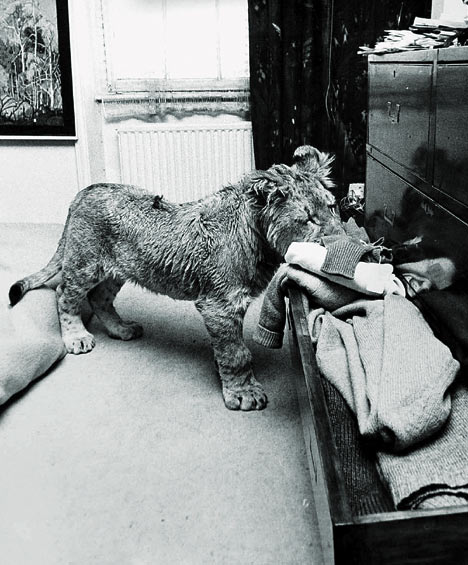
“Sometimes, he’d see people staring at him through the back window of the car, keep very still on purpose – and then, just when they were convinced he was a stuffed toy, he would very slowly turn his head and freak them out.”

This lion was bought (as a cub) from Harrods, then lived in a London flat in the Sixties. Eventually its owners had him released in Africa, and were then, even more improbably, reunited with him years later. If this all seems horribly cute, I’m sorry, it is Friday. Further details here.

Also, here is the sickeningly happy video when they are all reunited.

liondraw_468xx565

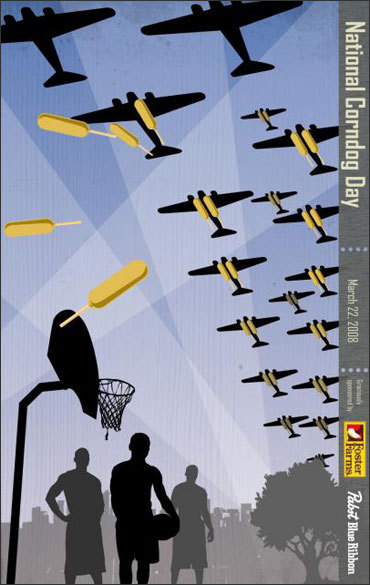
A screaming comes across the sky

corndog

Consider this your advance warning.

From September, I shall be doing a PhD on Thomas Pynchon at the University of Edinburgh.  Some, or even much of it, may take place in this column. Look forward to half-baked statements, scraps of literary theory, tedious unpickings of sentences, obscure allusions, deployment of dodgy terminology, some of it made-up (for example, yesterday, whilst semi-drunk, I hatched the phrases ‘bathetic inversion’ and ‘bathetic mimesis’).

My ‘proposal’ follows below. It is what I think I will be doing, until I start doing it. Then, after an indeterminate period- months, years -I will have a moment of panicked horror when I realise I have been doing something completely different, most likely very far from Pynchon. It will be like wandering in an unfamiliar city where every scrap of wall and face seems delightful till you realise that night is close and you are lost and a figure is coming towards you.

Proposal

As a symbolic structure, the historical novel does not reproduce the events it describes; it tells us in what direction to think about the events (White:1978 cited in Huthceon:1988).

The novels of Thomas Pynchon are dense, encyclopedic narratives, rich in allusion and context. Most, if not all, can be considered ‘historical’, in the sense that the majority of their action takes place in the past, ranging from the mid-18th Century setting of Mason & Dixon, up to a period that resembles (whilst not quite being) the 1980s of Vineland. As many have argued, most recently Smith (2005) and Thomas (2007), Pynchon uses these different historical contexts as a way of challenging received interpretations of history, so as to shift the focus from a unitary, cohesive narrative of progress, to one that emphasises plurality, injustice, and the structures of authority (including those of ‘narrative’ and ‘historiography’) that promote inequality. My proposed course of research is to analyse the means by which this project is continued, and extended, in Pynchon’s most recent novel Against the Day (2006), with the aim of understanding its significance in the context of his previous work.

The novel’s framing narrative is the Boys-Own style adventures of ‘The Chums of Chance’, which span the chronology of the book, from the late 19th Century to the start of the First World War. These ‘Chums’ travel round the world in hot air balloons, at the behest of semi-mysterious figures, accompanied by a dog with a penchant for the novels of Henry James. This comic pastiche is another example of Pynchon’s ‘serious unseriousness’ (Tanner: 2000). As in V. and Mason & Dixon, the presence of absurd elements (songs, fantastical creatures, elements from popular culture) is used to satirise the naïvete and self-delusion of many of those involved in the business of Empire (and indeed, many of the ‘Chums’, by the end of the book, do question their service of the imperial powers).

However, it seems likely that Pynchon’s intends to do more than simply undermine the rhetoric of imperial duty. The notion of an air-borne set of global agents is strongly reminiscent of the science fiction writing of the period (Jules Verne, H.G. Wells et al). By merging this fantastical strand with well-documented historical events, Pynchon (as in his previous work) calls into question the veracity of all presented historical events. This, of course, is what we would expect from any self-respecting (and self-regarding) piece of historiographic metafiction (Hutcheon:1988). Pynchon’s specific purpose may be to interrogate these visions of technological progress, in particular the arguments that such technical advancements would be socially beneficial (see Lindqvist: 2001). In his previous novels, most notably in Gravity’s Rainbow, scientific and technological ‘progress’ has been closely equated with dehumanisation and destruction (Smith: 2005). There are also a number of scenes in the novel where the future literally encroaches on the present, in the form of ghosts from the approaching First World War, and of “Trespassers” from “the end of the capitalistic experiment” (Against the Day: 467). One potential course of inquiry is thus to examine how Pynchon, by embedding ‘science fiction’ within received history, undermines our narratives not only of the past, but of the future as well. My discussion of Pynchon’s use of genre-elements is likely to be informed not only with reference to his previous work, but also by his forthcoming novel, Inherent Vice (2009), which promises to be “part-noir, part-psychedelic romp”.

As in many of Pynchon’s previous works, Against the Day utilises recurring symbolic tropes (Smith: 2005). Whilst it will require close reading to unpick these elements in Against the Day, a first reading of the novel suggests that light— its refraction, reflection, its ordering and disruption —is a leitmotif throughout the novel, perhaps representing some of the different uses to which versions of the past, or visions of the future, may be employed by those who possess (or lack) power.

In terms of methodology, my approach will be to try and embed the kind of micro-textual analysis performed by Thomas (2007) within the type of framework Smith (2005) utilises. Whilst both approaches have much to recommend them (Thomas’s focus at the level of the sentence; Smith’s sense of the novels’ grand thematic arcs), singly they possesses methodological weaknesses: on occasion, Thomas is forced to rely on rhetoric to bridge the logical gaps in his arguments for the great significance of a single phrase; whilst Smith sometimes try to second-guess Pynchon’s intentions without anchoring such supposition in the text . By combining these two approaches, I hope to complement their respective strengths whilst balancing their shortcomings.
In order to provide a theoretical context for my analysis, my research will also include a discussion of the debates regarding the value of metafictional historiography, such as whether or not, in a form so imbued with irony, one can determine the “boundary between parody and mimetic representation” (Witzling: 2007). Or, to put it more crudely, How can one be sure of the political stance of any given text?, assuming as White (1978) perhaps does, that a (postmodern) text can have anything so coherent and knowable.

Bibliography

Hutcheon, L. (1988) A Poetics of Postmodernism, Routledge: London.
Lindqvist, S. (2001) A History of Bombing, Granta: London.
Pynchon, T. (2006) Against the Day, Vintage: London.
Smith, S. (2005) Pynchon and History, Routledge: London.
Tanner, T. (2000) The American Mystery: Essays on American Literature from Emerson to DeLillo, Cambridge University Press: Cambridge.
Thomas, S. (2007) Pynchon and the Political, Routledge: London
Witzling, D. (2007) Everybody’s America: Thomas Pynchon, Race, and the Cultures of Postmodernism, Routledge: London.

Brief Interviews with Hideous Men trailer and clips

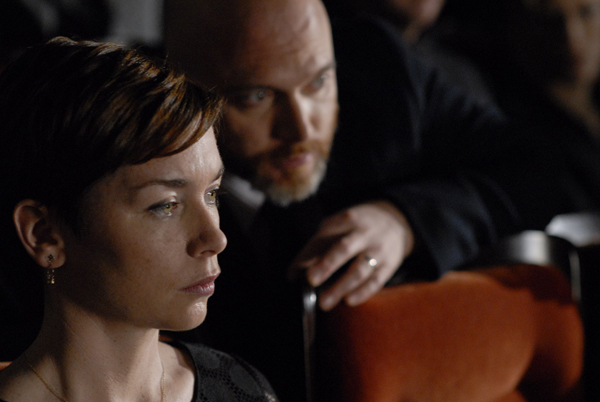
brief_interviews_with_hideous_men_movie_image_julianne_nicholson

Well, it’s not quite a full trailer, and not great quality. But it gives an encouraging glimpse of how Jon Krasinski has tried to translate DFW’s monologues into film.

For the ‘trailer’ click here

**There are also some actual scenes at Collider.com

*** Apple now has the official trailer

Granta, Burnside, Gregerson

1242299192932

Somehow, without quite meaning to, I have been leaving my room. Last night I went to a poetry reading by John Burnside and Linda Gregerson, both of whom, despite my misgivings about readings, spoke (and read) very well. Many of her poems had that longed-for (though not predictable) shift in tone or subject that, when it works, is like the shift from cold to warm when stood beneath a shower. Her most recent collection is Magnetic North.

41yt0cW1ujL._SL500_AA240_

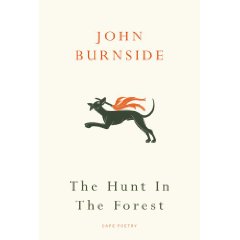
I only know Burnside’s work through his considerable reputation, as both a novelist and poet. The poems he read (including a long narrative poem about hunting a deer that made me recall, in a pleasurable fashion, Faulkner’s story ‘The Bear’) were mostly from his forthcoming collection, The Hunt in the Forest. In all of them the language seemed vital, rooted in landscape and its traditions (not least those of how we represent and imagine it).

31lcmnTUGAL._SL500_AA240_

Were this not enough, I also attended the launch of the Edinburgh International Book Festival this morning, held amidst the grandiosity of the Signet Library.

signet-library

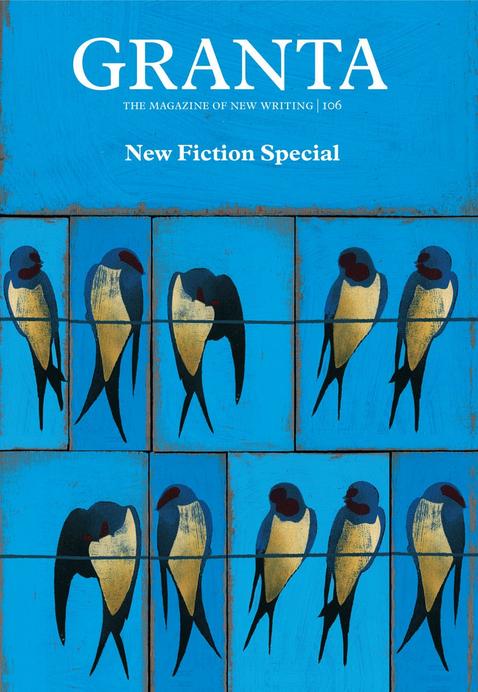
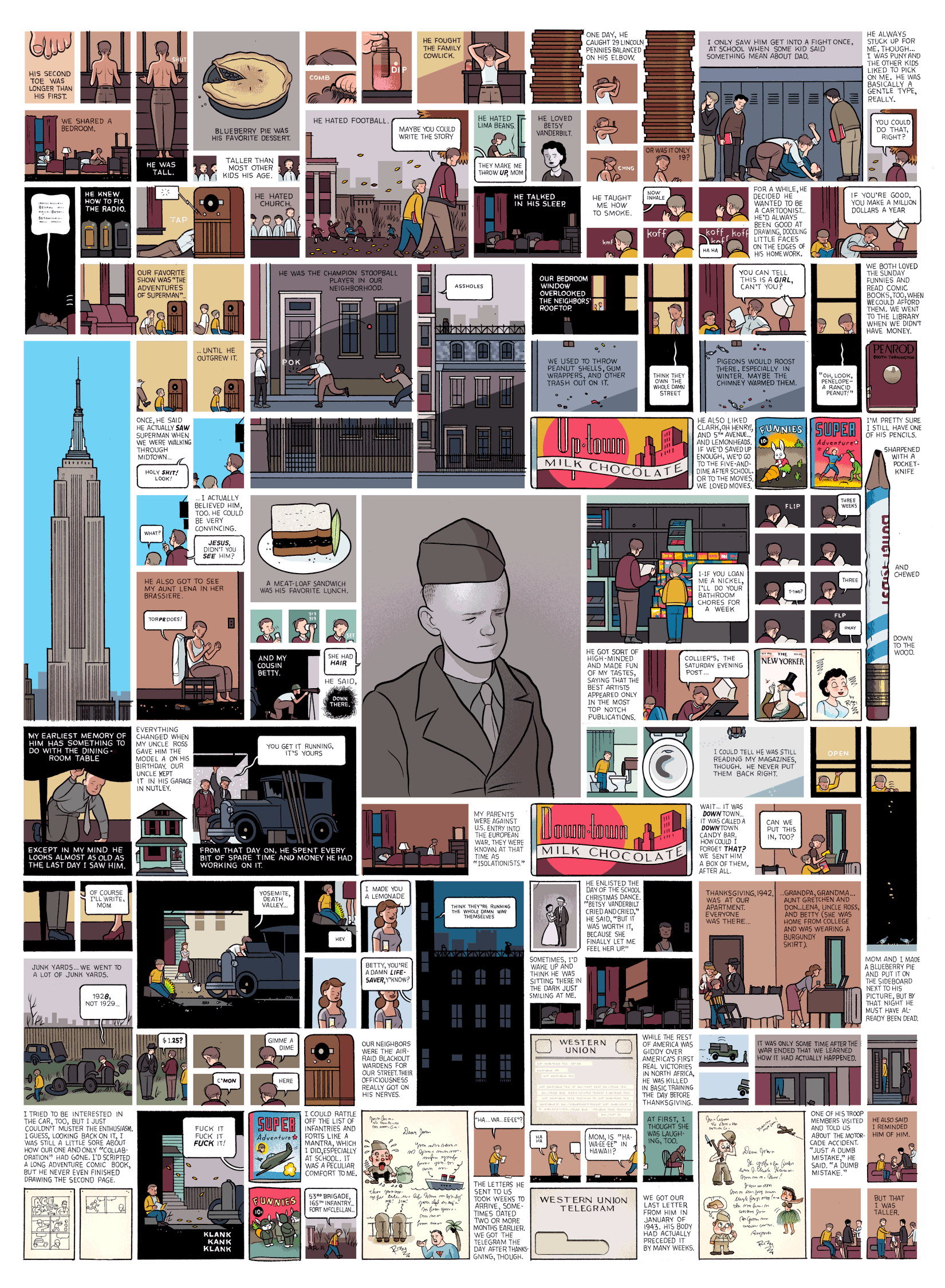
Champagne was consumed. Some items were received. One of which was the new Granta (106), which continues to improve under the editorship of John Freeman (by which I mean that it features more interesting writers, as well as being willing to print work like Chris Ware’s (you will want to zoom in on this:

warenyr061127-05

Issue 107 also promises to be good, with pieces by Kenzaburo Oe and (gasp) William T. Vollmann.

Now it is the afternoon; the fizz has consented to fade. It was very nice to go out. Shall try it again next year.

This Will Explain Everything (call for submissions)

twee

This Will Explain Everything

An open call to comic artists and illustrators.

The Edinburgh-based Forest Publishing is putting together a graphic novel anthology and we are looking for work from artists who combine words and images in various ways.

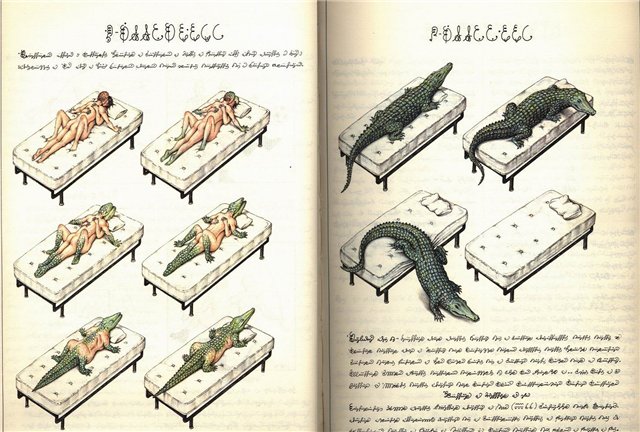
This anthology is an imaginary encyclopedia: a compendium of knowledge that is true, half-true, false, absurd or very confusing. A reader will come away from this book intrigued, amazed, mystified, puzzled, perplexed, bewildered, bemused and befuddled but not necessarily informed.

Your entry should explain something. It can be a piece of disinformation, speculation or thorough nonsense. It could be about how a tractor works, what heart burn really is, an explanation of long-distance running or zen. Facts are fine but, for this project, they are not the ultimate point. We’re looking for unique points of view on a wide-range of objects and ideas.

When submitting: do consider the different forms of informative imagery you could play around with: diagrams, maps, tables, technical illustrations, instruction manuals etc.

Technical specs:

You can submit multipage strips, spreads or single-page images in colour or black and white. The format of the book will be 245mm x 168mm (portrait) with a bleed of 3mm. past the edge of the page on all sides. If your image reaches the edges of the page, don’t put anything important in the bleed zone where it will get chopped off. If you intend to do a spread, please keep important things away from the centre of the image as there will be a deep gutter. (These specs aside, if you already have finished work in a different format, we might be able to fit it in anyway.)

Submissions should be emailed as low resolution jpegs (make sure that any text is readable, though) to thiswillexplain@gmail.com. Write ‘Submission’ in the subject line. Alternatively, you can send us a good quality photocopy by regular mail. The address is: Magda Boreysza at Forest Publishing, 3 Bristo Place, Edinburgh EH1 1EY, United Kingdom. If your piece is selected we will ask you to send a high quality image file.

About Forest Publishing
Forest Publishing is a branch of the Forest, a non-profit art collective and vital part of Edinburgh’s cultural life. Since August 2000 we have hosted thousands of free events and nourished scores of local artists and bands including luminaries such as St. Jude’s Infirmary and Aberfeldy. We have put out records, thrown street parties, hosted more than a hundred exhibitions, built a darkroom, offered workshops on everything from Arabic to crocheting, grown a garden, given out thousands of pounds in grants, built a practice studio, started a swap library and a free shop, made friends, battled the bureaucracy, hired out free bikes and much more. In the summer of 2008 we launched the massively successful Forest Fringe as part of the Edinburgh Festival. Thousands of people have participated, volunteered, created and enjoyed the Forest as an alternative to the grim entertainment prospects and corporate art and culture scene elsewhere in the city. The Forest excites and inspires people.

In 2004 we launched a small publishing wing which we have quietly been expanding. Our publications have showcased fine writing, music, commentary and art. The most recent of these, Stolen Stories, was an anthology of rip-offs, published last year to critical acclaim, with support from the Scottish Arts Council.

Vintage finds

2188660021_89c0060dfe

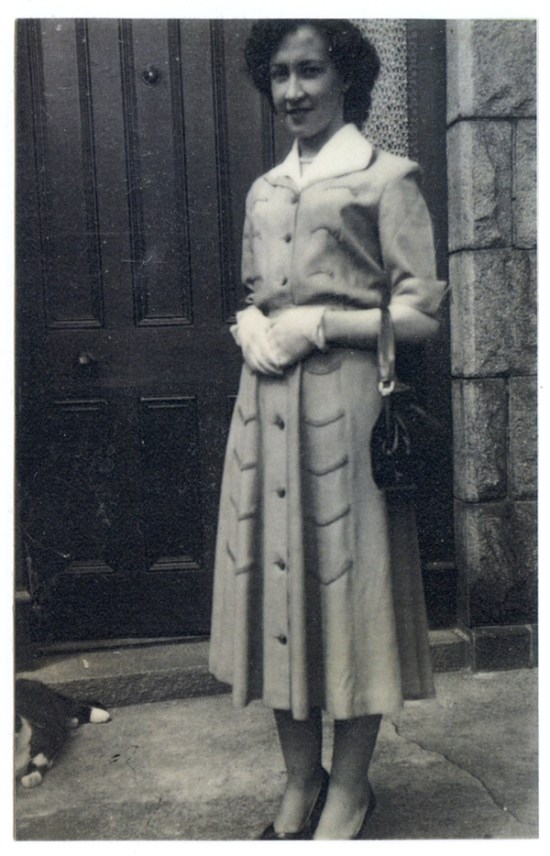
I came across these whilst looking for photos to use in a long piece I’m working on. These are all from Flickr, which has many collections of found families, wedding pictures etc (lovedaylemon’s collection is a good place to start).
2188656233_eb6d8f7fe6

2188658863_dc4916111d

Marilynne Robinson on Poe

HOME_MARILYNNE_ROBINSON_COVER_A

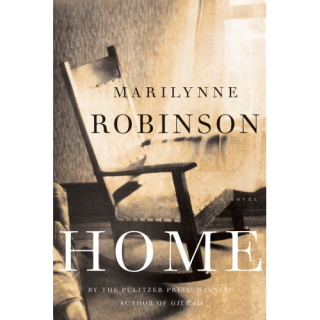
Marilynne Robinson, who has just won the Orange Prize for her third novel Home, writes in the Baltimore Sun about Poe. Also, if you have the time, and wish it well spent, here are a couple of interviews with her: part 1 part 2. Yet another one here.

Drowned in Sound

48797

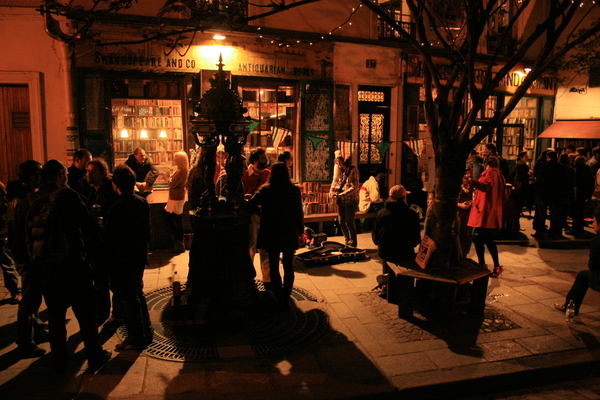
The tour diary for The Golden Hour European Tour is up at Drowned In Sound along with photos and video (which apparently features me on a swing). Many thanks to the Scottish Arts Council for funding the trip, and to the many venues that hosted us, in particular Shakespeare and Co. in Paris, where Sylvia and Hilary did so much to make the night a riotous success.

Supporting Salt

s_d1f3a19637f3828feba9d0570c492c2c

The following is an open post from Chris Hamilton-Emery, Director of Salt publishing, who produce many fine poetry and short story collections (the latter makes them particularly noteworthy). My picks were Andrew Philip’s The Ambulance Box and Sue Hubbard’s Rothko’s Red.

As many of you will know, Jen and I have been struggling to keep Salt moving since June last year when the economic downturn began to affect our press. Our three year funding ends this year: we’ve £4,000 due from Arts Council England in a final payment, but cannot apply through Grants for the Arts for further funding for Salt’s operations. Spring sales were down nearly 80% on the previous year, and despite April’s much improved trading, the past twelve months has left us with a budget deficit of over £55,000. It’s proving to be a very big hole and we’re having to take some drastic measures to save our business.

Here’s how you can help us to save Salt and all our work with hundreds of authors around the world.

JUST ONE BOOK

1. Please buy just one book, right now. We don’t mind from where, you can buy it from us or from Amazon, your local shop or megastore, online or offline. If you buy just one book now, you’ll help to save Salt. Timing is absolutely everything here. We need cash now to stay afloat. If you love literature, help keep it alive. All it takes is just one book sale. Go to our online store and help us keep going.

UK and International
http://www.saltpublishing.com/shop/index.php

USA
http://www.saltpublishing.com/shop-us/index.php

2. Share this note on your Facebook or MySpace profile. Tell your friends. If we can spread the word about our cash crisis, we can hopefully find more sales and save our literary publishing. Remember it’s just one book, that’s all it takes to save us. Please do it now.

With my best wishes to everyone
Chris Hamilton-Emery
Director
Salt Publishing
http://www.saltpublishing.com

The pinch producing the slap

Dead_tree

Troubling news at Bookfox about the possible need for some premier literary journals to become self-supporting. None of these are produced for profit, and so these proposals are in many cases tantamount to closure (or to a sea-change in how they’re run, such as charging for submissions).  I’m not sure what can be done, other than, as Bookfox suggests, to voice one’s ire to the PR departments (for The Southern Review, email urelat1@lsu.edu) and executive committees of the universities in question.

That, and take out subscriptions to journals you would like to be published in (and if you don’t think they’re worthy of that small amount, why do you want to be in them?)

David Lynch’s Interview Project

empires

in a Lynchian voice: “It’s a chance to meet these people. It’s something that’s human and you can’t stay away from it.”

David Lynch is to premiere his 121-part documentary series ‘Interview Project’ on his website on June 1.

The series of three to five-minute shorts will centre on people all around the US with new episodes broadcasting every three days over one year.

The trailer is at  Interview Project. The faces alone are great.

The Southern Review

TSR_Spring2009

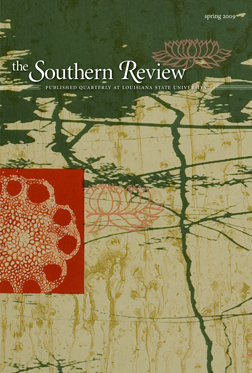
My story, ‘The Ballad of Poor Lucy Miller’ is currently appearing in the Spring 2009 issue of The Southern Review. Thanks to a remarkable technological breakthrough (me learning what some of the buttons on my blog do) you can view a pdf of the story-TSR_Winter2009_Holdstock

Subscriptions for The Southern Review start at $33 (including International Postage), which works out to just over £5 an issue- cheap for what is a beautifully produced journal.

New Ishiguro Book

51VnVP0jRPL._SS500_-1

This, of course, is cause for rejoicing. His previous novel, Never Let Me Go is probably as good a book as any published in the last decade. In a recent interview in The Guardian he admits to feeling that he peaked in his 30s, and that now it’s all just trying new things, which is either a brave admission, or a mark of how secure his position is.

The piece also contains the-should-be-horrifying news that Never Let Me Go is being butchered into film form, and will star… Keira Knightley.

As a thought experiment, let us breath deeply and consider what good might come of this. Yes, Knightley’s much vaunted looks will detract from the narrator’s averageness (from which a considerable amount of the novel’s pathos derives). Yes, the film will lack the interiority that made the novel so compelling.

But (and here I pause, and scrape the cloud hard)… I like to think that one reason why poorly written genre books (Patricia Cornwell, James Patterson etc) are so popular is because they are agressively marketed, inevitably to the detriment of more thoughtful books. If Keira Knightleys’ face on the cover makes more people pick up the novel, this is not only one more good book being read, but also, and as importantly, one less bad one too.

(There should probably now be a long, self critical paragraph that deals with my patronising belief that I know what’s best for people, what they should read, what is ‘good’ and ‘bad’ etc. Perhaps we can take this as read.)

A bunch of stink

ws-merwin-1-sized

The Paris Review has an old interview with W.S. Merwin, who just won the Pulitzer prize for Poetry. The New York Review of Books had a great  piece on Merwin, and the consequences of the choices he makes with regard to form and punctuation, but peversely, stupidly and really quite bafflingly, there is no electronic version of this even for print subscribers. Exclamation marks all round!!! I don’t mind it only being available to subscribers (as with the LRB, Harpers, almost every other decent literary publication) but to ask for an extra $20 a year to read online is, to my mind, a real bunch of stink.

Found #2

three-musicians-1

This is the front cover of a Christmas card found in a paperback copy of Huysmans’ Against Nature. It is in all likelihood from Christmas 1963. Inside, once, the pleasantries are disposed of, the writer bemoans the state of the nation.

three-musicians-2

The analysis continues on the reverse:

three-musicians-3

Whilst the thought of the US ‘falling back to the level of some South American republics or the Congo’ must have been chilling for Pat, one hopes she was comforted by the excellent work of the CIA in makng sure that other people’s elected leaders met broadly similar fates.

Found #1

party-cats-11

My work at a charity bookshop (that cannot be named) mainly involves selling books I don’t care for to people who ask me questions like, ‘So, do you read much?’

My other main duty is going through bags of donations, finding what can be sold, then disposing of the chaff (all of which gets recycled). For the next few posts I’ll be sharing some of the things that have slipped from the pages. Today’s involves the photo above, that came from a 1982 Blue Peter annual. Though obviously some kind of photo collage, it is all the more impressive for being pre-Photoshop, as attested to by the inscription on the reverse.

party-cats-21

Morbid anatomy

anatomicaltheatre06-1

anatomicaltheatre03

anatomicaltheatre042These images are from the La Specola Museum of Anatomy in Florence, which has a large collection of wax models. Though these are mostly of individual limbs and organs, there are several full figures, which are arranged with particular care (the pregnant woman, whose stomach is opened to display the baby, has long, brown, sensuous hair and wears a string of pearls).

If you have an interest in such things, Morbid Anatomy, which surveys “the Interstices of Art and Medicine, Death and Culture” has an embarassment of such riches (kudos to the cats at Fox and Comet for bringing this site to my notice).

Mason & Seidel

41lz7qi1e2l_sl500_aa240_

From a recent piece in the New York Times

One night after Christmas last year, in a dark, well-upholstered restaurant on Manhattan’s Upper West Side, the American poet Frederick Seidel, an elegant man of 73 with an uncommonly courtly manner, told me a story about poetry’s power to disturb. “It was years ago,” Seidel explained in his measured voice, “in the days when I had an answering machine. I’d left my apartment, briefly, to go outside to get something, and when I came back there was a message. When I played it, there was a woman’s voice, a young woman’s voice sounding deeply aroused, saying: ‘Frederick Seidel . . . Frederick Seidel . . . you think you’re going to live. You think you’re going to live. But you’re not. You’re not going to live. You’re not going to live. . . .’ All this extraordinary, suggestive heavy breathing, getting, in the tone of it, more and more intensely sexual, more gruesome, and then this sort of explosion of sound from this woman, and: ‘You’re . . . not . . . going . . . to . . . live.’ ”

Wyatt Mason, the author of the piece, writes a very fine blog for Harpers (which also has a fun piece on Seidel that casually bashes Garrison Keillor). I first came across Mason’s work in the LRB, where he wrote an article about DFW, in which he expressed doubts about the level of patience and close reading required to fully appreciate the stories in Oblivion, DFW’s last collection. Though he did not doubt the quality of the pieces, in his opinion an average, literate reader could be forgiven for being unwilling to make the considerable effort required. At the time I disagreed with him, perhaps in the belief that this made me more than an average reader. The fact that DFW’s last few published pieces (particularly Good People in the New Yorker) seemed to eschew such tricks or puzzles suggest that DFW had become aware of the diminishing returns of such forms.

At the risk of being thought helpful…

asf43-cover-sm

current_cover

coversummer08188large

Here’s a handy list of publications to send stories to (thank you Bookfox)  most of them in the US. Those who only accept postal submissions will want a SAE for a reply- which means finding US stamps (94c), messing around with International Reply Coupons (expensive and a hassle for all concerned) or contacting the editor directly and pleading that you are resident in the UK where the postal system is run by jackals and bears. The latter can actually work.

The list is by no means exhaustive, and I would question the inclusion of Epoch in the ‘Highly Competitive’ Section, as it’s just starting out and has a somewhat fresh-faced look (so says the old man of the sea). Otherwise it’s a good place to start, and will be invaluable in helping you to decide how bad you should feel about a given rejection.

http://www.thejohnfox.com/bookfox/ranking-of-literary-journ.html (you’ll have to paste this one in- it resists becoming a link).

Attention, Audio-lovers

“Vigelands Parken” in Oslo

Sculpture in Vigelands Parken, Oslo

Having raised a statue to Vollmann, I should make it talk (Real Player required).

This is from the Conjunctions Audio Vault which features recordings from many existing members of the pantheon, such as William Gass (three times) and Philip Roth.

William T. Vollmann

41wusrco33l_sl500_aa240_

Interviewer: I want to talk about your artwork on the walls here. There’s so much sexuality- particularly female sexuality- represented. Tell me about it.

Vollmann: Oh, it gets my dick hard, sweetheart.

(from an interview in Tin House Vol. 9 No. 3)

William T. Vollmann, at age 49, has already written too many damn books, more than I will ever write, let alone get published. This is not really a complaint. I am delighted that an author of his ability is able to be so productive: 19 or so large books, some fiction, some non-fiction, the longest being Rising Up and Rising down, which, in its unabridged form, clocks in at 3,300 pages. I have only read a few of these, but from You Bright and Risen Angels alone, it is horribly, wonderfully clear that he is trying to map out territory in very unpleasant lands. The author’s note is fair warning:

This book was written by a traitor to his class. It is dedicated to bigots everywhere. Ladies and gentleman of the black shirts, I call upon you to unite, to strike with claws and kitchen pokers, to burn the grub-worms of equality’s brood with sulfur and oil, to hudle together whispering about the silverfish in your basements, to make decrees in your great solemn rotten assemblies concerning what is proper, for you have nothing to lose but your last feeble principles.

The book is about the long and bloody conflict between Insects and the forces of Electricity (especially the blue globes).

Flicking through the book, which I read several years ago, I see that the page corners are turned in many places, each marking some place where my reading pleasure was so great that I was forced to harm the page. It is often difficult to recall what prompted the triangular mutilation. Without context, they can just seem very fine sentences. And then there is a passage like this, which causes bells to ring in deeply sunken cellars.

Generally speaking, she didn’t have much luck. Being maladjusted she was taken to a psychiatrist, who with his encounter groups and truth serums distorted her social reality so that life lost its cutting edge. At sixteen she stood on a broken bottle barefoot, hoping to bleed to death, but her mother found her and took her to the hospital. At eighteen she jumped off a bridge, but the river below was so polluted with gummy hydrocarbons that its surface merely dimpled to receive her like an immense trampoline and bounced her up and down until she got sick to her stomach. As a freshman in college a year later, having failed both in her exams and in love, she swallowed a bottle’s worth of asprin. Her ex-boyfriend came in to her unexpectedly next morning (for he wanted to tell her yet again how much he despised her in her stupidity and weakness, and she wasn’t even very goodlooking with her long neck and big nose and weak eyes, to say nothing of being a lousy lay, and he was fucking tired of the way she held onto his letters and he was going to get them back); and she was still alive, though red-faced and wheezing, with a suicide note lying on the bureau. Much like mild-mannered Clark Kent in his pre-Superman days, dear Emily was always doing the wrong thing in the wrong place at the wrong time in some trivial pathetic sort of way like most people one meets in our great Republic except that they are straitjacketed against adverse circumstances by the power grids that run screaming day and night beneath the surface of the neighborhood parking lot and in our furnaces and boilers and air conditioning rerun clamps so that no one ever has to deal with the hot muggy horrible outdoors of reality unless there’s a power failure somewhere, though maybe we get a hint of it when there’s a brownout and the oven takes longer to cook and the Announcer’s voice slows down and his face flickers and melts into an incomprehensible blue globe for just a minute and then all’s back to normal.

There are so many reasons why this appeals to me. At the broadest level, there is the sweep from the personal to the societal, from the interior thoughts of the loathsome ex-boyfriend to the talk of ‘our great Republic’.

There is Vollmann’s shift from horror (her standing on the broken bottle, on purpose) to absurdity (her bouncing on the polluted water) and then onto cruelty (not simply the attempted suicide, but the fact that she is, via the parethetical comment, being mocked while trying to kill herself), all in the space of four sentences.

And then there are the blue globes which scare the beejesus out of me.

Vollmann has also written books about being in Afghanistan, riding in boxcars, povery, violence, and most recently, Imperial Valley in California (a shorter volume of merely 1,344 pages, due out this month).

His most recent essay (on photography) can be found here.

Lynch commercial for Gucci

Well, that’s what they claim it is. To me it seems like a trailer for something so horrible it is best not seen. Lynch can always be relied upon to film incredibly beautiful women in such a way that they are so terrifying, or terrified, that it would take a very particular taste to ever find them attractive.

The Golden Hour Tour

flyer

Yes, it is spring, and we at Forest Publications have made a new book. The Golden Hour Book Vol. 2 is a collection of songs, poems and stories from some of the horribly talented people that have performed at The Golden Hour, the Forest cafe’s monthly cabaret night (I too have been guilty of this, reservations about readings notwithstanding). Due to the infinite largesse of the Scottish Arts Council, we are able to go to a number of impossibly glamorous places to promote the book:

29 April – Amsterdam, Cafe Sappho – Vijzelstraat 103 1017 HH (+31 6 17140296). 3 Euros Entry + Free Stolen Stories Book! 8pm – Late

2 May – Berlin – Studio54, Oranienburger 54 at Tacheles – 3 Euros Entry + Free Stolen Stories Book! 9Pm – Late.

4 May – Paris – Shakespeare and Co – Paris – 37, Rue Bûcherie, 75005 Paris, France‎ – 01 43 25 40 93‎ – Free! 7pm

5 May – London – The Camden Head – 100 Camden High Street, (020 7485 4019) – ‎ 8pm – £3 Entry + Free Stolen Stories Book! 8pm – 11pm

6 May- Cambridge CB2- 5/7 Norfolk Street, Cambridge £3 Entry + Free Stolen Stories Book! 8pm – 11pm

If you’re in these neighbourhoods, or know anyone who is, tell them about it and afterwards, they’ll look at you in wonder. This will be especially effective for people you’ve always had a crush on. On our previous tour, the rate of couplings increased by 23% in each of the cities we visited (a figure which of course excludes any hotness on our part. Or parts).

Donald

03101

Ladies and gentleman… Mr Donald Barthelme. Who was a writer. Prinicipally of stories. About these stories, it is hard to be certain. Some of them involve pictures. Others contain people. None of them are “constructed mousetrap-like to supply, at the finish, a tiny insight typically having to do with innocence violated”.

This last sentence is one that particularly pains me: God, after he had made several beasts, must have quickly lost any joy at the sight of a creature swimming or flying. It had already been done so well. If it had been worth doing it all.

Something further can be learnt here, here but not here.

Idioms to share #1

montaigne

Montaigne!

“I came to wonder if the game was really worth the candle.”

I found this in Alasdair Maclean’s Night Falls on Ardnamurchan, his account of the remote crofting community where he grew up. It refers to a situation where the returns from an activity or enterprise do not warrant the time, money or effort required (for Maclean the ‘game’ in question was raising cattle, which was at best an uncertain affair) . This expression, which began as a translation of a term used by the French essayist Michel de Montaigne in 1580, alludes to gambling by candlelight, which involved the expense of illumination. If the winnings were not sufficient, they did not warrant the expense.

Tomorrow I shall be looking for conversations in which to use this, especially with people who wont hate me too much for deliberately using a phrase they don’t know, just so I can then say, “Aha! Well, this is very interesting. It all goes back to Montaigne.”

And so on.