
Buttering the Tiger
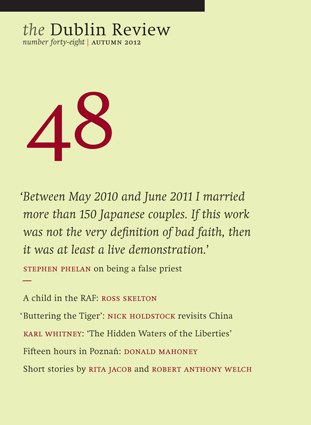
My essay on Chinese factories and corruption is in the latest issue of The Dublin Review, along with an interesting piece about being a fake priest in Japan. I originally wrote this as the middle section of my LARB piece, but it ended up breaking free from that and hopefully works fine on its own.
The DR is one of the few magazines still interested in publishing longform pieces about foreign countries that aren’t based around conflict or suffering. As such, it deserves our support. A 4 issue subscription costs £36.
I’d also like to thank the gone, but not forgotten, and very much missed Scottish Arts Council for helping to fund the trip to China that led to the LARB piece, the DR piece, and the afterword of The Tree That Bleeds.
Jumping the Dragon Gate
My piece on two of my former students is now up at the Los Angeles Review of Books, and features kidnapping, a cow’s vagina,’Peter Burger’ and the house of wasps. I may, perhaps, have burnt some bridges by writing this piece- in which case, dear bridges, I’m sorry. There was so much kindling I could not resist.
You can see accompanying photos here.
Review of Canada by Richard Ford

My review of Ford’s lastest novel Canada (spoiler: I liked it) is in the new issue of Edinburgh Review (no.135) along with poems by Benjamin Morris and an essay by Ryan Van Winkle, two gentlemen that are well-known to me.
Canada by Richard Ford. Bloomsbury. ISBN 9780747598602 £18.99
Richard Ford’s seventh novel is a curious hybrid. His early novels (A Piece of My Heart, The Ultimate Good Luck) were sparsely written exemplars of the dirty realism promoted by Raymond Carver and Tobias Wolff, and focussed on characters who, through poor luck and judgement, found themselves in desperate situations that built to an act of violence. The Sportswriter was a conspicuous departure in style and content, shifting the action to suburban America, and the dreamy, middle-aged ruminations of Frank Bascombe. Despite its acknowledged debts to Walker Percy’s The Moviegoer, Bascome’s method of narration had a charm and thoughtfulness that Ford sustained throughout two subsequent novels featuring the character (Independence Day and The Lay of the Land).
Canada’s opening sentences seem to align it with Ford’s earlier work: ‘First, I’ll tell you about the robbery our parents committed. Then about the murders, which happened later.’ This matter of fact statement sets up the structure of the book. In the first part Dell Parsons, a retired teacher in Canada, tells of how his family broke apart after his father robbed a bank; the second part relates what happened to him after his parents went to jail and he was sent to live in rural Saskatchewan. Though those opening sentences are attention grabbing, and promise some genre elements, they also have the effect of removing a degree of tension from the narrative. Both the robbery and the murders, when they eventually occur, are related in minimal fashion. One reason for this is because Dell believes the context is as important as the crime- their family life had both ‘the side that was normal and the side that was disastrous’, and they were inextricable. Ford’s depiction of the family dynamics — the tensions and affinity between Dell and his sister Berner; the mismatch of his parents — persuasively fuses the insight of the elderly narrator with the bewilderment of his younger self, deepening our feeling for how the two children are affected by their parents’ crime.
Despite the subject matter of the novel, the tone of the book is more in keeping with the Bascombe novels. Though this is a tale told by a man in his sixties, the five decades of Dell’s life after the murders are dealt with in only a few paragraphs near the end of the book. Canada is an attempt by a man to understand the most important events in his life, to follow his father’s injunction that he ‘find ways to make everything make sense.’ What makes Canada more than a coming of age story with thriller elements is that Dell admits that ‘making sense’ is not necessarily the same as trying to tell the truth. He excuses his younger self’s lie to his father by claiming ‘it was better than saying what was true’; he justifies another deception (this time of himself) with the rationale that ‘in all ways it seemed better to think that’, the implication being that when we try and remember our past, the truth is not always what is best for us.
Though the novel is stylistically grounded in the realism of Ford’s earlier work, Canada is more interested in how (and why) narratives are constructed. Dell slightly misquotes John Ruskin as saying ‘composition is the arrangement of unequal things’, which perhaps refers to the need for distortion in order for Dell’s tale to make the right kind of sense to himself (he might also have quoted Ruskin’s dictum regarding the process of making ‘things separately imperfect into a perfect whole’). Dell’s memories, and his mother’s prison diary, can only take him so far in his attempt to ‘make sense’ of what happened. As he says, there are ‘reasons that in the light of a later day don’t make any sense at all and have to be invented’.
Dell is constantly interrogating himself, posing questions and providing answers then undermining those answers. One example of this is his use of the idea of ‘destiny’ or fate. In the novel’s second paragraph there is a suggestion that his parents were ‘destined to end up the way that they did’, an idea developed a few pages later when Dell speaks of his father being ‘in the grip of some great, unspecified gravity’. Later in the novel he tries to argue that ‘because very few people do rob banks, it only makes sense that the few are destined for it’, but immediately admits that he finds it ‘impossible not to think this way, because the sense of tragedy would otherwise be overwhelming to me.’ However, he goes on to exempt himself and his sister from fate, claiming they were ‘accountable only to ourselves now, not to some greater design’. By invoking fate in this selective manner, Dell is granting his parents a kind of absolution, perhaps because ‘blaming your parents for your life’s difficulties finally leads nowhere’. At the same time, he is also granting himself and his sister a level of freedom (but also responsibility).
It is this level of psychological complexity — achieved in a prose that is restrained without being sparse — that makes Canada a consistently interesting novel. My main reservation is that Ford is occasionally heavy handed in his symbolism. After the robbery, when Dell’s father’s behaviour seems strange and inexplicable, Ford has him swallow a piece of a jigsaw puzzle. A more persistent irritation is the frequency with which Dell’s interest in chess is recruited as a metaphor. There are also times when Ford’s attempts to mine significance from the ordinary verge on the portentous:
Weather means more than time on the prairie, and it measures the changes in oneself that are invisibly occurring.
Things happen when people are not where they belong, and the world moves forward and back by that principle.
These minor quibbles aside, Canada is a novel that deserves respect for its calm and thoughtful exploration of how we fashion stories about ourselves.
Interview about The Tree That Bleeds now up on China File
There’s a short video of me speaking about The Tree That Bleeds now up at China File, where there’s a lot of other great content. Thanks to Maura Cunningham for doing the interview and for editing my rambling into coherent form.
Post-Yugoslav Palimpsests

When I was in Bosnia in May I visited an old hotel converted into a refugee centre during the war.The photos and text of the place can now be seen at the CITSEE.eu website
Climate Change?
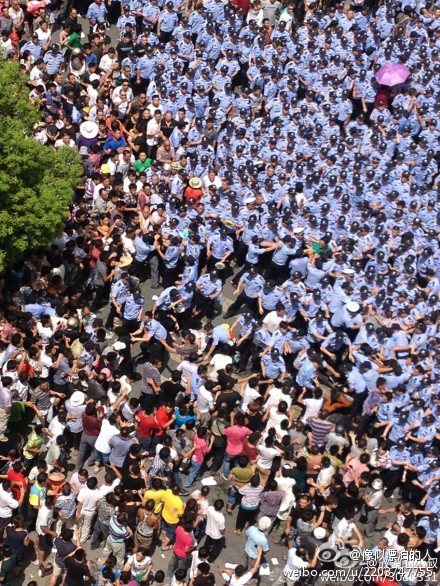
Qidong protest, July 28th 2012. Blue = police
My post on Chinese environmental protests is now up at the LRB Blog.
New story online
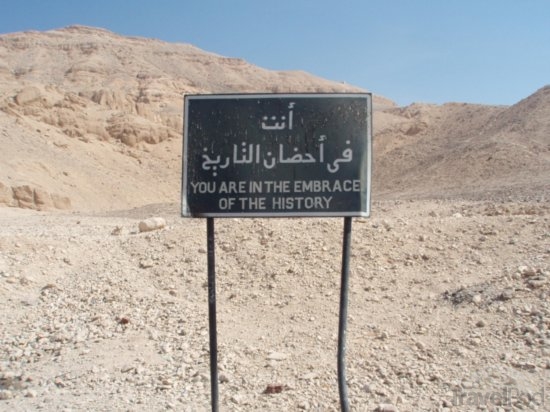
Click here to read my story ‘The Embrace’ from the Autumn 2011 issue of The Southern Review.
‘Great Changes after the Liberation’

I have a new piece on the LRB Blog on Chinese propaganda comics from 1950 that some have used to critique modern China. The only thing I’d add to what I say there is that to argue that China has gone back in time is overlook the many achievements made by the PRC, albeit sometimes at catastrophic cost to its people. Despite the apparent similarities, the problems of contemporary China are those of a very different kind of society and system.
Great Expectations?
The first prize I ever won was for English at school. I was given £15 of book tokens, with which I bought all the volumes of Steve Jackson’s Sorcery!Quartet.
Here is the cover of the first book:

‘The Shamutanti Hills’ is a quest through a fantasy world in which magic and might are required to defeat various monsters and obstacles. This requires good judgement and a lot of luck, the latter generated (or not) by rolling two six-sided dice. Unsurprisingly, the reader fails (and dies) many times and has to start again.
Neither ‘The Shamutanti Hills’ nor its successor, ‘Khare- Cityport of Traps’ were on the school syllabus, despite their excellent spell casting system and well-pitched level of difficulty. During the prize-giving ceremony it became apparent that I was the only winner to have bought such books. The other pupils had purchased encyclopaedias, advanced math textbooks, bilingual dictionaries that required a two-handed grip. When the headmaster- a kind man with a degree in Classics from Oxford –handed me the brightly coloured fantasy books, he was obviously disappointed. Until that moment it had never occurred to my nine-year old self that with rewards might also come expectations.
This episode taught me that sometimes you have to conceal the things you enjoy, and not because they are illegal or immoral, but because they don’t fit with people’s conceptions of you. But I think it also had a hand in teaching me that things we expect to wholly enjoy are often a more mixed affair. Awards require speeches; fondue parties can drag; many cherished fantasies end in discomfort and hospitalisation. I wouldn’t go so far as to label this a depressive or melancholic worldview; but it’s one that definitely looks for the grey in every silver cloud.
This also extends to compliments (especially about my writing). What should be a form of validation just makes me feel awkward. ‘Thank you,’ doesn’t seem an adequate response, but I can never tell what else the person might expect to hear, whether they want me to talk about the story, say something about my work in general, or ask them something about themselves: I have so little idea of which would be right that I might as well roll a dice to choose. Though this is true of any encounter, the person’s kindness makes me want to give an answer they’ll appreciate, and there are just those two or three seconds in which to speak, and if I fail, there’s no chance to start again.
So when I received a phone call informing me I had been awarded a Robert Louis Stevenson Fellowship, I was slightly taken aback. Matters weren’t helped by me mistaking the voice of the woman asking if I was Nick Holdstock. I leapt to the conclusion that she was my mother, causing me to say ‘Mum? Is that you Mum?’, which caused equal confusion in her. She mastered hers more quickly and went on to say that all I had to do was decide when to go to Grez sur Loing (the small village 70km southeast of Paris where RLS fellows have been going since 1994). Feeling that more than simple gratitude was required, I replied by saying it was by far the best news I’d had in a really long time. This disclosure elicited a pause, perhaps of pity, for either the sentiment, or that I had been compelled to express it.
Though my answer might have suggested desperation, it was mainly borne of surprise. Like many artists, I’m constantly applying for fellowships, bursaries and grants; given the huge impact these can have on one’s professional life (often determining what you have to do to make ends meet), it is with more than a small amount of expectation that you await the verdict. During this period it’s easy to find oneself performing tricks of mental sleight of hand. You tell yourself that although you deserve it, and are good enough, there are many reasons why you might not get it. You tell yourself that the outcome is at least partly due to chance. Or you do the same as the subject of Lydia Davis’s short story, ‘The Fellowship’, in which two reasons are posited why the subject of the story, year after year, does not get the award: one that the person is qualified, but his/her ‘application is not good enough’; the other that the applicant is qualified ‘but not patient enough.’ If the results arrive, and one is rejected, there is thus an embarrassment of explanations to choose from, certainly no need to doubt that one’s application might have failed for reasons that the subject of Lydia Davis’s story does not even consider.
Receiving a prize or award raises an opposite, almost equally terrifying possibility: that with sufficient time and space you might actually produce something good. Having to work several jobs, or go to fondue parties, is something I have often bemoaned, both for the interruptions to work and my sang-froid (and I cannot write with burned lips). Being given a month in which to do nothing but write and eat cold French cheese was in many ways an answer to my moans. However, after the initial I-want-to-dance-till-I’m-dead euphoria had cleared, there was the worry of whether all the time and lack of interruption would actually make a difference. Perhaps I would be prey to all the clichéd monsters of distraction: the ‘fact-checking’ that leads to ‘research’, the many links that can be clicked, so that one wanders, as if blindfolded, through the great labyrinth that is the Internet. Either that or I’d be fighting my way through Sorcellerie!

It is with some relief, and just as much surprise, that I can report that these expectations (or to be precise, fears) have proved mistaken. During the last 20 days I have mostly been able to work in a steady fashion. Here are some of the sentences:
“Even the word of so many monarchs was not proof enough.”
“They felt like ants, but much faster than ants, these did not march in slow columns, these ants rode on trains.”
“The predictable vibrator was in her bedside drawer.”
“People in the newer districts rolled their eyes and groaned; in the old town, in the midbrain, lights pulsed in applause.”
My productivity has not been due to the lack of possible distractions. I could have followed the river Loing through the woods for hours, pursued the mysteries of the village— who left the decapitated snake outside the bakers?; what is really happening in the ‘vaccination centre’ where lights burn all night? —or indulged in the all too easy business of writing about the foibles of the other artists in residence. But the latter are kind and welcoming people, and it has rained most days. As for the unexplained events in the village, I know better than to pry in rural matters. I have lost too many kin in the dark woods of East Sussex (in their own way as perilous as the Hills of Shamutanti) to think otherwise.
But I think there’s a far simpler reason I’ve found it easy to work here. I hesitate to name it, but it can perhaps be found in watching the angles the swallows turn as they approach their nest. Or in the bullying tactics of the white dove that squats on top of the roof. It’s in the sound of the trees and hearing people joke in languages I do not understand. To say it stems from the removal of pressure is to approach the truth: but I don’t know if ‘expectation’ has an antonym.
Robert Louis Stevenson Fellowship
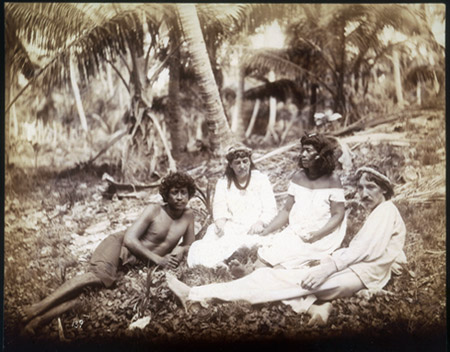
I’m very happy to say I’ve been awarded a Robert Louis Stevenson Fellowship (thank you Creative Scotland) which means I’ll be in the village of Grez Sur Loing in France during June. Though my ostensible purpose is to work on a novel in progress, my real goal is to recreate the atmosphere of RLS’s sojourn in the South Seas. Each morning I will convene a meeting of the elders of the village. We will toast each other with coconut milk. I will marry a snake. I will find a peace I had not thought possible, and change my name to ‘Jacques’. Finally, after weeks that will feel like years to the villagers, I will contract an exotic disease that will make me work feverishly on a manuscript I will not live to complete. For years, and generations after, the good, pure people of Grez Sur Loing will tell stories of ‘the pale one that died’.
There will be no statues.

Razing Kashgar

Kashgar’s Old Town, as it was…
My piece on the destruction of Kashgar’s old city is now up on the the London Review of Books Blog.
And here’s a more reportage-based piece from 2013.
For more on Xinjiang, see my book The Tree That Bleeds: A Uighur Town on the Edge.
Blockupy Frankfurt

My post on Blockupy Frankfurt is now up on the London review of books blog. Thomas Seibert was a fascinating, engaging interviewee, and I’m very grateful to him for talking to me.
Zagreb Subversive Festival- Day One

My blog on the Zagreb Subversive Forum is up now at CITSEE.EU and on the Forum website.
Shortlisted for Commonwealth Short Story Prize
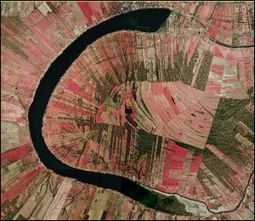
My story ‘The False River’ has been shortlisted for The Commonwealth Short Story Prize. I had completely forgotten about this, so it’s almost a shock, though a welcome one. I think the way judging works is that they pick a regional winner (mine would be Canada and Europe) then an overall one. The story in question is about a man obsessed by numbers who is driving a Greyhound bus and is very much in love. 1st round of judging takes place on May 22nd. Please cross your eyes.
Willesden Herald 2012 Short Story Prize
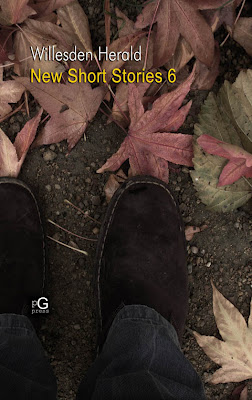
Once again, I am the bridesmaid in this excellent competition. My story ‘Half’ was shortlisted and appears in the 2012 Anthology, which can soon be ordered here. The Willesden Herald is a very good competition because a) it’s not expensive to enter b) it’s judged anonymously c) The word limit is usually much higher than usual (7/8000) for short story competitions and d) if you get shortlisted, you at least get a publication out of it, rather than the whole ‘honourable mention’ thing which is like being told you’re a bridesmaid without being allowed to come to the wedding.
My story is an incredibly joyful tale of acceptance, personal growth and warm, enduring love, as the begining suggests:
Ruth stood at the end of the pier, looking back at the shore. Beyond the beach, above the road, she saw the line of hotels: white castles topped with flags, slightly blurred in her vision. She squinted, but they weren’t just distant: they appeared to be retreating. As if she were at the stern of a ship that was slowly cruising away.
She touched her hair, then checked her watch. Perhaps Sam wasn’t going to come. Perhaps, despite the way he’d sounded, things had not improved.
She leaned on the railing and wanted to shut her eyes. But the pier, for all its ironwork, did not feel like something to trust, not against so much water.
Five minutes, then she’d go; the London train was at half past.
She went to the telescope and pushed a coin in its slot. She bent and peered and turned it slowly. Windsurfers, waves, a dinghy. A single swimmer on his back. Then the grey of the water blurred to the yellow ochre of sand. More sand, then the freckled limbs of a woman without hair. The woman was wearing small dark glasses. She absently picked her nose. Then she looked directly at Ruth with a stare that said, Fuck off. Ruth jumped and the telescope skipped to waves that lifted, hung, then fell. The woman had, of course, not seen her. If she moved the telescope back, the woman would be squeezing sun cream onto her speckled arms.
She turned the scope till she was seeing down the pier. A pushchair, a rubbish bin, a cloud of candyfloss. Then she raised it and saw faces. White, black, lumpy, old, then, as the shutter dropped, the face of her half-brother.
He’d told her a year ago, just after he passed the bread, right as she started to butter.
“I’m using heroin,” he said.
Literary Review
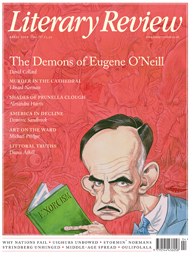
There’s a nice review of The Tree That Bleeds in the April issue of Literary Review, which doesn’t even accuse me of bigotry or treachery.
The City of the Dead

My piece on life in Cairo’s cemeteries is up at Egypt Independent.
NYC X 2
I’ll be having two kinds of fun in NYC this month. I’ll be giving a paper at the Association for the Study of Nationalities conference at Columbia University on 19th April. The paper is titled ‘Post-Conflict Identities in Xinjiang: Good, Bad and Non Muslims’ and is basically about the mean things that Uighurs I knew said about Han Chinese, Hui and other Uighurs in Yining. For example, this exchange that I had with a Uighur girl in a small village near Yining.
‘Are there any Chinese here?’
‘No, you would be able to smell them.’
‘What do they smell of?’
‘Spices, mostly chilli.’
‘What do they say you smell of?’
‘Lamb. Many Chinese, they can’t stand this smell. When they come here for the first time, they will –’ (she mimed retching) ‘when they smell this.’
Were this not fun enough, I’ll also be doing a book reading at Bluestockings in Manhattan on the 22nd. For the love of God, if you know anyone in NYC, please tell them to come.
‘Boys and Girls Are All Treasures’

These, and other friendly slogans are considered in my piece for The Times of India on China’s new approach to the one-child policy.
With the Zabbaleen
My piece on Cairo’s rubbish collectors is now up at the London Review of Books.
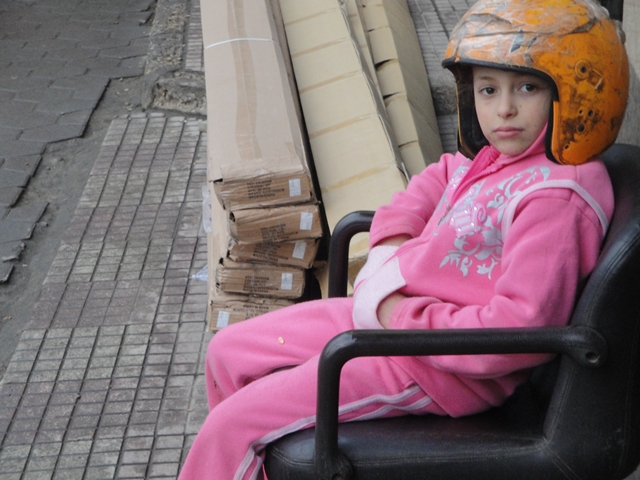
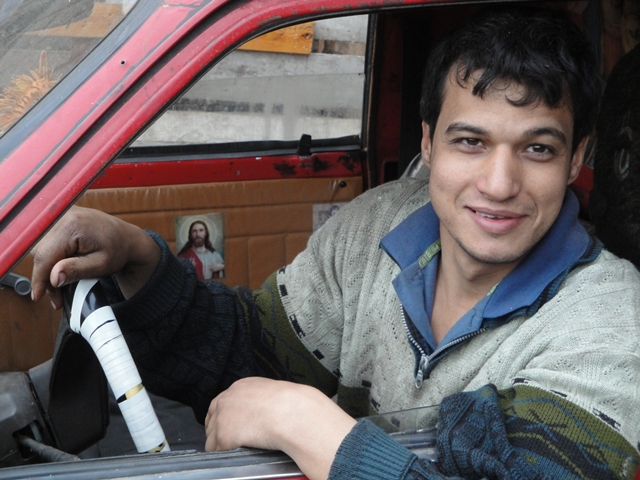
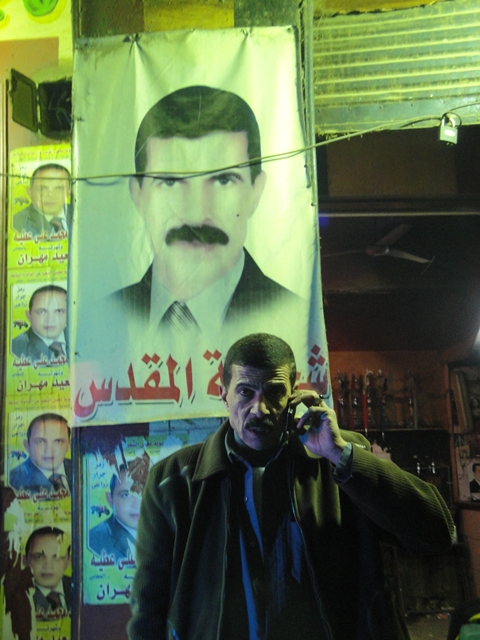
Here are some more photos from the area:


Cemeteries and Faces
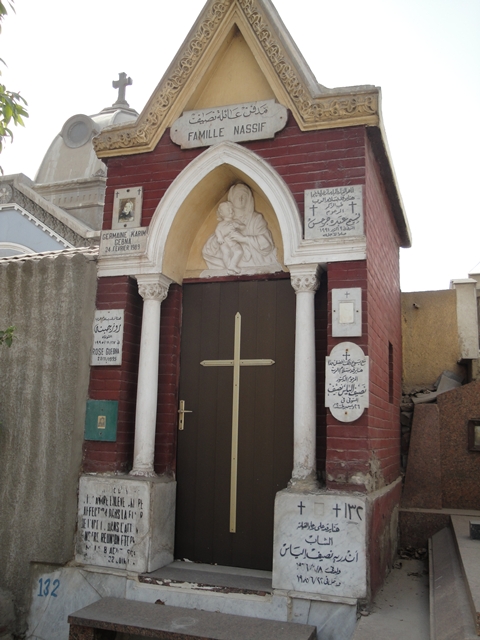
There are many faces in Cairo’s Christian cemeteries. After entering a small one in Mar Girgis (‘St. George’) the first I saw were those of three young men playing backgammon at the gate. They returned my greeting without looking up. Most of the tombs were large, free-standing structures with a family name. Here are the Nassifs.
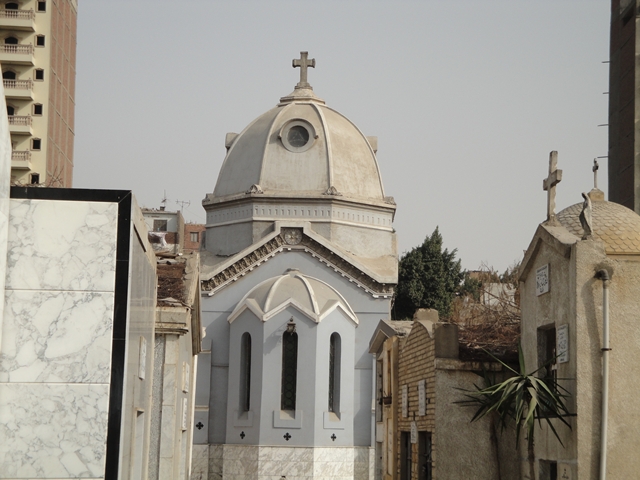
They were ornamented with icons, real and fake flowers, statues with exposed hearts.


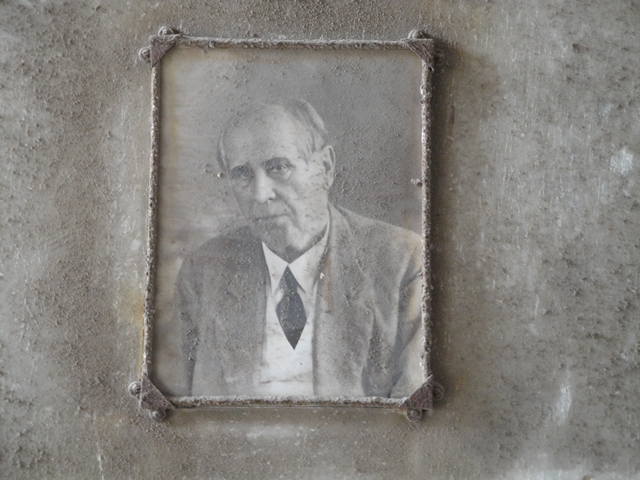
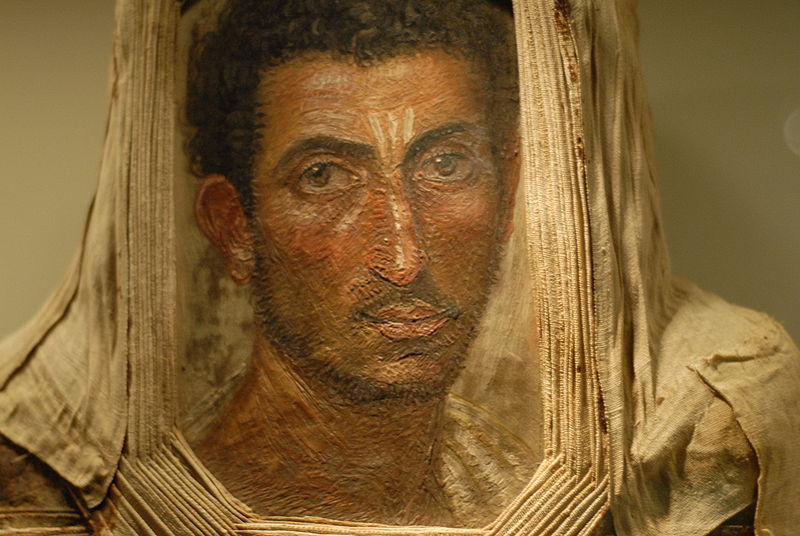
Names and dates on gravestones do little for my imagination. If I am to conjure some idea of who the deceased might have been I need at least a phrase about their life, or manner of death, to start me off, preferably something not entirely platitudinous. It is nice to know that they ‘were deeply loved’ or ‘granted mercy’ or ‘taken into angels’ care’; but it is far better to see their face. This has been an option amongst Egypt’s Copts for a very long time:


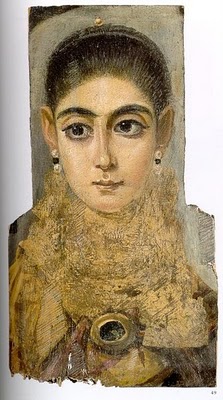
In that small cemetery, there were plenty of modern equivalents. Here is one of the Nassif’s:

There were also scholars and great beauties.


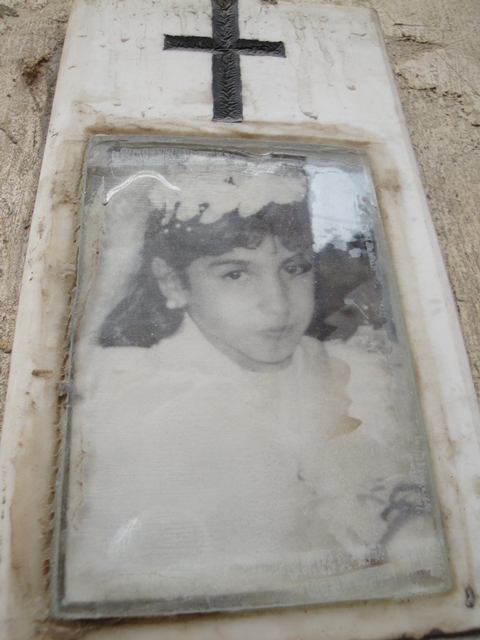

At the rear of the cemetery, there was a long mausoleum that took up most of its back wall.

Inside were marble graves stacked from floor to ceiling, most of them originally from Europe. There were the Bernadis from Parma:
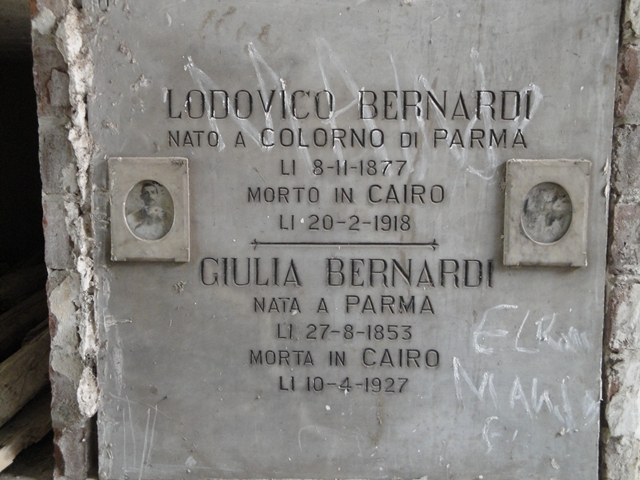
Here are the Kuhns, she originally from South Africa, he from Lindau, Bavaria.
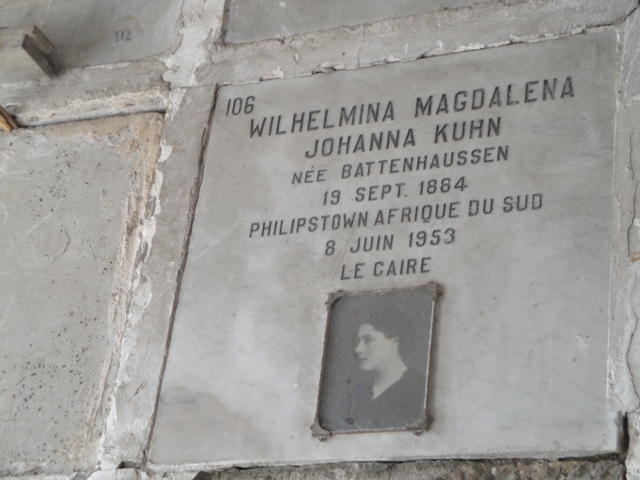

There was also a candidate for one of the worst things it can say on your gravestone.
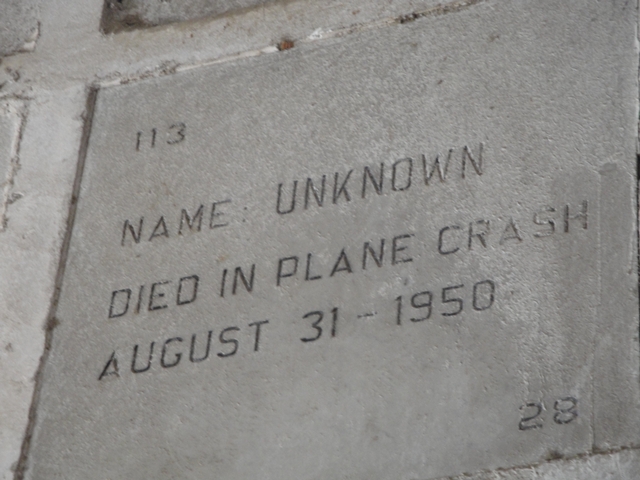
Though it is of course better to have a gravestone than not. A few of the graves lacked their fronts, most of which were empty.
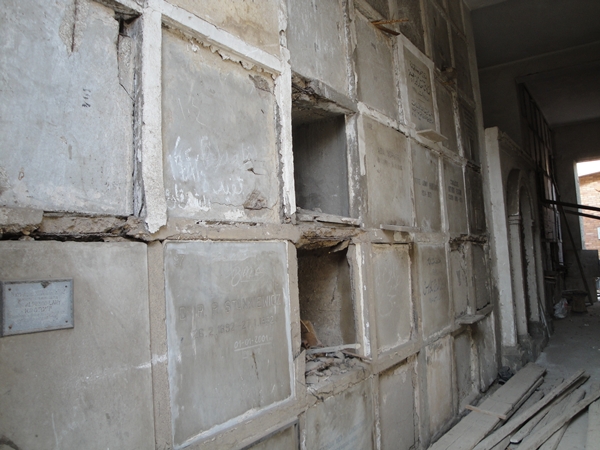
However, there was one exception.

This gentleman was still wearing his socks and shoes.
Review in SCA magazine

Sceptics in the Yining market
Barry Moore, the Chairman of the Scotland China Association, Glasgow Branch, was kind enough to write a review of my book for their magazine:
Book Review: Nick Holdstock, The Tree That Bleeds: A Uighur town on the edge. Luath Press, 2011 (£12.99)
The Glasgow Branch of the SCA had the pleasure of meeting Nick Holdstock at our June 2011 monthly meeting when his publishers had arranged with us to launch The Tree That Bleeds. The author gave an illustrated presentation in a commanding, energetic and enthusiastic manner and these personality characteristics are reflected throughout his dramatic story.
The account of Holdstock’s time when revisiting China in 2010 opens with the reporting of the noise of soldiers marching and chanting as they progress through the city of Urumqi, the capital of the largest Chinese province, the Xinjiang Uighur Autonomous Region. This image provides the background to a fascinating story of the year the author had spent living and teaching in the province earlier in the decade and to his underlying reason for revisiting the province: to learn about the riots which had taken place there and the associated ethnic discrimination.
Useful maps are shown at the beginning. The first locates Xinjiang as the most westerly province in China, more than 2000 kilometres from Beijing, bordered by Russia, Mongolia, Kazakhstan, Kyrgyzstan, Tajikistan, Pakistan, India, Afghanistan and Tibet. The second map shows the principal cities within Xinjiang, including Yining, southwest of Urumqi, where the author spent most of his time. After the maps are descriptive pages providing information about the unrest which has occurred in the province in 1997 and again in 2009 and offering divergent explanations of the events from the differing viewpoints of those reporting and commenting on them at the time. There follows a short description of the author’s original journey to Yining, which took him three days from Beijing. The early pages vividly provide the reader with the sense of the vastness, isolation and inaccessibility of Xinjiang, which has a total population of about 23 million, and of the confusions which arise from being in a separate time zone. Yining, with a population of about half a million, is called a border town although it is still about an hour away from the actual border with the neighbouring state, Kazakhstan.
In his description of Yining, Holdstock paints a detailed picture of the stark town where he taught and his observations on the changing character of Xinjiang’s ethnic composition are revealing. The people of Xinjiang, Holdstock tells us, are a mixture of Uighurs and Hui, (both Sunni Muslims), Han Chinese and several other ethnic minorities. He confirms that the reasons for the riots in 1997 and 2009 are complex and will not, if ever, be easily explained.
After the initial pages the book is divided into sections Autumn, Winter, Spring and Summer. In “Autumn” we are introduced to diverse and interesting characters including several American teachers with a hidden agenda; Murat and Ismail, two quirky and outspoken Uighurs teaching English; Miss Cai, the ‘foreign liaison officer’, with a colourful past; and Erkin a student, who invited the author to a wedding that provided him with a unique experience delightfully recounted. As autumn progresses, Holdstock became increasingly aware of the divergent lives lived by the different ethnic groups within the student body. So much so that each acts as if the others do not exist. A conundrum surely?
‘Winter’ finds Holdstock, discussing the hardships experienced by the inhabitants of Yining, (including himself) during the sub- zero temperatures. This season provides the author with the opportunity to hold numerous conversations with the different Uighurs and Han Chinese he meets. Through these conversations he gains (and so does the reader) a deeper understanding of different aspects of the Muslim faith and of the working lives of the Uigher people of Xinjiang.
After winter comes ‘Spring’. Spring opens with observations about the prevalent drug abuse which the author encounters. Discussions on this topic in some of his adult classes prove difficult for Holdstock and end inconclusively. He finds it impossible to determine if this is a result of student reticence or lack of knowledge brought about by the suppression of information.
The teaching year ends with “Summer” but Holdstock’s observations on local life continues, and with summer comes an explanation for his intriguing title!
The Tree That Bleeds is a fascinating book for those interested in what is happening in this remote part of China. While great insights and information are provided about Xinjiang province to Holdstock’s frustration he is unable to reach any satisfactory conclusions about the definitive causes and reasons for the riots, although the extent of the tensions and potential causes for strife are well described.
To my mind this is a book of short stories rather than a comprehensive and seamless tale but the format does not detract from what is a fascinating and elegantly expressed account of this little known Province. It raises the question – is there a sequel to be written about the future of Xinjiang Province in this fast and ever changing world where the Muslim faith grows ever more in importance? If so Holdstock is the man to write it.
Keizer’s Revolutionary Graffitti
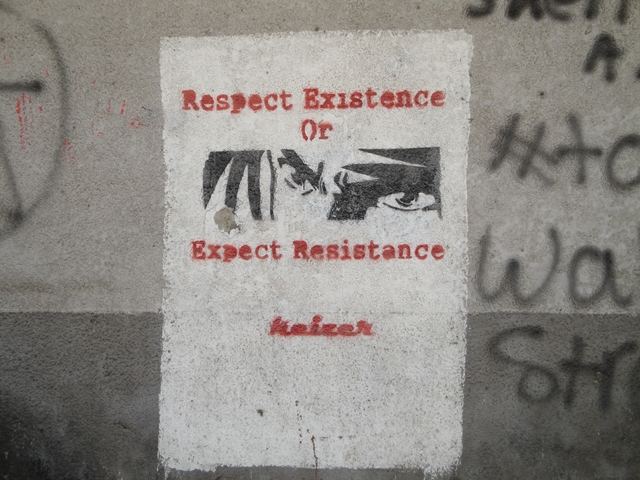
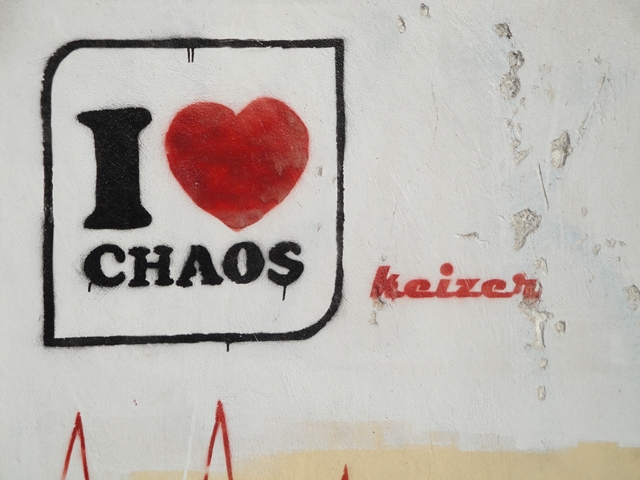
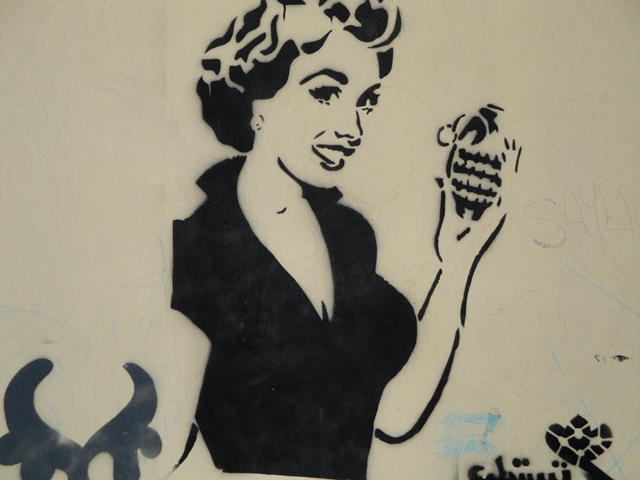
Here are some images by Keizer, one of the biggest stencil graffitti artists in Cairo, whose home turf is the walls of the Ultra Ahly Football Club HQ in Zamalek. There’s a lot of amazing work in the city, but the stuff by Keizer seems to have a clearer ideological focus (not to mention being most consistently signed). There’s an interview with him here.



Busking in Cairo
These gentlemen were working the backstreets of ‘Islamic Cairo’, and seemed to be doing pretty well. Many were amused enough to give them something. The man reminded me of Edinburgh’s favourite son, Jim Brown, aka Organic Jim (who might also benefit from this kind of amplification).
My ‘unquenchable and dangerous curiosity’.
A lot of authors seem to dread their reviews, but I have really enjoyed mine. It’s not because they’ve been wholehearedly positive, far from it. All have hated my brief use of the second person. Most have criticised my intolerance, or atheism, or refusal to tie things up in a neat, conclusive bow. For me, the enjoyable parts are the misreadings (and in some cases, the inventions) of the reviewers, the sense of the mind that the book has passed through, and how it has thus been transformed.
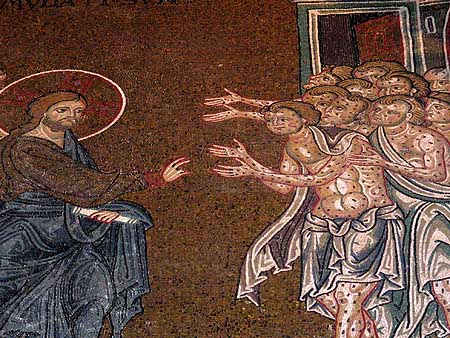
There are many things I love about this latest Review: its strange opening sentence (‘in February 1997, a riot shook China to its core which reverberated across the world’); the talk of my ‘unquenchable and dangerous curiosity’; its claim that I encountered ‘lepers up close and personal’ (I never mention them); the idea that my ‘benign and humanistic’ approach’ is indicative of the fact that the ‘book is more of a personal odyssey of growth than anything else’ (if only); the notion that I am ‘an instigator, a fire-starter’; its accusations of pathos: ‘He cannot find the people he used to know. Like most people who revisit a place in their memory, he is both estranged from the past and painfully lost to the present time as well, he sits there somewhere, lost in limbo’.
I give this review four stars!
How to Become a Good Snake Charmer

In case you were wondering, look no further:
Go to another man who is a good snake charmer, and this man will pour some water into a plate, then he makes a snake drink this. After this he puts a piece of salt in the plate with a little more water, and then makes the snake vomit the water he has drunk back into the plate. The would-be snake charmer must then drink this water. After he has done this he can handle any snake, none will hurt him.
This was the advice Winifred Blackman receved in 1924 from Sheikh Muhanni. I found this in Anthony Sattin’s excellent book,The Pharaoh’s Shadow which also contains a story of a Tree That Bleeds.
‘Tell me about the tree,’ I asked, as innocently as I could.
‘There is lots of baraka [blessing] in the tree. So much. It is the sheikha’s tree.’
‘How do you know?’
‘Twenty years ago, someone wanted to cut it down. but the sheikha appeared to them and said, “Don’t do it. This is my tree. Any my name is Sheikha Khadra.” Another time magicians came and cut the tree. It started to bleed.’
‘Red blood?’
‘Red blood,’ she said with untainted sincerity. ‘But the sheikha dealt with them. She cut off their hands.’
I waited to see if she would smile, but she didn’t.
Eight of Her Expressions (Found#11)
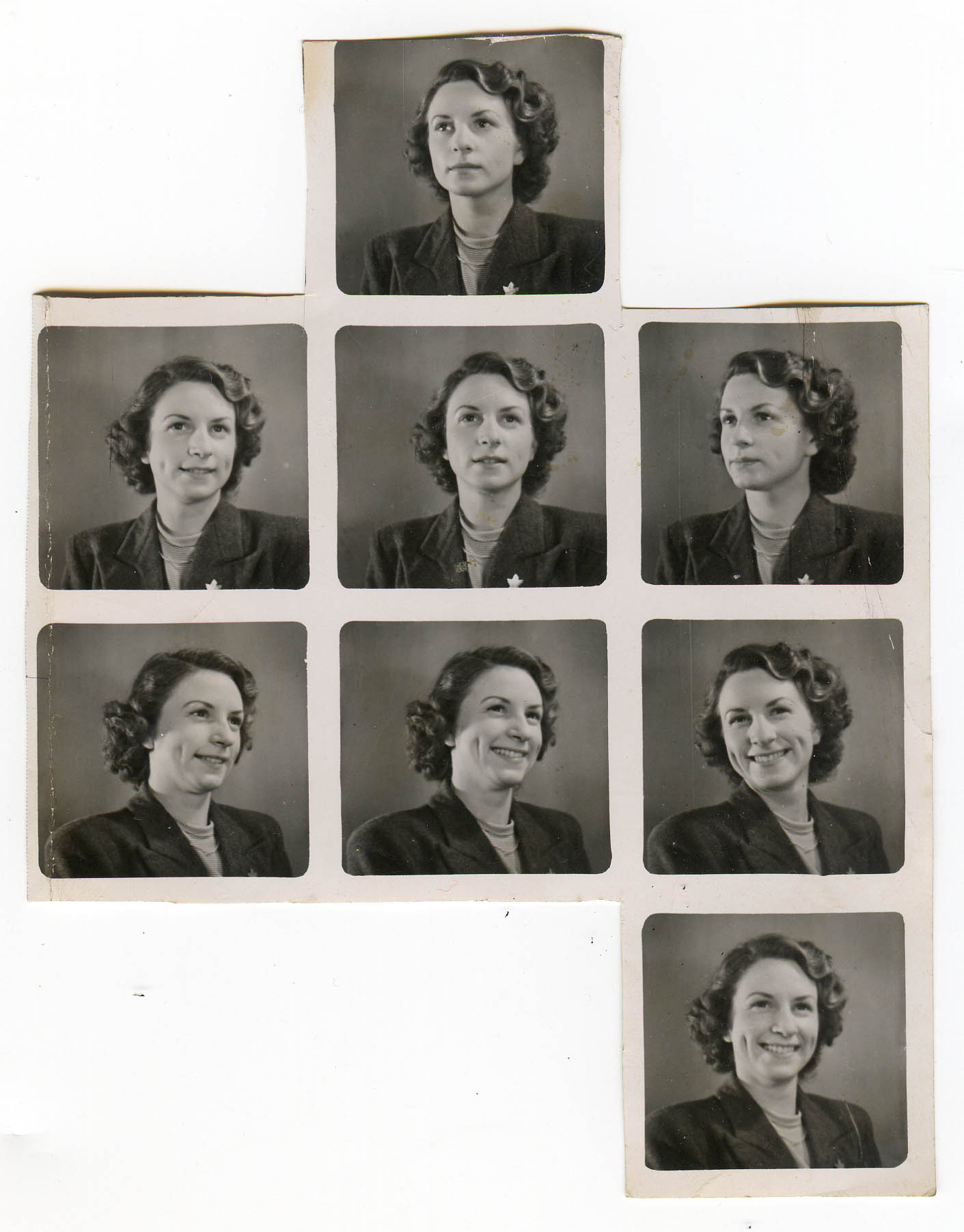
Found in a copy of The Moon’s a Balloon by David Niven, a real charity shop favourite. I wonder what the missing four expressions were?
Another Decade of Roma Exclusion?

There’s a new blog post on the CITSEE web magazine about the situation of the Roma in Europe.
Apparently, I used to be a scientist

My CV says that I have a Bsc in Experimental Psychology, and an Msc in Neuroscience. I seem to remember going for an interview at Oxford University for a PhD. The latter, I am sure, did not go any further, and probably mercifully. By the end of my masters I was very disenchanted with the practice of scientific research, in particular the way in which research seemed to follow scientific fashion, which is to say, funding. It was also disappointing to find many scientists, both at the start of their careers, and further on, who seemed to have little interest in theoretical questions.
Perhaps this was my own fault for having unrealistic expectations. Scientific research is not cheap, and needs to be focussed on details. But by the time I went to China in 1999, I had stopped taking even a passing interest in science. I didn’t read popular science books. I ignored headlines.
Last week, while logging into my email account, I saw a headline that made me stop, click, then read. Channel 4 had reported that a blood test for variant Creuztfeldt Jakob Disease was now available for use in UK hospitals.
Few people today seem worried about mad cow disease (the popular name for variant Creutztfeldt Jakob Disease). In the late 1990s people spoke of vCJD like it was the new Black Death. All the newspapers, both broadsheet and tabloid, contained harrowing stories of otherwise healthy people developing symptoms that looked like a mixture of Alzheimer’s and Parkinson’s Disease. Memory loss, personality changes, and hallucinations were accompanied by impaired speech, seizures, and problems with movement. Most patients died within 6 months, often of respiratory complications. The fact that vCJD’s symptoms overlapped with so many other neurological conditions meant there was no reliable diagnostic method until a post-mortem examination of the brain could be carried out. Only then it was possible to see the tiny holes in the brain tissue caused by massive cell death (which give it a sponge-like appearance) and to test for the presence of abnormal proteins.
One of the most frightening aspects of the disease was that there was no way to be certain you did not have it. CJD appears in a number of forms: an inherited form; one that occurs spontaneously due to a genetic defect; and one transmitted through the use of contaminated surgical instruments. In the case of vCJD, the cause was thought to be ingestion of beef products infected with Bovine Spongiform Encephalopathy (hence ‘mad cow disease’). It wasn’t just people who ate meat that had reason to be worried; any food containing meat by products (such as gelatin) was a potential risk. It was a wonderful time to be vegan.
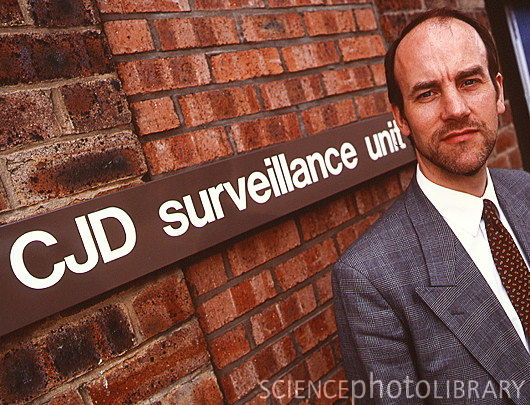
In 1997, when I was still a scientist, I did a research project at the CJD Suveillance Unit in Edinburgh- I wrote about this, and what the availability of blood tests means on the LRB Blog yesterday. It made me briefly feel like someone who actually knows something about science. No doubt, this will pass.
Here is a photo of my supervisor Professor James Ironside, looking incredibly tough.
 Nick Holdstock