Supporting Salt

s_d1f3a19637f3828feba9d0570c492c2c

The following is an open post from Chris Hamilton-Emery, Director of Salt publishing, who produce many fine poetry and short story collections (the latter makes them particularly noteworthy). My picks were Andrew Philip’s The Ambulance Box and Sue Hubbard’s Rothko’s Red.

As many of you will know, Jen and I have been struggling to keep Salt moving since June last year when the economic downturn began to affect our press. Our three year funding ends this year: we’ve £4,000 due from Arts Council England in a final payment, but cannot apply through Grants for the Arts for further funding for Salt’s operations. Spring sales were down nearly 80% on the previous year, and despite April’s much improved trading, the past twelve months has left us with a budget deficit of over £55,000. It’s proving to be a very big hole and we’re having to take some drastic measures to save our business.

Here’s how you can help us to save Salt and all our work with hundreds of authors around the world.

JUST ONE BOOK

1. Please buy just one book, right now. We don’t mind from where, you can buy it from us or from Amazon, your local shop or megastore, online or offline. If you buy just one book now, you’ll help to save Salt. Timing is absolutely everything here. We need cash now to stay afloat. If you love literature, help keep it alive. All it takes is just one book sale. Go to our online store and help us keep going.

UK and International
http://www.saltpublishing.com/shop/index.php

USA
http://www.saltpublishing.com/shop-us/index.php

2. Share this note on your Facebook or MySpace profile. Tell your friends. If we can spread the word about our cash crisis, we can hopefully find more sales and save our literary publishing. Remember it’s just one book, that’s all it takes to save us. Please do it now.

With my best wishes to everyone
Chris Hamilton-Emery
Director
Salt Publishing
http://www.saltpublishing.com

The pinch producing the slap

Dead_tree

Troubling news at Bookfox about the possible need for some premier literary journals to become self-supporting. None of these are produced for profit, and so these proposals are in many cases tantamount to closure (or to a sea-change in how they’re run, such as charging for submissions).  I’m not sure what can be done, other than, as Bookfox suggests, to voice one’s ire to the PR departments (for The Southern Review, email urelat1@lsu.edu) and executive committees of the universities in question.

That, and take out subscriptions to journals you would like to be published in (and if you don’t think they’re worthy of that small amount, why do you want to be in them?)

David Lynch’s Interview Project

empires

in a Lynchian voice: “It’s a chance to meet these people. It’s something that’s human and you can’t stay away from it.”

David Lynch is to premiere his 121-part documentary series ‘Interview Project’ on his website on June 1.

The series of three to five-minute shorts will centre on people all around the US with new episodes broadcasting every three days over one year.

The trailer is at  Interview Project. The faces alone are great.

New Ishiguro Book

51VnVP0jRPL._SS500_-1

This, of course, is cause for rejoicing. His previous novel, Never Let Me Go is probably as good a book as any published in the last decade. In a recent interview in The Guardian he admits to feeling that he peaked in his 30s, and that now it’s all just trying new things, which is either a brave admission, or a mark of how secure his position is.

The piece also contains the-should-be-horrifying news that Never Let Me Go is being butchered into film form, and will star… Keira Knightley.

As a thought experiment, let us breath deeply and consider what good might come of this. Yes, Knightley’s much vaunted looks will detract from the narrator’s averageness (from which a considerable amount of the novel’s pathos derives). Yes, the film will lack the interiority that made the novel so compelling.

But (and here I pause, and scrape the cloud hard)… I like to think that one reason why poorly written genre books (Patricia Cornwell, James Patterson etc) are so popular is because they are agressively marketed, inevitably to the detriment of more thoughtful books. If Keira Knightleys’ face on the cover makes more people pick up the novel, this is not only one more good book being read, but also, and as importantly, one less bad one too.

(There should probably now be a long, self critical paragraph that deals with my patronising belief that I know what’s best for people, what they should read, what is ‘good’ and ‘bad’ etc. Perhaps we can take this as read.)

A bunch of stink

ws-merwin-1-sized

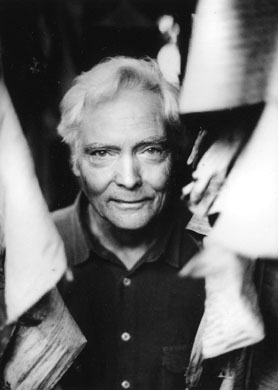
The Paris Review has an old interview with W.S. Merwin, who just won the Pulitzer prize for Poetry. The New York Review of Books had a great  piece on Merwin, and the consequences of the choices he makes with regard to form and punctuation, but peversely, stupidly and really quite bafflingly, there is no electronic version of this even for print subscribers. Exclamation marks all round!!! I don’t mind it only being available to subscribers (as with the LRB, Harpers, almost every other decent literary publication) but to ask for an extra $20 a year to read online is, to my mind, a real bunch of stink.

A frolicsome crapshoot?

everyman_philip-rothimages_big15978-83-07-03139-2

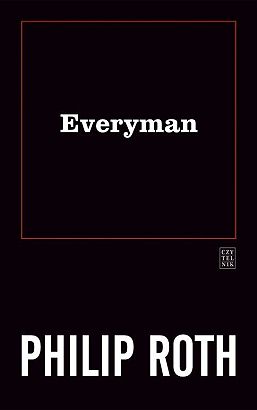
Philip Roth’s Everyman has many simple, devastating things to say about our mortality, and is one of those books that deserve to be read in their entirety in the course of a day (but not, I think, in a single sitting, as this is good for no one’s digestion). I acquired my copy somewhat fraudulently from the PR department of Jonathan Cape, on the proviso I would write a review, and though I am not about to do that, I consider this post, though several years late, my repayment of this debt, in full.

Some reviewers found fault with the novel for its plainness of style and lack of event, but to my mind this was just churlish disappointment at being denied some of the sexual fireworks that have ensured the popularity of his books (though there is, I’m pretty sure, at least one fairly hot scene slipped in between the lifetime of surgical procedures that are used to structure the book. This kind of thematic approach to structure is to my, and maybe other’s minds, a good approach to the question of how we tell the story of another’s life. One can imagine focusing on sex, betrayal, crimes, marriages, journeys, dogs owned, or great Russian novels, depending on one’s purpose).

Having just finished that, I serendipitously came across this article by RICHARD FORD, who is  without doubt one of the most charming and charismatic writers I have paid money to see. During a Q. & A. in Edinburgh in 2007 he digressed to say, “My grandfather was a suicide,” then proceeded to tell us of how his grandfather had lost the farm and the house whilst gambling, and then was so fearful of telling his wife that he shot himself dead. Ford ended the anecdote by saying, “But you’re probably not interested in that.”

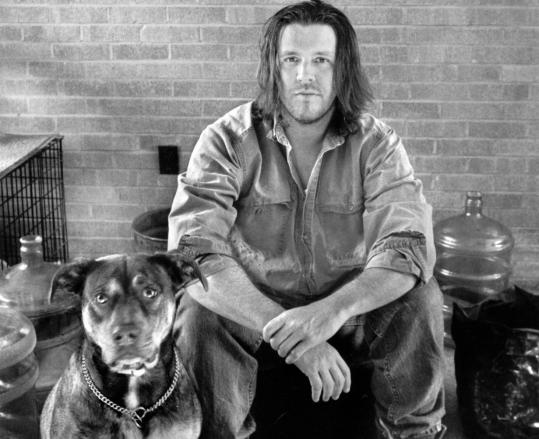
The piece has some interesting points to make about Character, and makes me think that writing a kind of representative human depends precisely on emphasising that which is particular and specific, as without these elements, no character, however emblematic they are intended to be, can persuade us into identifying with them. And now, a picture of Ford, with dogs.

29coverscott4501

Final words

539w1

There were several forms of disbelief at the suicide of David Foster Wallace last November. First, there was disbelief at the basic fact of his death. Then, on learning the manner of it, there was a refusal to comprehend that someone so brilliant, so devoted to showing the richness of mental life, could be simultaneously  so exhausted by this richness that he chose death as a solution. Finally, there was our childish refusal to accept that there would be no more. The two novels, three short-story collections, numerous non-fiction pieces- maybe half a million words -just did not seem enough. And we wanted to think this was not just our greed. We could not imagine that someone so engaged, so gifted, would not be, in spite of their depression, at work on something.

Well, even we are sometimes right, albeit twice a day. It seems that, yes, there is more. The New Yorker has an excerpt from ‘The Pale King’ which DFW had been at work on for years; the unfinished novel will be published in 2010, and apparently runs to two hundred thousand words. Also in the same issue, a long piece on DFW’s life and death, the best of its kind so far.

I suspect that when the book comes out, it will makes us feel better and worse.

“Alan Moore knows the score”

watchmen_06_-_33

This was shouted by someone, around 6 a.m., at the Scala Cinema in Kings Cross, during the title sequence for Return of the Swamp Thing. The year was 1990. The titles- consisting of a montage of pages from the comic -were by far the best part of the film.

Then there was V for Vendetta; From Hell; The League of Extraordinary Gentleman. About which there is little worth dwelling on.

As for Watchmen, I do not know if I dare to see it. But then again, as Moore says in a recent interview in Wired

My books are still the same books as they were before they were made into films. The books haven’t changed. I’m reminded of the remark by, I think it was Raymond Chandler, where he was asked about what he felt about having his books “ruined” by Hollywood. And he led the questioner into his study and showed him all the books there on the bookshelf, and said, Look—there they all are. They’re all fine. They’re fine. They’re not ruined. They’re still there. And I think that’s pretty much the attitude I take. If the books are as good as I think they are, then they are the things that will endure. And if the films are as bad as I think they are, then they are the things that will not endure. So, I suppose we’ll see at the end of the day, whenever that is.

Advice for young writers

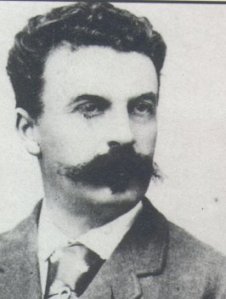
maupassant

“You must- do you hear me, young man? -you must work harder… Too many whores! Too much boating!  Too much exercise! Yes, that’s quite right: a civilised man does not require as much locomotion as doctors would have us believe.”

This was Flaubert’s advice to the young Maupassant, who he acted as tutor to. “If you have any orginality,” Flaubert told him, “you must dig it out. If you don’t have any, you must get some.”

If only these excellent precepts had been drilled into me by my own writing tutors! How many diseases might have been avoided! Those foolish hours walking!

These, alas, were not the only snippets witheld. I should also have benefited from an injunction to subscribe to various publications, in order to be familiar with the kind of work actually being published. I should have been advised that a story once written, like a fine confit, improves from being left; that a sequence of well-crafted sentences is far from being a story; that some things are always a matter of taste and that I, though still a pup-in-arms, was a goddamn genius whose star was a light that bless-ed and bedazzled.

If only this had been the case! Then I would have gladly taken part in the preparations for my tutors’ burials. I, like Maupassant, would have bathed them in eau de Cologne, dressed them in silk underwear, then a suit complete with waistcoat, cravat and skin gloves. I would have brushed their famous moustaches, covered as much of their terrible wounds as powder and care might allow. I would have engaged a choir of sweet voices, bloodied my knees in prayer. But this, alas, was not to be. They are in their pauper’s grave, while I, who live, regret.

Zadie Smith vs. ‘Zadie Smith’

Cover art: Charles Burns!

Cover art: Charles Burns!

On the face of it there are several reasons why I could dislike ‘Zadie Smith’, by which I do not mean Zadie Smith, the actual person who has loves and hates and passions just like mine, but ‘Zadie Smith’, the construct presented by the media in the form of articles about her, pictures of her, reviews of her work, her blurbs on the back of books, the object of publishers’ noble quest to ‘find’ the next ‘Zadie Smith’.

There is first of all, White Teeth, which though a good book, with much fine writing, was not the Great London Novel we were asked to worship. Perhaps its chief fault was the way its plot lurched towards an unconvincing moment of violence.

But this is something even Zadie Smith (the person) has admitted (reference when I can find it). Zadie Smith (the person) is also not responsible for ‘Zadie Smith’. This is the fault of people who do something called Publicity & Marketing. By way of a disclaimer, I should also like to say that I read the book after several years living in China, when I was, of course, quite out of my mind.

Another possible cause of dislike is her (‘Zadie Smith’) editorship of incredibly patchy anthologies such as The Burned Children of America and The Books of Other People, both of which rely heavily on already published work, some of which may have been included for extra-textual reasons (because they, like ‘Zadie Smith’ were ‘big names’, or because they were willing to waive their fee, or because they were friends of her which made it awkward to reject their work).

But then there is also the fact that I, as an editor of several incredibly patchy anthologies (whose names I forget), know something of extratextual factors. Like the need to have the names of well (or at least better) known authors on one’s funding application. And that even ‘Zadie Smith’, in her efforts to persuade a major publisher to publish and promote an anthology whose profits support a (lack of inverted commas) good cause, could conceivably have similar concerns. Also, that an anthology, by its very nature (multiple styles, concerns and forms) is doomed to be uneven (has anyone ever read an anthology and liked everything in it?)

The final potential cause of dislike of ‘Zadie Smith’ was her inclusion in a piece by Robert McCrum entitled Sebald, Hughes and Smith: three modern greats’. Leaving aside the oddness of pairing Ted Hughes and W.G. Sebald (poet and prose-writer respectively), it made little sense to include her, a young writer, with such luminaries from a previous generation, whose work is similar to hers in neither style nor concerns.

Zadie Smith was one of the first to decry her inclusion.

I would never place myself anywhere near either Hughes or Sebald. I’m 33. I’m just starting out. I’ve written three comic novels and a handful of criticism.

And it occurs to me (because it is obvious) that there is something extremely suspect about me, ‘Nick Holdstock, Edinburgh-based writer’, almost wanting to dislike ‘Zadie Smith’. It can only be some species of envy, if not of her undoubted ability as a writer, then of the status (and the opportunities afforded by it) of being ‘Zadie Smith’. One of the few solaces afforded to struggling writers (those poor souls who have to add their own inverted commas) is the act of trying to topple the great statues under whose shadows we write, even if it means burying ourselves in their rubble. If there is comfort in denigrating such figures, it is of a scuttling kind.

How much better, for all concerned, if we could simply focus on the writing. After all, this is what we, as readers and writers, ultimately care about most. Let us ignore the blurbs and reviews (unless they are actually reviews- see below, and previous post on Gass) and see what Zadie Smith is saying.

These aren’t particularly healthy times. A breed of lyrical Realism has had the freedom of the highway for some time now, with most other exits blocked. For Netherland, our receptive pathways are so solidly established that to read this novel is to feel a powerful, somewhat dispiriting sense of recognition. It seems perfectly done—in a sense that’s the problem. It’s so precisely the image of what we have been taught to value in fiction that it throws that image into a kind of existential crisis, as the photograph gifts a nervous breakdown to the painted portrait.

This is from a piece in The New York Review of Books entitled, ‘Two Paths for the novel’. It continues:

Yet despite these theoretical assaults, the American metafiction that stood in opposition to Realism has been relegated to a safe corner of literary history, to be studied in postmodernity modules, and dismissed, by our most famous public critics, as a fascinating failure, intellectual brinkmanship that lacked heart. Barth, Barthelme, Pynchon, Gaddis, DeLillo, David Foster Wallace—all misguided ideologists, the novelist equivalents of the socialists in Francis Fukuyama’s The End of History and the Last Man. In this version of our literary history, the last man standing is the Balzac-Flaubert model, on the evidence of its extraordinary persistence. But the critiques persist, too. Is it really the closest model we have to our condition? Or simply the bedtime story that comforts us most?

At this point, I was no longer eating my egg salad sandwich. I was nodding, and humming a little, thinking about the seductive pull of lyrical realism. The piece, whilst providing a proper review of the books in question (Joseph O’Neill’s Netherland and Tom McCarthy’s Remainder) frames this discussion in a meaningful way, asking us to consider not only what gives us pleasure as readers, but how important it is that such pleasure is effortful.

It also reminds us, lest we forget (and yes, we do, always) that there is nothing so artificial as Realism. That this too is constructed, through precise and concrete description, through the presentation of rich and coherent selves with lyrical inner lives. This is what we try hard to believe.

At a certain point in his Pervert’s Guide to Cinema, the philosopher Slavoj Zizek passes quickly and dismissively over exactly this personal fullness we hold so dear in the literary arts (“You know…the wealth of human personality and so on and so forth…”), directing our attention instead to those cinematic masters of the anti-sublime (Hitchcock, Tarkovsky, David Lynch) who look into the eyes of the Other and see no self at all, only an unknowable absence, an abyss.

There is more, to which I shall not do justice. Please ascend this page, then click.

Too long in the library #1

adorno-13

“To perpetuate the ethos of consumption the products of mass culture demand an identification with the status quo which produces the very smugness and intellectual passivity that seem to fit in with totalitarian creeds, even if the explicit surface message is anti-totalitarian.”

Theodor Adorno, The Schema of Mass Culture

Levitation

Sassetta (Stefano di Giovanni), The Blessed Ranieri Rasini Freeing Poor People from Prison in Florence, 1437–1444.

Sassetta (Stefano di Giovanni), The Blessed Ranieri Rasini Freeing Poor People from Prison in Florence, 1437–1444.

Aaron Schuster considers The Cosmonaut of the Erotic Future in Cabinet magazine.

Revolutionary Road

rev4

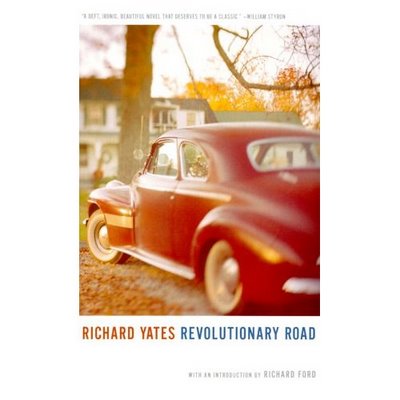
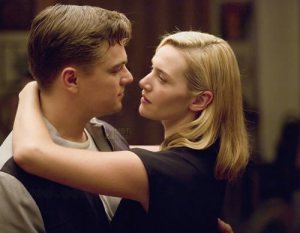
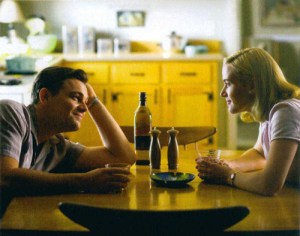
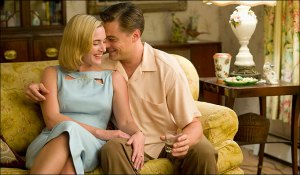
Whilst it is both predictable and a cliche to bemoan that a film, whatever its very different goals, does not ‘succeed’ to the same extent as its source material (usually a book, but I suppose this could apply to all sorts of things. For example, few would disagree that the film of Street Fighter was a huge disappointment compared to the beloved arcade game) in this case I’m going to bother, because the film adaptation of Richard Yates’ Revolutionary Road clearly reveres the 1961 novel and wants to do right by it. The screenplay preserves much of the dialogue, and makes few (if any) deviations from the book’s main narrative, other than to omit the opening chapter where the Laurel Players prepare for the play (more on this later).

The problem is that as in Sam Mendes’ previous films (American Beauty, Jarhead, Road to Perdition), the director’s approach has mostly been to try and shoot the film as if it were theatre (yes, even in the Iraq-based Jarhead). In concrete terms, this means he rarely moves the camera, and relies on close ups or medium shots of the actors.

kate1441

road1

snf3001wa-682_721767a

During dialogue, Mendes’ preferred tactic is often to use a series of reverse angles, much as if the heads of an audience member in the stalls were turning first this way, then that, to track the conversation on stage.

We might excuse this kind of thing if it was actually a play that was being filmed (due to physical and temporal limitations) but in the cinema, where, let’s face it, anything is now possible, the task of the director is surely to do more than merely present events. His or her job, I would argue, is through their control of mis-en-scene, to comment on the events of the narrative, whether it be to reinforce or undermine what appears to be taking place. This, I think, is one of the reasons most adaptations (though perhaps not Street Fighter, whose reasons for failure must remain elusive) fail to live up to their origins. While the general sequence of events is easy to preserve, much of a novel’s colour and mood depends on those passages (usually descriptive, either of external details or internal states) where little may appear to be happening. It is precisely the task of the director (and perhaps the screenwriter) to find a way of translating these elements to a primarily visual medium, whether that involves radical structural changes (as in Mike Nichol’s version of Catch 22) or minor (but cumulatively significant) choices of shot that suggest an attitude to the material (as in Kubrick’s painterly tableuxs in Barry Lyndon, one of whose effects is to contribute to the overall sense of the characters being fixed in their social places. It also reminds us of the artificiality of what we are watching, which in a Brechtian manner reduces the possibility of us engaging with the subject matter on an emotional level.

barry_lyndon_screenshot_small

It also suggests to me a new way of looking at the Old Masters, to in a sense unfreeze the picture, to think of what led to the moment depicted, what might unfold from it.

18867786

In the case of Revolutionary Road, there seems to have been an implicit trust that the virtues of the book were so instilled, so estimable, that they could not help transfer (perhaps through the ether) to the humble screen, and that to alter the material greatly could only endanger this process (which did not, however, prevent the screenwriter from giving April Wheeler the line, ‘You’re the most beautiful thing in the world- a man’).

For a further review (which has its doubt about the novel as well): A Better Life: The Current Cinema: The New Yorker

I also have my doubts, though I think there is much to admire on the whole, especially its delineation of the charcters’ “postures of controlled collapse” (the phrase belongs to Richard Ford, from his introduction to the novel). My own uncertainty surrounds the general voice of the book, whether it is at times too direct in its attempt to convey the hopelessness of practically every character. The novel’s opening chapter, which the film omits, is so effective in conveying the atmosphere of futility of the novel, that I almost felt the rest was redundant. Even the opening has this marked sense of disappointment:

The final dying sounds of their dress rehearsal left the Laurel players with nothing to do but stand there, silent and helpless, blinking out over the footlights of an empty auditorium.

Another difficulty (though obviously not the fault of the novel) is that we have been presented with so many suburban dramas about unhappy couples in the 50s and 60s that it is difficult to muster much enthusiasm. The success of Mad Men is that it functions on both a historical and individual level, and of course is able to do so because of its distance from the period it depicts. There we can understand something of the complex interplay between the changes (or lack of) in both people and the society they inhabit.  Whilst Revolutionary Road, in its title, and and the aspirations of April Wheeler, alludes to the lost innocence of 1776 (when America declared independence), for me the novel fails to work on a symbolic level. If Yates wished to argue that the dream that was America had not only run aground, but foundered (alright, maybe we don’t need convincing of that), the novel perhaps needed a broader scope (which Mad Men is more sucessful at, and, in future seasons (thank you!) will no doubt build on).

Finally, for anyone whom the film has put off Yates’ work, let me implore you to consider The Easter Parade, which I found both more subtle and compelling. It begins, “Neither of the Grimes sisters would have a happy life…”

The feeling that (literary) life is elsewhere

William H. Gass as painted by Philip Guston

William H. Gass as painted by Philip Guston

I was going to write (in a somewhat gushing manner) about how much I enjoyed William H. Gass’s piece on Katherine Anne Porter in the latest issue of Harper’s. Not because I have any particular interest in Porter (so perfect is my ignorance,  I had never even heard of her), or that learning about her life and writing created the desire to read her books,  letters and reviews, an impulse that was accompanied by a kind of anticipatory pleasure, as if her books were some new kind of fruit.

My enjoyment stemmed from neither of these, nor the satisfaction of knowing this was one less thing I knew nothing about (and for me, it is never terrible to become aware of yet another empty, dark space where the flame of my knowledge is but a lighter held aloft. On the contrary, I find it profoundly reassuring. This meager effort is usually sufficient to make me feel let off the hook (of not-knowing) so completely that it is wholly unecessary to make any futher effort). What made the piece an utter joy was simply Gass’s performance: his erudition; the grace of his prose; his metafictional tics.

On Porter’s marriage to John Koontz:

The pair moved but packed their problems with their pajamas. One one occasion husband thew wife down stairs, ‘breaking her right ankle and severely injuring her knee’. On another, he beat her with unconscious with a hairbrush. The view one has of men and marriage from the foot of such a fall, or from an instrument that should only pursue fashion or caresses, tends to be as permanent as Adam’s; nevertheless Porter tried to save her marriage by converting to Catholicism, a move I find mystifying, though I was never consulted.

On praise for Porter as ‘an excellent stylist’:

This praise is well meant, but it is also removed as quickly as it is offered. For most critics, the presence of “style” requires assurance that there is also “substance”. Style is wrapping paper and ribbon, scented tag and loving inscription. If you are careful, the tissue can be reused for a birthday or another Christmas. My aunt ironed such paper as she fancied and stored it like linen napkins in folded flat stacks beneath her bed.

Whilst this no doubt seems like ‘flashiness’ or ‘showing-off” to some- those who prefer their reviewers sober, staid,  so absent from the discussion as to seem like critical ghosts -to me it is the brilliance of a man, who at the age of 82, could not be more playful.

The article is only available to subscribers (which, believe me, is very cheap, even for those outside the U.S.- with it comes access to the entire Harper’s archive) but I can provide a pdf on request.

Having spent all this time and effort on the gush, I don’t have sufficient negativity left to write about what this post was intended to be, namely a moan/rant about the feeling that the UK has an impoverished literary culture, with few decent magazines and (as people seem to virtually crow) that there is no market or demand for or interest in short stories, unless they are by people whose long stories (i.e. novels) are already beloved. Happily, this can bring us back to Gass (and curtail my slatternly tears):

Although O’Connor, Welty, and Porter obliged us by writing novels, it is for short stories they are generally remembered, in which more polish for small surfaces is routinely expected, whereas Tolstoy, Faulkner, and Stein- well, they are moving mountains, and it doesn’t matter if they leave a small mess here and there like great chefs in their kitchens. Does it?

This year’s delusion

Apart from my perennial delusions (some of which involve a book-deal), I like to have a foolish notion to kick around during the year. Last year’s involved getting a job in the fabled (and sometimes fabulous) Shakespeare & Company bookshop in Paris. Some of the major components of this delusion: a short working week; access to luncheon vouchers; the chance to generally swan around the low-numbered arrondissements. Impressively (if only to my mind), I did  apply for a vacancy that actually existed. Less impressively, I failed to get it.

In a slight variation on this theme, I have, after visiting Berlin, resolved to live there by the end of the year. Naturally I have plans on how to achieve this. In my head, they sound great. In the meantime I shall goad myself with the following pictures taken during my recent sojourn. All images by Mr Ryan van Winkle (ryanvanwinkle.com), in the sense that he pressed the button.

early_1990nineteen_berlin_nye_-30

Various sites of worship

early_1990nineteen_berlin_nye_-136

Probably not thinking

early_1990nineteen_berlin_nye_-95

Mr. Dirk Markham wearing a found shirt

early_1990nineteen_berlin_nye_-66

The author, pictured with Death on her lunch-break.

early_1990nineteen_berlin_nye_-18

The Creeping Bent Organisation

early_1990nineteen_berlin_nye_-61

The LRB

cov3022

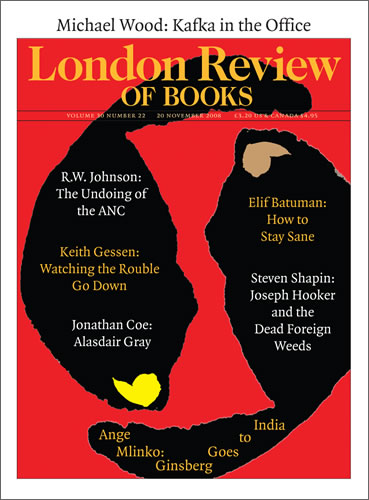
I am begining to think that The London Review of Books is pretty much the only place (in the UK) to find an actual book review. By which I mean a piece of writing that engages with the way in which a book is constructed, how it achieves its aims (or fails to), what it means in the context of other, similar works- in short, whether the book is good (or not) and why.

I used to read the Saturday Guardian and The Observer religiously, but the space devoted to books has shrunk, as the ‘cultural analysis’ of reality TV and footballer’s wives has grown (and if an utter disinterest in this sort of thing makes me an elitist, I shall willingly march to the scaffold). Now the majority of book reviews seem to consist of little more than a plot synopsis followed by some vacuous phrase intended for the back cover.

Lest this post consist entirely of griping, here are some extracts from the November 20th edition (I am always a few months behind, as even the pieces on the history of sweaters seem to compel my attention).

From Michael Wood’s piece on Kafka’s Office Writings:

‘We might think of Kafka’s response to his friend Max Brod’s question about hope and whether there was any outside the world as we know it. “Plenty of hope,” Kafka said. “But not for us.”

‘The crows maintain that a single crow could destroy heaven. This is beyond doubt, but doesn’t prove anything against heaven, since heaven means, precisely, the impossibility of crows.’

From Elif Batuman’s review of Philosophy in Turbulent Times by Elisabeth Roudinesco:

‘Helene was a Russian Jewish emigree, a Resistance fighter (unlike Althusser, who spent the war in a prison camp), eight years older than her husband, and not beautiful. By the time she got married all her closest friends had been killed by the Nazis. Her parents had died long, slow deaths from cancer before she was 14; the family doctor, her only friend at this time, betrayed her by abusing her sexually and eventually forcing her to euthanise her own parents with morphine injections. Life with Althusser was never easy either. In his manic periods, the philosopher compulsively seduced younger, more attractive women and brought them home to ‘show’ his wife. The actual murder took place when he was giving Helene a “neck massage”- on the front of her neck. The great Marxist pressed “his thumbs into the hollow at the top of Helene’s breastbone and then, still pressing, slowly moved them both… up towards her ears,” squeezing so hard that he felt pain in his forearms. He noticed this pain before he noticed his wife’s glazed and protruding tongue.’

‘For the most part, Roudinesco leaves the obscurities of Deleuze and Guattari unplumbed- “Be the pink panther,” said the two authors, “And may your loves be like the wasp and the orchid, the cat and the baboon.”‘

There are also many fine quotes in the piece from Flaubert’s Dictionary of Received Ideas, a work I think I should like to have close at hand:

‘NOVELS: Pervert the masses.

GYMNASTICS: One can never do enough. Wears children out.

HYGIENE: Must always be maintained. Prevents illnesses, except when it causes them.

In closing (and fairness) I should acknowledge the possibility that The Times Literary Supplement (and maybe, perhaps, The Literary Review) sometimes have decent reviews. However, I am yet to be convinced of this.

The LRB is available in WH Smiths, and most decent newsagents, but your best bet really is to subscribe (£20 quid for 6 months (12 issues), £34 for the year).

Absent writers #2

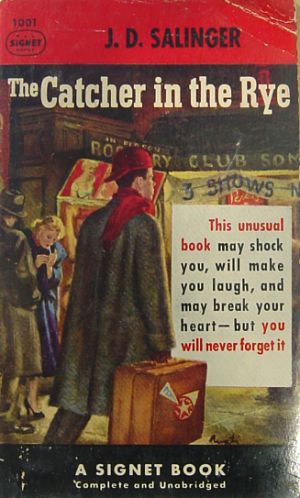
salingercatcher

Nice piece from The Guardian about Salinger’s absence.

http://www.guardian.co.uk/books/booksblog/2009/jan/01/jd-salinger

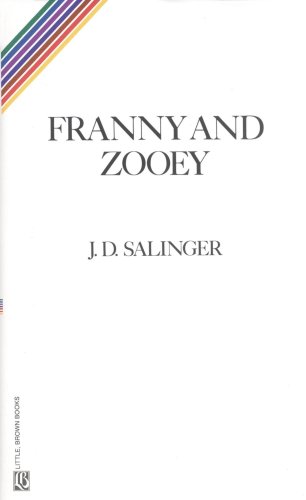
The cover is from an early paperback edition, before Salinger became successful enough to be able to stipulate there be no images on his books. There have been some fairly ghastly interpretations of this rule- to the point where one wonders if the graphics department were saying fine, alright, now lie in this bed.

031676949501lzzzzzzz1

Generally, however, the designs have been clean and cohesive, with the one on the left being the current template. Given that this post, like the one preceding it, is little more than a piece of enthusiasm, I suppose it’s appropriate to urge anyone who’s only read The Catcher in the Rye to check out the other books, which offer a series of interconnected stories about a family of genius children, who are all quite broken and charming, and as adults struggle to deal with the suicide of Seymour, the eldest child. These are strange, tightly crafted books, that often veer into mystical territory, while never losing a  sense of fun.

OK, I need to finish this post, that last sentence sounded too much like a blurb.

41sxa20j7gl_sl500_aa240_

688e410f05832decc188f5928062ffc0

031676954101_sy190_sclzzzzzzz_

More fun at the fair

kkk-ferris_wheel3

During the many seconds it took to find the image for ‘The Fun of the Fair’, I came across this picture. There are probably numerous volumes that collect such images, coffee-table books with titles like ‘Klan’s Playtime‘. If I end up teaching creative writing, this photo will  be invaluable for one of those tepid exercises where, in a bid to further mislead the students, they are presented with random pictures and asked to scribble something that, when read out, the tutor will smile benignly at while saying, ‘Very good!’

Hmm. Perhaps the picture is a fake. The board that says ‘photo by B- (illegible)’ is really awfuly fishy. If the photo has been staged there may indeed be a beautiful book published by Taschen that collects similar Klan shots: in the fun house, on the dodgems, playing crazy golf.

I am going to click some buttons to try and find out.

Stolen Stories introduction

Bad artists copy. Great artists steal.

—Pablo Picasso


Fiction is, by definition, that which is ‘made up’. Unlike biography, reportage, or booklets that purport to explain how to assemble your washing machine, fiction makes few claims to ‘truth’, not even the limited variety present in these genres. Which begs a couple of questions— how does a writer ‘make up’ something? and what is the relationship between this construction and the truth? —the first of which we’ll try to answer, the second of which we’ll try to ignore.

When we, as writers, begin a story, most of us do so with an event, image, or psychological question we wish to explore. Sometimes there is only a title (‘Richard and His Excellent Bears’), a first line (‘Melanie refused to discuss her penchant for being inverted’), sometimes a last (‘And with that the boy entered the deep, dark, dripping tunnel that led to the mine of adulthood’). All the above could be placed under the heading ‘An Idea’. These are what people ask us about after we have given a reading. They march, totter or are pushed to the mike, then after clearing their throats, croak, “Where do your ideas come from?” Usually we offer the same response given by Henry James in his 1908 preface to The Portrait of a Lady.


As for the origin of one’s wind-blown germs… who shall say where they come from. We have to go too far back, too far behind, to say. Isn’t it all we can say that they come from every quarter of heaven, that they are there at almost any turn of the road? They accumulate, and we are always picking them over, selecting among them. They are the breath of life— by which I mean that life, in its own way, breathes them upon us. They are so, in a manner prescribed and imposed—floated into our minds by the current of life.


Whilst this is enjoyably grand (not to say suitably mystifying), James’ response, like our talk of first lines and images, is a form of evasion. To say that ideas come from ‘every quarter of heaven’ is little better than saying they come from the faeries, our ‘collective unconscious’, or a tiny green shoulder weasel that whispers ideas only we can hear.

The main items in ‘the current of life’ are people, who, as characters, are usually the main parts of a story. So a better question may be, ‘Where do characters and their actions come from?’ James suggests that ‘life’ gives them to us, but comes closer to the truth when he speaks of ‘picking them over, selecting among them’. Our ‘made up’ characters and events are thus not so much given as taken from life. The writer’s task is to select those parts of life he or she feels can be satisfactorily assembled into something as pleasing as a washing machine that not only makes one’s clothes smell mother-laundered, but also never leaks in a manner that seems downright sorrowful. These range from the individual detail— a pencil-drawn eyebrow, the heft of a breast —to a particular face or way of speaking— pedantic, hectoring, a boiled sweet in the mouth —up to a sketch of a person remarkable in its verisimilitude: one that captures the manner in which they laugh, dress, breathe, eat and fall down stairs[1].

None of this can be avoided. Writers are, after all, not God. We cannot create something from nothing.  We are also not all-seeing: the majority of us are probably no more observant than average; certainly no more than policemen, pimps, or psychiatrists. When one considers the daily life of most writers—sitting in a room, perhaps the kitchen, often alone for most of the day —it becomes clear that the sphere from which most of us draw our ‘wind-blown germs’ is fairly limited. Those events and people that interest us most are often drawn from family, friends or colleagues[2], perhaps because we think we understand why ten-year-old Adam throws stones at dogs, why our friend has yet to cheat on her husband, why Polly works so late, so often, what she is avoiding at home. It may be that given our emotional connection to these people, their stories have a greater resonance for us, that they seem more deserving of being written, or at least included in our narratives. It is certainly easier than devising the inner lives of people who do not quite exist.

Which brings us to the nub of all this. For whilst there is nothing inherently problematic about placing one’s girlfriend’s nose in a story, fitting it, as it were, on another woman’s face—not unless said nose is so malformed it resembles a whelk more than an organ of scent, such an inclusion calling further attention to an already sensitive matter—it is an altogether more fraught endeavour to place your actual girlfriend in a story, even under another name, with auburn hair rather than brown, but still with the same issues about your relationship, such as, for instance, her fear you’ll leave for her someone with a shapelier nose.  Although it might be an excellent story, one of your best, it will cause her great suffering[3]. Amongst the many accusations she might later hurl as the two of you stand in the kitchen, you pressed against the washing machine, she leaning against the wall with the spice rack, the main point she might return to, as her hand sweeps the sage to the floor, would be that it was her nose and that you had no right to just take it and put it in a story for fucking strangers to gawp at. And though it was only a nose, for God’s sake (and a horrible, mollusc-like one at that), by no means the most intimate detail you could have borrowed—not her baby-talk during sex; the way she snored like a vagrant; her habit of opening her mouth to show you the food she’d chewed—you would have to concede she had a point. You had taken, you had stolen something that did not belong to you.

Later, much later, after she had moved out, you might begin to question this notion. Although a person clearly ‘owns’ their own nose, can they be said to have the same rights of ownership when it comes to things they have said or done, especially if you were also present? What about your rights? After all, these were things you saw and heard. Surely that gives you the right to use them? But regardless of whether a person can truly ‘own’ their words, deeds and thoughts — in the way you still ‘own’ that Captain Beefheart record she took, even if you said it was a present—what is far more germane is that people feel they do. And it is they, rather than any abstract ethical or legal code, who matter. They are, after all— pace James —the proverbial hands that feed us.

The main issue is thus one of permission. This is the difference between borrowing and theft (at least when it comes to records). There is nothing to stop a writer from asking their partner, their colleague, or the girl on the no. 47 bus telling a long and impressively detailed account of what she did with a Cypriot waiter on Mykonos if they mind themselves or their actions being included in a work of fiction. Nothing, I suspect, except the prospect of being told ‘no’ (and several other things besides[4]). Ideally, these people would instantly contract some baffling perceptual disorder unknown to clinical science, rendering them physically unable to read any story in which they or their actions appeared. Given the likelihood of this scenario, most writers instead pile wigs and sweaters on the people in question, change their sex, nationality, and religion, or even split them into two or more characters, especially if they are writing something that shows the person (or their nose) in an unfavourable light. This, of course, does not always succeed. Some people are surprisingly acute at spotting themselves in fiction.

The other, somewhat safer option is to portray the person in a manner unlikely to cause offense. Many of the stories in this anthology portray their subjects in a sympathetic manner, though this by no means guarantees a favourable reception, the most common accusation being ‘that-isn’t-how-it-was’. There are, however, several stories in the anthology (‘Applesauce’, for example) that gleefully announce their lack of shame at what amounts to a violation of trust, of telling a story those involved might prefer not to be shared.

We wish we’d been sent more stories like that.

Malice aside, perhaps what is most important is not a story’s provenance, but how its author deals with the ‘stolen’ material. We were sent (and rejected) many stories that did little more than reproduce anecdotes, some of which were so enjoyable—children whose glass eyes fall out; women who publicly insult each other’s genitalia on a London bus; a man who claims to have ‘built’ the robot known (to the rest of us) as Naomi Campbell —we believe we could be forgiven for making a further volume of doubly stolen stories, if only because some of the ‘wind-blown germs’ we inhale seem to demand they be allowed to burgeon into a sickness (even when its prognosis is likely to be terminal[5]).

But however enjoyable or compelling the anecdote, what ultimately mattered to us during selection was how it had been transformed. How something overheard in a bar had been expanded into a structured narrative that did not merely tell you what happened, but gave you ways to think about it you did not expect; a piece of writing which, through its control of event and language, might affect you in some lasting manner— in short, how it had been made into a story[6].

Before we began putting this anthology together, few of us had doubted the ethics of appropriating from others’ lives, probably because we never gave it much thought. A good story is all that matters, as journalists may still say. But in the end, if you write enough stories, someone will eventually say J’accuse. They will stand in your kitchen and ask by what right you took something private, something shared, and turned it into a story. They may be crying. So may you. But as you stare at their face, their unbelievable nose, you will realise that they will stand there as long as it takes. That they deserve— and you may need —some kind of answer to this.


[1] Booming; badly; from their diaphragm; messily; with grace.

[2] Even Henry James, who had a remarkably wide circle of acquaintance—in London during the winter of 1878-9, he admitted to accepting 107 invitations—based many of his heroines on his cousin Minny Temple (e.g. Daisy Miller, Isabel Archer, and Milly Theale).

[3] Whilst this is probably not among most writers’ higher aspirations for their work, revenge as a guiding motive cannot be entirely discounted (cf. Philip Roth’s I Married a Communist; Sylvia Plath’s The Bell Jar).

[4]Though let’s face it, how many writers are going to take ‘no’ for an answer? It is as rhetorical a question as, “Do you mind if I have the last scone?” Or, “Do you mind if I take another breath of air?”

[5]The question of why we are sometimes compelled to use a person, event or nose is one that warrants further study. We would like to think that this urge, while not entirely philanthropic, is at least as public-spirited as the donation of one of those benches with a memorial nameplate. That we only use such material because we believe that its inclusion is fundamental to the world-improving quality of our work. We would not like to think of it as a piece of arch-selfishness, one wholly typical of us and our deceitful, treacherous, spiteful, self-centred and thoroughly writerly ways.

[6]The other main reason we rejected stories was that they took the ‘stolen’ theme as an excuse to make free with the writings of already-famous authors. Whilst there is nothing wrong with this—William Burroughs used to write ‘GETS’ in the margins of books, when he felt something was Good Enough To Steal—if you’re going to tinker with the canon, it needs to be done not only outstandingly well (e.g. J.M. Coetzee’s Foe or Jean Rhys’s Wide Sargasso Sea) but also with a better legal defence than we would be able to muster.

Stolen Stories

getattachment

Stolen Stories is a new anthology of fiction that I co-edited and wrote the introduction for. This is the back cover blurb, that hopefully explains the concept of the book (or is, alternatively, so mystifying, so great an enigma, that you positively have to buy the book, just so you can know).

“Never, ever trust a writer. One minute you’re pouring your heart out in the pub: the tale of you and him, or you and her; the tears, the anguish, the pain. Next thing you know, it’s all over the papers: the hilarious and best-selling tale of some twit who resembles you in every way except they have black hair and better taste in music. But this is what writers do: they steal, they take, they lie. And there is no shame in this. Quite the opposite. In order to celebrate this fact, we have compiled an anthology of the finest ‘stolen’ stories, a collection of 16 tales from both established and emerging thieves, all of whom have been forced to confess the source of their thefts.”

The anthology is published by Forest Publications, and for those not residing in Edinburgh, or Glasgow (where we’ll be having our initial readings and launches) it can be ordered from Wordpower Books, price £5.99.

http://www.word-power.co.uk/books/stolen-stories-I9780955645617/

Andrew Marvell

As part of the Scottish Poetry Library’s ‘Reading Room’ series, I make some horribly personal disclosures, and also offer, somewhat belatedly, a few half-thoughts on Marvell’s ‘To His Coy Mistress’. 

http://www.readingroom.spl.org.uk/classic_poems/index.html

Stand

c_822

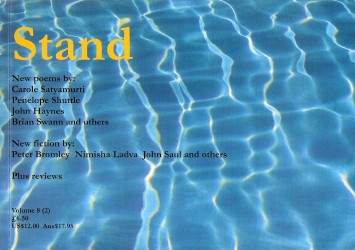
My story ‘The Fun of the Fair’ is in the new issue of Stand (Vol 8:2). This is a story that I first submitted to them almost 3 years ago. Even by the protracted standards of literary magazines, this is an impressively long time. But it is a nice magazine, with a good history, so it’s only been faintly excruciating to wait. If your library is excellent, and poetry-minded, they may have a copy.

Otherwise, you can get a copy from them direct at http://www.people.vcu.edu/~dlatane/stand-maga/

Surprisingly, it is not in the Native American issue (Vol 8:1) presently billed as the current issue.

And so, finally

Well, I’m going to try and get this site active. At least sporadically. Sort of. 

I’m going to be reading at a few places in August- At the Edinburgh Book festival on August 12th, at 3.40, in the Bookshop. And in the Book Fringe at Wordpower on August 18th at 2.15. Along with Ryan van Winkle, a fine poet and friend, and Kapka Kassabova, whose excellent memoir has just received a great review in the Guardian.

More to follow on publications.

n