‘Not enough smoke, and the snow is too loud.’

A few obscure Wes Anderson clips, the first from the 1999 MTV Movie Awards, where the Max Fischer players from Rushmore stage some popular films.

This second is a 2004 American Express commercial that’s a homage to Truffaut’s Day for Night. My advice: click on the YouTube bit on the right hand corner of the screen, and it will get bigger.

An unremembered dream

I rarely remember my dreams. But I am assured that they still happen. Or at least the same patterns of electrical activity that correlate with waking reports of a dream. Though this is fine for my brain, it leaves me feeling a bit cheated. Thankfully I own a copy of The World Doesn’t End by Charles Simic, which has many fine short pieces I can recite and pass off as my own whenever the conversation during the party/train ride/hostage situation turns the sad corner to ‘Dreams’. This is one of my current mainstays, which you may of course feel free to appropriate, should you also suffer from the same deficit, and are at a different party or bank to myself.

My thumb is embarking on a great adventure.

“Don’t go, please,” say the fingers. They try to hold

him down. Here comes a black limousine with a

veiled woman in the back seat, but no one at the

wheel. When it stops, she takes a pair of gold

scissors out of her purse and snips the thumb off.

We are off to Chicago with her using the bloody

stump of my thumb to paint her lips.

When to stop reading

I used to finish every book I began, no matter how bad it seemed. To stop reading would only compound the sense of failure the book had already inspired. I suppose that the failure, on my part, was in thinking that the book was worth reading in the first place; that a scan of its opening pages had not alerted me to the fact that it was misconceived/ cliched/badly plotted/ pretentious/narrated by a rabid dog that thought it was a hippo. There was also the fear that the book was not to blame, especially if it was part of the canon, or even just well-reviewed. Because we should always acknowledge the possibility that the fault lies with us, not the book (or at least that we share blame). We can ruin good books for ourselves by reading them last thing at night, when we are tired, or on a train where someone is talking too loudly, or simply by reading the book too quickly. And there are definitely great books that are very uneven, that have both wonderful and mediocre sections (e.g. Lanark and Ulyssess), and that the latter must be endured. Even with some of the very worst books, there is the increasingly desperate hope that the last 25 pages, when the spaceship lands, will turn out to be a tour de force that contains ‘some of the finest passages written in the English language since the end of the War’ (or some other hyperbole).

But a few years ago, after 120 pages of Memoirs of a Geisha, I decided to stop. The narrative premise was unconvincing, the writing was leaden, and there were hundreds of  books in my room. For me, this last point has become increasingly crucial. I will only be able to read a small fraction of the books I would like to read, and so to waste time on something that is less than wonderful seems ridiculous.

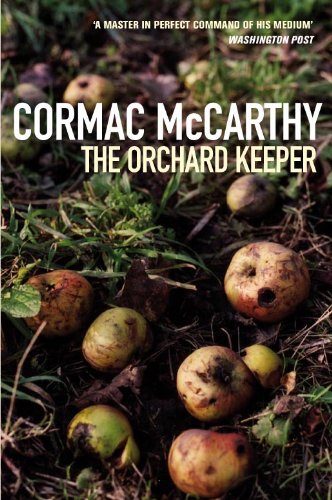
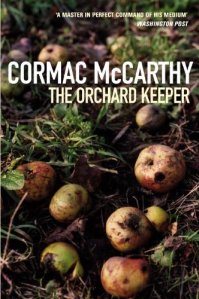
These days the difficulty is in deciding when to stop. I don’t, for example, read 50 pages and think ‘Shall I continue?’ If something is enjoyable, this question never arises. Usually it takes longer, especially if I think that the fault is partly mine, that I am just being obtuse. In the case of the book I most recently stopped- The Orchard Keeper (1965) by Cormac McCarthy -it was because I had read 5 or 6 other books by the author, and felt that I knew what to expect. This passage was decisive.

The boy followed him for a few paces, then quartered off to the creek again and the man watched him go, his legs disappearing in the mist, then the rest of him, so that he seemed to be gliding away  toward the line of willows marking its course like some nightwraith fleeing the slow reaching dawn until the man wasn’t sure that he had really been there at all. Then he came back with the pole and handed it to him.

Thanks, the man said.

They moved on across the field, through vapors of fog and wisps of light, to the east, looking like the last survivors of Armageddon.

(103-104 UK Picador edition)

Though this probably doesn’t seem bad (especially out of context), after reading 5 or 6 books written in this style, it now seems incredibly overblown, an attempt to make every event in the book into some portentous event. I’ve managed to deal with this kind of thing before, for example in All the Pretty Horses

The browsing horses jerked their heads up. It was no sound they’d ever heard before. In the gray twilight those retchings seemed to echo like the calls of some rude provisional species loosed upon that waste. Something imperfect and malformed lodged in the heart of being. A thing smirking deep in the eyes of grace itself like a gorgon in an autumn pool.

Why it should be a ‘gorgon’ is beyond me- it doesn’t fit any character’s point of view, not even the authorial voice, with its King James cadences. As a result it seems comical rather than resonant. In terms of the passage from The Orchard Keeper, I could probably have dealt with ‘nightwraith’ on its own, but the subsequent description a paragraph later of them being like ‘survivors of Armageddon’ was too much faux-epic for me.

And the other thing about ceasing to read is that it need not be a judgement on the author- I’ve enjoyed several of McCarthy’s books, and realise  this was his first novel. It’s just that I also have 2666, The Man Without Qualities, The Recognitions, In Search of Lost Time, Wolf Hall, and too many others staring at me from the shelf, and I don’t know what they contain.

Trailer for new Terence Malick film

If you didn’t like The Thin Red Line, Badlands, Days of Heaven, or The New World, judging from this trailer, you won’t like The Tree of Life either.

I happen to like the aforementioned films very much.

This comes out in May.

p.s. If the film runs slow or is pixellated, go here and watch it in HD. Which you probably should do anyway.

Summer in Baden-Baden

Summer in Baden-Baden by Leonid Tsypkin is a novel about what it means to love literature. The novel recreates the life of Dostoevsky, focussing mainly on the summer of 1867 when he and his wife Anna visited Baden-Baden. It is also an account of the narrator’s journey to Moscow, during which he visits places Dostoevsky lived and wrote about. The novel switches between these without warning, but the boundaries between these are quickly blurred, not only because the narrator, in the novel’s present, is so preoccupied with Dostoevsky, but also because both are written in the same style. Each paragraph, whether several lines, or five or six pages, is only a single sentence, full of diversions, qualifications, evasions, and digressions. Here is Dostoevsky’s reaction to Christ in the Sepulchre by Holbein the Younger, a painting that ‘was enough to make you lose your very faith’.

He stared at the picture with renewed intensity- and for a few moments it faded, even seemed to dissolve, and in its place there appeared the familiar faces: the red one with the lynx eyes, the squashed one with the protruding eyes, and then the faces of those performing the round-dance, before positioning themselves in a semi-circle at the summit of the mountain, and begining to point their fingers at him, sniggering and winking at each other, making him want to get down from the chair, but the next moment they all disappeared and he saw clearly once again the face and body of the dead Christ and heard the words about loss of faith spoken by someone else- and this idea was to become the focus of the novel, and then there began to emerge from the mist a few still indistinct objects, scenes and images: a gleaming knife- one peasant stabbing another and raising his eyes to the sky with the words: ‘God, forgive me for the sake of Jesus Christ’; then a soldier selling his pewter cross, pretending it is a silver one; words about God uttered by a simple peasant woman as she sees her baby smile for the first time; an exchange of crosses between the two main characters of the novel; then an unusually deserted Summer Garden with storm clouds thickening over the Petersburg side; a knife gleaming again somewhere in a dark corridor in one of the cheap Petersburg hotels near Liteiny Propsect and the quick glance of tiny, fiery murderous eyes, and a knife gleaming again in the darkness as it is driven in beneath the white breast of the proud and fallen woman.

The effect of these single-sentence paragraphs is to trap the reader within the flights of association that Dostoevsky is portrayed as being subject to, many of which revolve around climbing or descending a mountain, at the summit of which is a Crystal Palace (there is an irony here, in that Dostoevsky frequently mocked this image, which appeared in Chernyshevsky’s 1862 novel What is to be done?, as an idealised communal living space– in Notes from Underground it is likened to a ‘chicken coop’).

The book also raises an interesting question as to why the narrator , who is Jewish, should be so interested in a writer was made no secret of his anti-semitism. This is from A Writer’s Diary:

the whole activity of the Jews in these border regions of ours consisted of rendering the native population as much as possible inescapably dependent on them, taking advantage of the local laws. They have always managed to be on friendly terms with those upon whom the people were dependent. Point to any other tribe from among Russian aliens which could rival the Jew by his dreadful influence in this connection! You will find no such tribe. In this respect the Jew preserves all his originality as compared with other Russian aliens, and of course, the reason therefore is that status of status of his, that spirit of which specifically breathes pitilessness for everything that is not Jew, with disrespect for any people and tribe, for every human creature who is not a Jew…

However, it is more in bafflement, than anger, that the narrator considers this question; at no point does the reader get the sense that it impinges on his love for Dostoevsky’s work.


Escape from Spiderhead

Two excellent, and very different stories, from the New Yorker, one by George Saunders, the other by David Means. I particularly like the way the Saunders story starts in such an unintelligible manner.


“Drip on?” Abnesti said over the P.A.

“What’s in it?” I said.

“Hilarious,” he said.

“Acknowledge,” I said.

Abnesti used his remote. My MobiPak™ whirred. Soon the Interior Garden looked really nice. Everything seemed super-clear.

I said out loud, as I was supposed to, what I was feeling.

“Garden looks nice,” I said. “Super-clear.”

Abnesti said, “Jeff, how about we pep up those language centers?”

“Sure,” I said.

“Drip on?” he said.

“Acknowledge,” I said.

He added some Verbaluce™ to the drip, and soon I was feeling the same things but saying them better. The garden still looked nice. It was like the bushes were so tight-seeming and the sun made everything stand out? It was like any moment you expected some Victorians to wander in with their cups of tea. It was as if the garden had become a sort of embodiment of the domestic dreams forever intrinsic to human consciousness. It was as if I could suddenly discern, in this contemporary vignette, the ancient corollary through which Plato and some of his contemporaries might have strolled; to wit, I was sensing the eternal in the ephemeral.

How David Lynch sells a handbag

This is David Lynch’s film for the Lady Dior Handbag. It was written, directed, shot, and edited by David Lynch,and stars Marion Cotillard and Gong Tao. I will now make 5 announcements.

FIRST ANNOUNCEMENT: THIS IS A LONG COMMERCIAL, RATHER THAN A SHORT FILM, AND SHOULD BE VIEWED ACCORDINGLY. I.E. WITH SOME DEGREE OF LENIENCY GIVEN THE CONSTRAINTS THAT THIS INVOLVES.

SECOND: I STILL FOUND IT WORTHWHILE.

THIRD: I”M FAIRLY SURE LYNCH ONLY DID THIS FOR THE MONEY. BUT EVEN SAINTS HAVE TO EAT/BUY NEW WHITE SHIRTS/OPEN NEW CENTRES FOR TRANSCENDENTAL MEDITATION.

FOURTH: APOLOGIES FOR IT BEING TWO CLIPS, NOT ONE.

FIFTH: GOOD LUCK.

W.S. Merwin interview

There’s a half hour interview with W.S. Merwin, U.S. Poet Laureate, at the Kenyon Review.

Here’s a poem of his:

Thanks
Listen
with the night falling we are saying thank you
we are stopping on the bridges to bow from the railings
we are running out of the glass rooms
with our mouths full of food to look at the sky
and say thank you
we are standing by the water thanking it
smiling by the windows looking out
in our directions 

back from a series of hospitals back from a mugging
after funerals we are saying thank you
after the news of the dead
whether or not we knew them we are saying thank you

over telephones we are saying thank you
in doorways and in the backs of cars and in elevators
remembering wars and the police at the door
and the beatings on stairs we are saying thank you
in the banks we are saying thank you
in the faces of the officials and the rich
and of all who will never change
we go on saying thank you thank you

with the animals dying around us
our lost feelings we are saying thank you
with the forests falling faster than the minutes
of our lives we are saying thank you
with the words going out like cells of a brain
with the cities growing over us
we are saying thank you faster and faster
with nobody listening we are saying thank you
we are saying thank you and waving
dark though it is

“Let’s extensively raise goats in all families!”

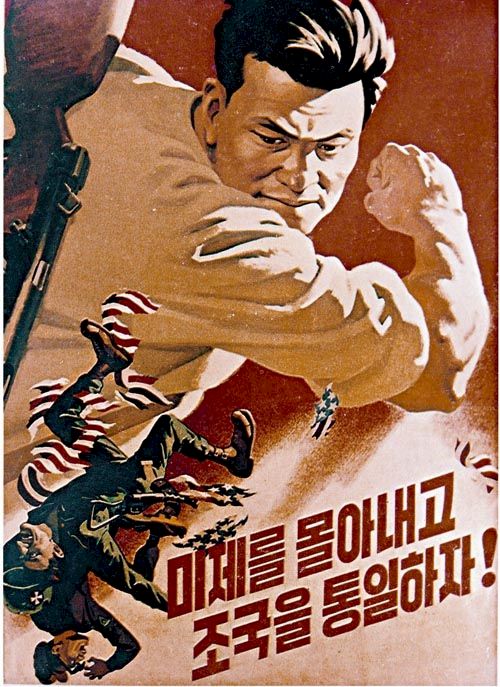
Some propaganda posters from North Korea, more of which can be found here.

"Let's drive the US imperialists out and reunite the fatherland!"

"Let's extensively raise goats in all families!"

"Do not forget the US imperialist wolves!"

"Though the dog barks, the procession moves on!"

"The US is truly an Axis of Evil."

"Wicked Man."

I hope this is worth 30 seconds of your precious time.

Ladies and gentleman, the Arnolfini Portrait by Jan van Eyck, 1434, in the National Gallery, London. It will be too small on your screen; you will need to click on it to see the carvings on the bedposts. The faces had me pretty much hooked, but then I looked in the mirror behind them, and it was like in a film when suddenly the focus of the image deepens and there is too much horizon. And then there is the green of her dress, its tumbled folds, the hat that seems about to swallow his head.

Please note the oranges.

‘What the hell is water?’

This is the text of David Foster Wallace’s commencement address at Kenyon College in 2005. If anyone can find the full audio, there may be some sort of, um, ‘prize’.

Elif Batuman on Creative Writing Programmes

Elif Batuman on Creative Writing Programmes- The Posessed, her wonderful book on Russian literature, and those who love it, is out in the UK next year.

‘It’s important that a film is loud’

David Lynch promoting Twin Peaks: Fire Walk with Me.

Considerably more fun than this, where Letterman has clearly not watched Twin Peaks:

Too long in the library #5

A fairly disapproving comment on postmodernism (from Arthur Kroker’s essay in The Postmodern Scene: Excremental Culture and Hyper-Aesthetics New York, St Martin’s Press, 1986).

We don’t have to wonder; we know just for the “fun of it.” We write just for the fun of it, just as we think, make love, parody and praise… we are having a nice day, maybe a thousand nice days. The postmodern scene is a panic site, just for the fun of it. And beneath the forgetting, there is only the scribbling of another [Georges] Bataille, another vomitting of flavourless blood, another heterogenity of excess to mark the upturned orb of the pineal eye. The solar anus is parodic of postmodernism, but again, just for the fun of it.

I was pretty much with him, until the ‘flavourless blood’. I think it is not entirely irrelevant to mention that Kroker was also one of the editors of the volume in which this appeared.

I was hoping Kroker had coined the term ‘solar anus’ but Bataille beat him to it. Here, in closing, is the sun itself.

Too long in the library #4

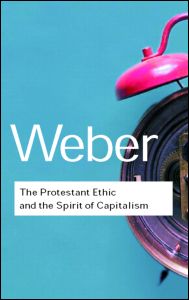
From Max Weber’s The Protestant Ethic and The Spirit of Capitalism, pub. 1904, and still pretty much on the money.

The care for external goods should only lie on the shoulders of the saint “like a light cloak, which canbe thrown aside at any moment”. But fate decreed that the cloak should become an iron cage… No one knows who will live in this cage in the future, or whether at the end of this tremendous development entirely new prophets will arise, or there will be a great rebirth of old ideas and ideals, or, if neither, mechanized petrification, embellished with a sort of convulsive self importance. For of the last stage of this cultural development, it might well be truly said: “Specialists without spirit, sensualists without heart; this nullity imagines that it has attained a level of civilisation never before achieved.”

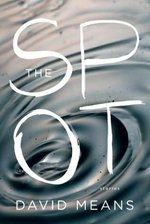
The Spot

David Means has a new collection out. It is called The Spot. It is probably awesome. I came across his previous collection, The Secret Goldfish (a Salinger reference) whilst in a bookstore in Ireland (Rep. of) and decided to check out ‘A visit from Jesus’. It is the only time I have ever stood and read an entire short story in a bookstore, and also the only time my parasympathetic nervous system reacted so strongly to a bunch of marks on a page that I staggered so much I had to grab hold of the shelf to keep balance.

Here’s a recent story of his from  The New Yorker.

The Thorn in the Heart

Trailer for the new Michel Gondry movie, a personal look at the life of Gondry family matriarch, his aunt Suzette Gondry, and her relationship with her son, Jean—Yves. Michel examines Suzette’s years as a schoolteacher and her life in rural France.

Heaven knows when it will be out in the UK, but on the evidence of this it looks worth seeing- assuming you have any interest in the lives of actual people who are not vampires or tycoons with superpowers.

A wooden tongue

The same Noh mask at three inclinations.

From Ian Buruma’s review of the new William Vollman book in the latest NYRB:

If even our deepest desires are no more than delusions, then the objects of our desires are forever beyond our reach. But Vollmann, like most of us, though moved by the performance of Noh, is not ready for Buddhist renunciation. This, he writes, “is not what I wish to believe. I want to kiss the mask, and when I put my lips against its wooden emptiness, I want to feel a woman’s tongue in my mouth.”

The triumph of his tired eyes

I am overjoyed (yes, I am capable of it) to write that my colleague, friend and co-conspirator Ryan Van Winkle has been awarded the Crashaw Prize by Salt Publishing.

I will let you know when you can purchase his debut collection.

Now he will be buying me drinks.

This and that

A few things worth a look-

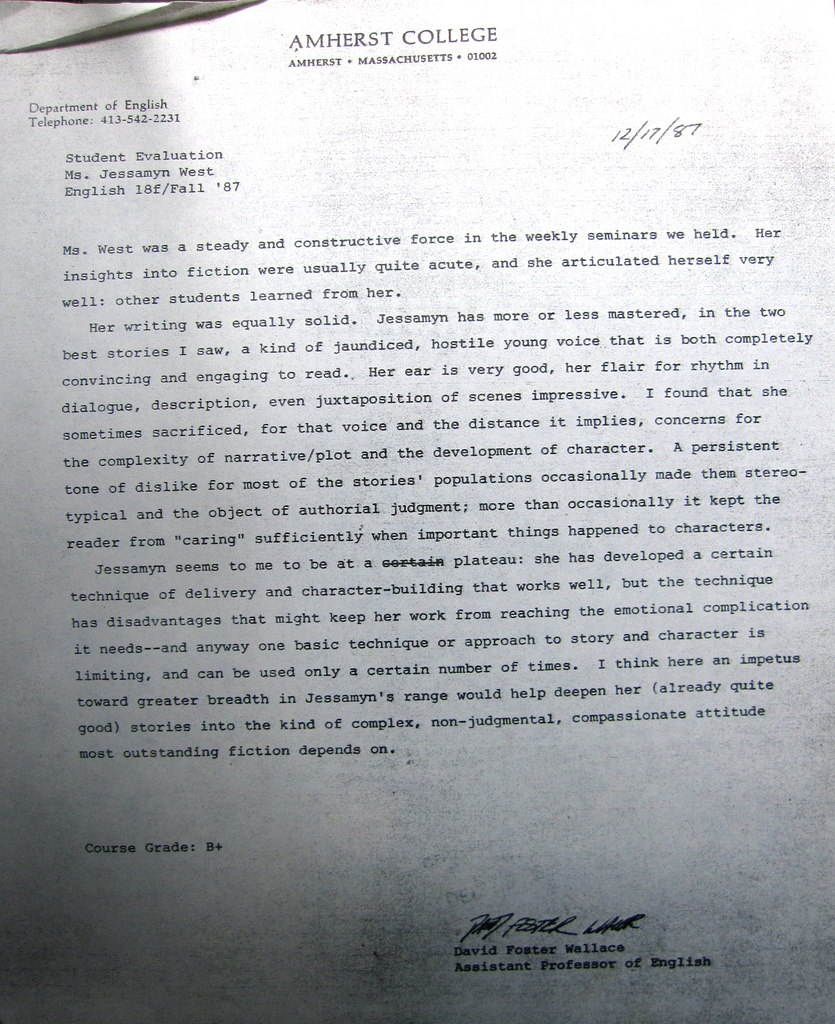
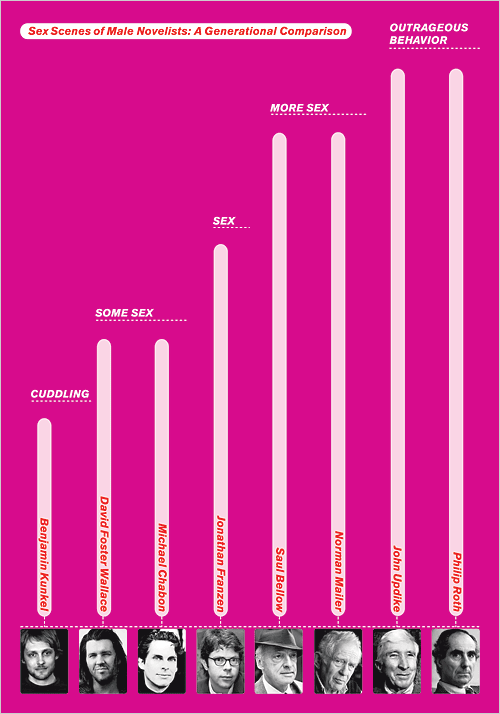
William Vollmann’s review of Ted Conover’s ‘The Routes of Man’; a new take on Salinger’s ‘A Perfect Day for Bananafish‘; the Great Male Novelists compared; why it isn’t worth being on Amazon sometimes; clip from the new Walker Percy documentary; and Zadie Smith’s rules for writers.

Recycle

During the 2008 US Presidential Election, The Onion ran a series of blog pieces purporting to be by Don Delillo (whose new novel Point Omega is just out), commenting on the political conventions in Minneapolis. There were several reasons why this seemed unlikely. The first was that The Onion is a satirical newspaper, famous for having articles whose headlines are punchlines in themselves (‘Massive Earthquake Reveals Entire Civilisation Called “Haiti”‘; ‘Man Who Enjoys Thing Informed He Is Wrong’), whereas Don De Lillo— one of the most lauded authors of his generation —has rarely been associated with either comic writing or direct political comment. The second was that the tagline for the author read ‘Master of Postmodern Literature’- surely too immodest a title to be taken seriously. Though an entirely accurate (and respectful) bio accompanied each piece (‘Don DeLillo is considered one of America’s greatest living novelists. His works explore themes of consumerism, alienation, and decontextualization, and include such towering postmodernist classics as White Noise, Mao II, and Underworld’), and though I wanted to believe that Don Delillo was writing for The Onion (The British equivalent of J.G. Ballard writing for Private Eye), in the end what convinced me that this could only be a fond parody was that one of the pieces began ‘He speaks in your voice, American’. This is the opening phrase of Underworld,  Delillo’s best-selling (and most praised) novel to date,  and thus not a phrase he seemed likely to re-use.  However, after reading through the pieces again, I had to conclude that they were at the very least a fair imitation of Delillo’s style:

In the air, invisible information. Uploads, downloads. Waves and radiation. Surrounding us both, on every side of the lobby, dozens more do exactly the same, typing with their thumbs into tiny silver death machines.

Whilst I hoped that this was a piece of self-parody, a wink at the notion that in postmodernity every text is a pastiche, even if it is only of your own work, I and most other commentators concluded that it had to be a hoax. The only indication to the contrary was an item in the New Yorker, said ‘to be from the writer himself.

Yes, I posted a blog for The Onion, but this was four years ago at the Republican Convention in New York. Evidently the report has been orbiting the blogosphere all this time. Note the prophetic reference to Sarah Palin.

All this did was muddy the waters, albeit of a debate that was somewhat less pressing than the questions being asked of the US electorate. Even if Delillo had written those pieces, and thus reused his opening phrase, did it really matter? The answer, I decided, was that it did not. And then Obama won.

But yesterday, whislt reading a collection of tributes to the late David Foster Wallace, I came across a piece by Delillo. At the end of his moving and appreciative eulogy (the pieces were first read out on 23 October, 2008 at New York University) there is a familiar phrase.

The words won’t stop coming. Youth and loss. This is Dave’s voice, American.

The idea that one should always avoid repetition in one’s work may be helpful for begining writers (‘the big dog chased the big man into the big field’ is probably not a good sentence) but done deliberately, as for example, throughout Faulkner’s work, repetition can be a very effective device.  Whilst there is an argument that a writer should always be looking for new ways to test the language, it is also true that sometimes the best way to express something has been said before, not only by others, but also oneself.

Beheaded by a laser beam

I haven’t been able to watch TV news in years, mostly due to the sterling efforts of Mr Chris Morris on programs such as The Day Today and Brass Eye.

But we all need booster shots, and here is one courtesy of Mr Charlie Brooker.

‘Non-buyers of carrots and turnips’

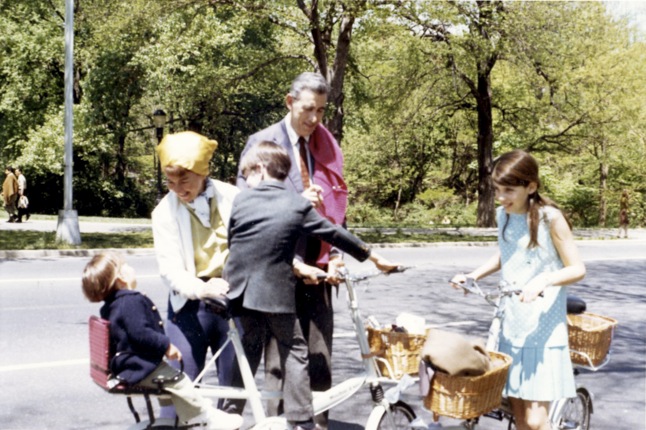
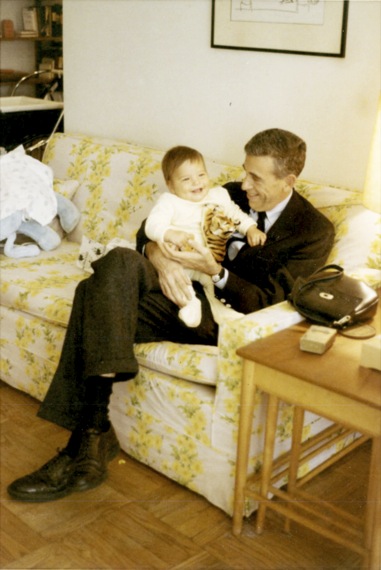
From left: Erik Ross, Lillian Ross, Matthew Salinger, J. D. Salinger, and Peggy Salinger, in Central Park.

The first rash of obituaries for J.D. Salinger seemed to add little to what we had known for years. That he had removed himself from the world (at least, the literary one) for decades, only emerging to defend his privacy, albeit sometimes at the cost of it. That he had been writing…  something during this time, but what this was, and whether we might dare to hope to see it, was no more certain than it had been for the last four decades.

However, now that the news cycle has moved on slightly (and perhaps also now that it is clear that this is not a hoax), people who had known Salinger are starting to come forward. Some of these are fairly minor, as one might expect from people who only had glancing, professional contact with Salinger (such as  Tim Bates, who corresponded with Salinger whilst working at Penguin, in the far distant days before he was my agent for a brief time. About this, let it merely be said that, like Salinger, I too remember him in my nightly prayers) whilst others are from people with a deeper connection, such as Lilian Ross of the New Yorker, who talks of his love for Emerson’s dictum that

“A man must have aunts and cousins, must buy carrots and turnips, must have barn and woodshed, must go to market and to the blacksmith’s shop, must saunter and sleep and be inferior and silly.” Writers, he thought, had trouble abiding by that, and he referred to Flaubert and Kafka as “two other born non-buyers of carrots and turnips.”

Ross’ piece is the first one to make me recall what I prize most in Salinger- not the talk of phonies and fakes, but the unswerving belief in innocence. What I would like to be able to call Goodness. There are whole clusters of feelings  we spend most of our adult lives avoiding, because of the risks they involve, because we lack the opportunity, or courage- these are what Salinger gives voice to. These are why it is worth reading (and re-reading) Franny & Zooey, Seymour: an introduction, and For Esme with Love and Squalor.

J. D. Salinger holding Lillian Ross’s son, Erik, and perhaps a little tiger too

Lynch’s Interview Project now free

There are now 80 (and counting) of these short interviews with ordinary people all over the US. Though I have only seen a few so far, each has the ring of the genuine. Each will only take 3-4 minutes of your time. I reccommend no. 67 (James Flory) as a place to start.

Wyatt Mason on Celine

Wyatt Mason, whose Sentences blog for Harpers is much missed, writes in the NYRB about Céline, not least his anti-semitism, one of the more virulent strands of his misanthropy.

To read any single novel by Céline is to receive, in a bracing style, a hysterical primer on the abjection of being. To read them all is to register a unique species of racism: a hatred not of particular elements of humanity but of the human race as a whole. Thus Jean Giono said of Céline’s writing, “If Céline had truly believed what he wrote, he would have killed himself.”

How do you catch a hold of yourself before it’s over?

Trailer for Win Riley’s forthcoming documentary about Walker Percy, appropriately featuring Richard Ford, who has spoken often, and eloquently, about the influence of Percy’s The Moviegoer on The Sportwriter.

Coming to a shelf near you…

I have a piece on the London Review of Books blog about the use of video trailers for literary fiction. It features a wonderful animation for Kazuo Ishiguro’s Nocturnes, and also one of Pynchon giving a monologue.