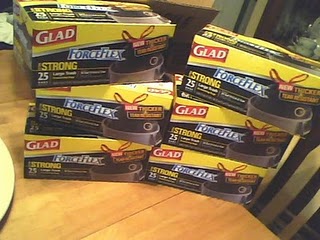
Month of Glad

As we prepare to enter what will surely be International David Foster Wallace Month (a day seems paltry, a year is just greedy), here is an old interview from The Believer, which includes the following, one of DFWs many dog references. After reading the book-length interview that is Although Of Course You End Up Becoming Yourself, these have almost come to seem metonymic not only for all kinds of DFW’s concerns, but also for the still-pointed sadness of his absence.

If you live by yourself and have dogs, things get strange. I know I’m not the only person who projects skewed parental neuroses onto his pets or companion-animals or whatever. But I have it pretty bad; it’s a source of some amusement to friends. First, I began to get this strong feeling that it was traumatic for them to be left alone more than a couple hours. This is not quite as psycho as it may seem, because most of the dogs I’ve ended up with have had shall we say hard puppyhoods, including one past owner who went to jail… but that’s neither here nor there. The point is that I got reluctant to leave them alone for very long, and then after a while I got so I actually needed one or more dogs around in order to be comfortable enough to feel like working

Scotland China Association talk

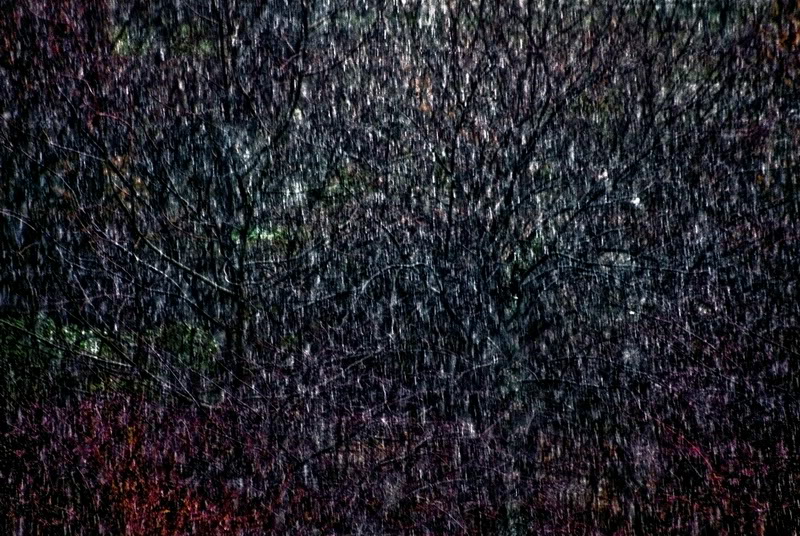
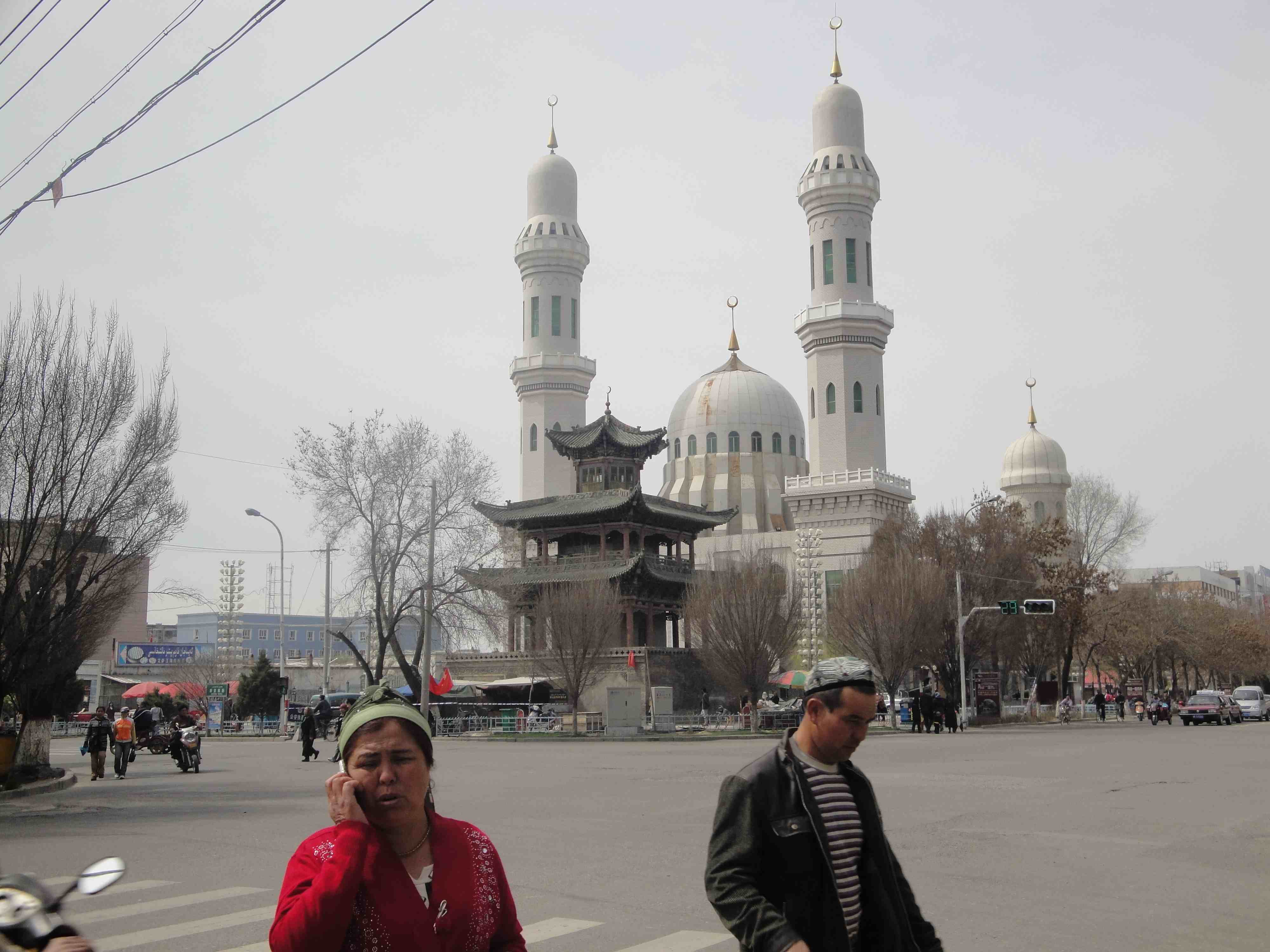
I’ll be giving a talk to the Scotland China Association on Tuesday April 12th, mainly about what’s been happening in Xinjiang since the July 2009 riots. I was there during April last year, and will be showing photos, and maybe some video from the trip. I wont be showing this photo:


Tue 12 Apr 2011 “The Tree that Bleeds: Xinjiang after the 2009 riots”

Tuesday, 12 April 2011 7pm for 7.30pm

The Meeting House
7 Victoria Terrace, Edinburgh
at the junction of Victoria Terrace and the Upper Row, just off the Royal Mile/Lawnmarket.

The first sentence

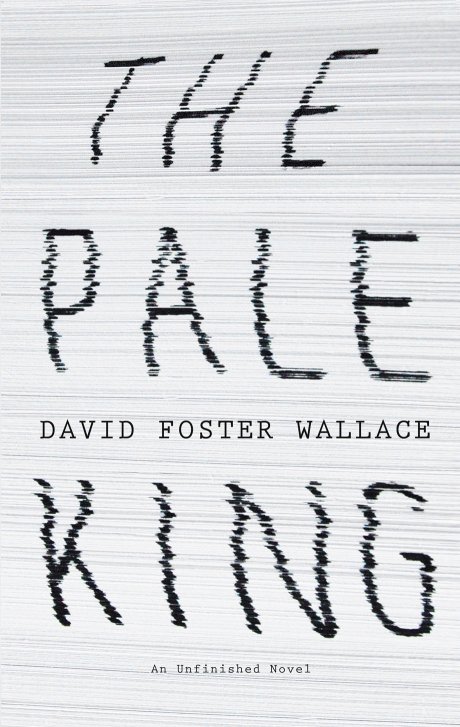
David Foster Wallace’s The Pale King opens thus:

Past the flannel plains and blacktop graphs and skylines of canted rust, and past the tobacco-​brown river overhung with weeping trees and coins of sunlight through them on the water downriver, to the place beyond the windbreak, where untilled fields simmer shrilly in the a.m. heat: shattercane, lamb’s‑quarter, cutgrass, sawbrier, nutgrass, jimsonweed, wild mint, dandelion, foxtail, muscadine, spinecabbage, goldenrod, creeping charlie, butter-​print, nightshade, ragweed, wild oat, vetch, butcher grass, invaginate volunteer beans, all heads gently nodding in a morning breeze like a mother’s soft hand on your cheek.

(from The Millions)

Books I had to read and mostly didn’t like, Part 2

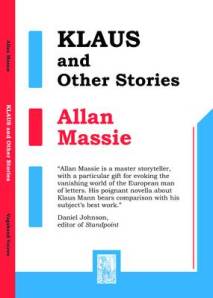
Klaus and other stories by Allan Massie

Klaus is a novella and collection of stories that span the entirety of Massie’s writing life. Though the stories are solidly composed, none are thematically or formally challenging, and for the most part feel slight- the kind of story one might write in response to a commission. The onus thus falls on the novella (which gives the volume its title) to impress. The ambition of Klaus is certainly praiseworthy- an attempt to relate the last days of Thomas Mann’s son Klaus, a novelist and political activist who ends up committing suicide after the war. The mode of narration slips between free-indirect and straight third person, in the course of which much of Klaus’s life is presented- his relations with his father, his sexual life, his opposition to the Nazis. Given the richness of this subject matter, it is all the more disappointing that the novel fails to provide a compelling portrait of the author. This can be attributed to two main failings. The first stems from Massie’s preface to the collection, which sketches the biographical details of Klaus Mann’s life and how Massie came to be interested in him. There are several cogent reasons why few novelists write prefaces to their own novels (the exceptions being when the novel is being re-issued some time after its initial publication). Firstly, it suggests that the novel cannot speak for itself (which is almost a vote of no-confidence in the novel, or perhaps, its reader). The second, perhaps more serious reason, is that it can easily diminish the reader’s curiosity about the forthcoming narrative. With a narrative in which the reader knows virtually everything that is going to happen, the burden borne by the prose, and the ideas it contains, is bound to be far greater.

Unfortunately, the second great failing of ‘Klaus’ is that it is poorly written. Despite the promises on the back cover regarding Massie’s ‘subtle prose’ and ‘dense and highly effective style’, the writing is leaden and possess a number of  stylistic tics, such as as the overuse of points of ellipsis and the continued recourse to rhetorical questions (the prose is also not helped by the obvious lack of care with which the book was proofed and typeset- there are numerous errors of punctuation throughout). The imagery for the most part lacks subtlety and fails to resonate.

What would he say now? What advice would he give?

(Klaus ordered a pastis and wondered as he poured water in and watched the liquid turn cloudy…) (p.29)

The novel’s frequent attempts at pathos are similarly unsuccessful.

Klaus thought he was looking into that cupboard under the stairs where unwanted memories are hidden away, but can’t be forgotten (p.55)

Why it should be a cupboard under the stairs- a place where brooms and vacuum cleaners are kept -that is equated with painful recollections is unclear (perhaps Massie felt that a basement or attic was too obvious).

The reader is seldom allowed to draw their own conclusions about Klaus’s mental state in his last days- instead Massie resorts to frequent passages of heavy exposition, where we are continually told (either by the omniscient narrator, or by Klaus) about some aspect of his character. On page 11 alone we are informed that, ‘Humiliation, he had known that for a long time… the humiliation of lovelessness, the knowledge that he could never find what he sought because those to whom he was most attracted could not respond in kind’. A few paragraphs later we are told that ‘Klaus had known the temptation of that abyss too well for too long not to tell it truly’. In addition to the heavy-handed way in which this information is imparted, there is also the fact that the preface has rendered the majority of such information redundant. Though Massie tells us a lot about the life of Klaus Mann, he rarely manages to show us anything vital.
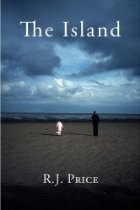
The Island by R.J. Price

The Island is a novella that describes the journey of a father and daughter to the zoo, one which becomes increasingly fraught as it becomes apparent that some kind of disaster has occurred. During the trip we are shown the childhood and marriage of the father in flashback, the latter of which seems unsatisfactory, probably doomed. However, it is the portrayal of the relationship between father and daughter, their insistently private world of shared references, in-jokes, and affectionate point-scoring that the novella is at its most successful. Unfortunately, their well-rendered relationship is embedded in a narrative that lacks any real urgency- the catastrophe is so vague and sporadic a presence that father and daughter never feel endangered, not even emotionally. It is also difficult to understand the father’s determination to reach the zoo- it is not presented as a place of safety, or hope, and given the father’s feeling for his daughter, there is no apparent reason for him to take her there. As a result, the climax of the book feels melodramatic, too eager for significance.

The same flaw inhabits much of the book’s language. There is always a compromise between what a character might plausibly think or say, and what an actual person would, but Price has the father say to his wife, who has just had a serious operation, in explanation of why he wrote verse in her get-well card,

‘It’s so much easier to say it in poetry, because poetry has silences you can fill, if you want to.’

This portentous tone occurs throughout the novella. When the father is filling in a lottery slip, he sees it as

a burlesque of a chained book in a cathedral library. Certainly, the flimsy plastic pen was likely to be worth more than the religious text of the lottery slip.

Having strained this metaphor, Price immediately has the father overcome by moral reservations about using his daughter’s birth date as a source of lottery numbers.

But he hated the thought of using numbers that had a human resonance- his own daughter, for heaven’s sake. The lottery was a dehumaniser, and people-as-numbers only colluded with its statistical hopelessness.

Even if the reader is able to believe that a character thinks like this, it is likely to be injurious to their interest in them.

Though many novels by poets (R.J. Price is better known as Richard Price, a poet) suffer from over-wrought sentences, which though sometimes elegant, cumulatively make for 0verly-effortful reading, there are some remarkably awkward sentences in what is a very short book.

His precognitive senses registered disquiet without his intelligence being able to articulate just what the problem was.

The strength of her vulnerability- the tiny intricate bonds of their life together, multitudinous, delicate each in themselves, the singe chord that kept a structure like the Erskine Bridge suspended gracefully in air!

In conclusion, this is a slight, oddly insubstantial novella, despite the many potential sources of emotion and interest that it contains.

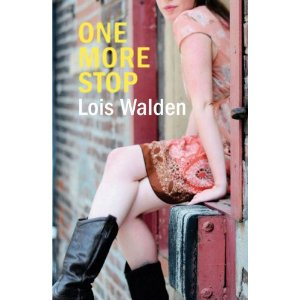
One More Stop by Lois Walden

I am unsure what genre this novel belongs in- probably inspirational chick-lit, if such a category exists. I am far more certain that I do not fall into the intended readership of this novel, which I found baffling, foolish, trite and banal. The novel focuses on the consideraby-larger-than-life character of of Loli Greene, a drama teacher, who is search of closure/resolution/coming to turns with the demons of her past (insert your own talk show cliche), who meets a variety of obstacles which she naturally overcomes. This is one of the major flaws in the narrative: many seemingly insoluble problems are easily resolved. Her troubled relationship with her father is one such example- though she has been wishing him dead, when he calls her, she phones him back, then immediately forgives him because he sounds terrrible. Loli’s involvement in a cult in the wake of her mother’s death also ends with no real conclusion. In some kinds of novels this wouldn’t matter- but given the simple models of psychological causation that books like these are supposed to offer (X is a bully because his father beat him, Y takes drugs because her husband doesn’t love her) Walden isn’t even offering her readers a plausible series of emotional transformations, just a set of platitudes e.g. ‘When you change your life, some who love you will fall to their knees, begging you to reconsider their plans’; ‘There are times in your life when you must let the dearest parts of yourself slip through your fingers like sand’.

As for the prose, it swerves from sentimental (‘She lived inside her tears. My heart still swims in her sorrow’) to grandiloquent  (‘I prefer the slow dance. This is not completely true. Depends… Age, place time. History… It is always about history.’).
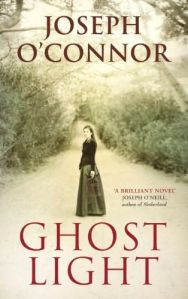
Ghost Light by Joseph O’Connor

Ghost Light is a fictionalised version of the relationship between the playwright John Synge and his leading lady, Molly Allgood. The novel begins in 1952, long after Synge is dead, when Molly is living in London in virtual destitution. The novel always stays focussed on her, whether it is following her through London, or through various episodes during her time with Synge. Though this is doubtless supposed to increase our attatchment to her, the problem is that in both the past and the novel’s present there is not enough narrative tension to sustain interest in her thoughts and memories. After the first chapter, all the novel does is put meat on the bones of what we already know. There is also an issue with voice- the perspective shifts between second and third for no obvious reason, and even her internal monologue moves between high and low registers.

The aurora borealis is their national anthem, for they are able to hear colours, touch sounds. Their flicker-lit eyes sees no blitzes, no firestorms. Their language needs no word for torture. (37-38)

Now look at that man and he gawping at me strernish, like the seam of his bollocks is hand stitched (61)

What might explain these shifts of person and register is the ghost of Synge that seems to literally haunt her present. He is present in a derelict flat opposite hers, and later in a cinema. If more were made of this in the narrative, one might be able to argue that the narration of the book is shared, perhaps contested, between Molly and Synge (hence the shifts between second person and a sort of free indirect third person), or alternately, that these different registers reflect Molly’s affectations of gentility whilst being obviously destitute. If it seems that I am working hard to excuse what are most likely failings of the novel, it is because the novel is so well-written. One wants this to count for something, whilst knowing it is not sufficient.
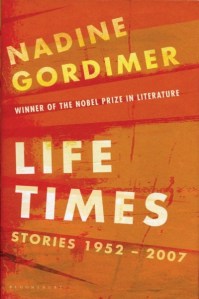

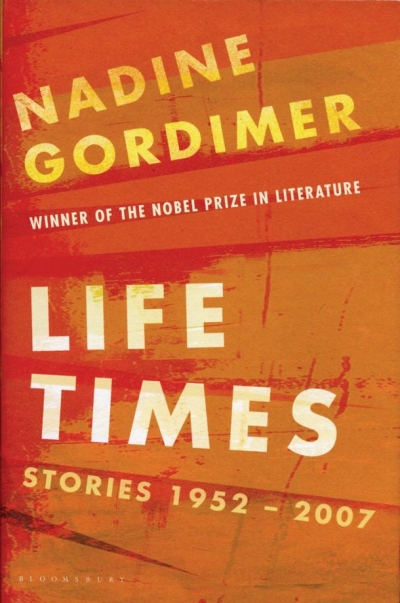
Life Times: Stories 1952-2007 by Nadine Gordimer

This collection of stories covers the entirety of Gordimer’s writing life, and as such cannot help but raise the question of why these particular stories were selected. Should we take these to be the ‘best’ stories, or at least the most representative, of her ouevre? The former arguably places more pressure on the work to impress; the latter perhaps allows for the inclusion of the occassional good, but not excellent, story in the name of variety. In terms of the range of the stories, most of the early work takes place in South Africa or surrounding countries, and primarily deals with the complexities and moral ambiguities of people living under apartheid, whilst the latter stories, written in the 1980s and after, are more geographically (and thematically) diffuse.  At their best, the early stories go beyond the simple oppositions of black and white, and show how even tolerance and apparent open-mindedness can be problematic. In ‘Which New Era Would That Be?”, Jake bemoans ‘the white women… who persisted in regarding themselves as your equal’ (52)

There was no escaping their understanding. They even insisted on feeling the resentment you must feel at their identifying themselves with your feelings… (53)

‘Six Feet of the Country’ and ‘The Smell of Death and Flowers’ contain similar moments where the veener of white characters’ sympathies are betrayed, often with an offhand expression. There is a merciless quality to Gordimer’s writing, one that often denies the characters a rich, inner life, and instead focuses on what follows from their actions. There are few, if any, white characters in the stories set in South Africa who are not shown to be complicit in the workings of apartheid, at least to some degree. In ‘A Soldier’s Embrace’ a lawyer who has represented black clients in cases against the state is shown to be motivated as much by self-interest and vanity. Though he and his wife are ‘rather proud of their friendship’ with a dissident, and claim to have been against the regime, neither have a problem with retaining a servant. After the old regime falls, they claim to have no intentions of leaving, but in the end all it takes the offer of another job elsewhere- in a different repressive regime in which they will again have both an affluent lifestyle whilst feeling themselves morally superior. But there also stories, like ‘The Bridegroom’ and ‘Town and Country Lovers’ that explore more intimate territory. Though these display the same alertness to the inequalities present in people’s relationshhips under apartheid, they also offer occassional moments of personal respite from that system. Even the abolition of apartheid is shown to be problematic. In ‘At the Rendevous of Victory’, the leader of the guerilla forces that made the overthrow of the regime possible becomes a marginalised figure the new leaders are embarassed of.

The later stories are more uneven- ‘Why haven’t you written?’ is a compelling story of a man stuck in snow-bound Mid-Western town during the winter, who drunkenly writes to his distant wife to tell her about an affair he’s having. Gordimer impressively shows him vacillating between wanting it to arrive, and wishing that it would not. On the other hand, ‘Letter from his Father’, a fictional evocation of Franz Kafka’s father, who writes reproachfully to his son from heaven, is a cliched, cringeworthy effort.

Of all the books I reviewed for the prize, this is the only one I can recommend. Though some of the other novels contained good writing, or effective scenes, what all of them lacked was the sense that they mattered, or even had much to say. Ultimately, however, it is not the undoubted gravity of Gordimer’s themes that impresses, but the precision, and subtlety with which she shows how such issues are realised in daily life.
Books I had to read and mostly did not like, Part 1

I was recently given a stack of books to read for a literary prize which should probably remain nameless. Part of my duties was to write a short review of each, justifying why it should or should not be recommended for the prize. I present these here, and should warn you that despite striving for fairness, I probably failed at times. I have an insurmountable aversion to some genres (barring the honorable exceptions that exist in each), and so may not have been as fair to the several books of quasi-mystical self-help masquerading as novels that the pile contained. To their authors, I can only apologise, and wish them better luck in the next prize-giving year.

The Forty Rules of Love by Elif Shafak

This is the story of how Ella, an affluent woman with a slightly unhappy marriage reads a manuscript about the poet Rumi, and is so overwhelmed by its timeless precepts about the human heart that she falls in love with its author, and the way of Rumi, and subsequently leaves her affluent life and slightly unhappy marriage. That this is going to happen is telegraphed to the reader with incredible haste.

And it happened fast, so fast in fact that Ella had no time to realize what was happening and to be on guard, if one could ever be on guard against love. (3)

Little did she know that this was going to be not just any book, but the book that changed her life. In the time she was reading it, her life would be rewritten. (14)

The novel takes no chances that Ella’s decision to leave her husband and children will be seen in a negative light. From the moment of his introduction,  it is clear that he has mistresses and is conscending. Yet when he discovers her affair with the manuscript’s, even this unlikable man is remarkably understanding:

I don’t blame you Ella, I deserve it. I neglected you, and you looked for compassion elsewhere.

The prose throughout the novel is over-scented, constantly attempting a kind of emotional wisdom that lacks foundation in either believable characters or even the ideas of Rumi. The morning call to prayer is described as being  ‘beautiful, rich and mysterious. And yet at the same time there is something uncanny about it, almost eerie. Just like love.’ (345)
Even after the death of the manuscript’s author, emotional depth is absent.  Ella simply says that she has learned ‘that ‘death was not something to be afraid of’. This last-gasp at profundity is immediately undercut by her chirpily telling her daughter,

‘I’m going to Amsterdam. They have incredibly cute little flats, overlooking the canals. I can rent one of those. I’ll need to improve my biking.’

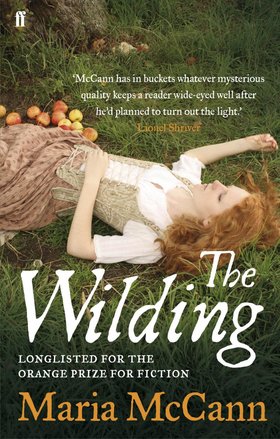
The Wilding by Maria McCann

The Wilding is set in England in 1672, just after the end of the Civil War. Jonathan Dymond, a young man who works as a cider-maker, lives with his loving parents and leads a quiet, life, travelling around the neighbouring villages with his mobile cider-press. When Jonathan’s father receives a mysterious letter from his dying brother, Jonathan grows suspicious and decides to visit his uncle’s widow to investigate. At his Aunt Harriet’s house he meets Tamar, one of his aunt’s servants, and begins to unravel the circumstances surrounding his uncle’s death.

This is a well-written novel, with a fast-moving plot, which seems well-researched  (not least in the minutiae of cider making). Thematically, it ably charts Jonathan’s journey from an initially bucolic existence to one that is more alive to the tensions and dangers inherent in people’s relations. The main problem with the novel is that the characters lack depth, especially its protagonist, which makes it difficult to be interested in his minor evolution.  Perhaps the use of at least one other perspective in the novel (for example, Tamar’s) would have brought variety and balance to the book, which for the most part lacks genuine tension- even when two women try to murder Jonathan, there is no real sense of danger. For the most part, the novel also lacks a strong sense of period. There is rarely the impression of a different culture and sensibility to that of the present.

Zero History by William Gibson

Zero History is the third novel in Gibson’s foray into the contemporary techno-thriller, a genre whose rules he subverts (or perhaps ignores), as this novel lacks the violence and sense of imminent catastrophe that such books rely on. The  plot centres around the attempt to locate the designer of a secret brand of clothing, with the aim of getting them to design clothing for the US military. Behind this, there are occassional , vague hints that Something Big Is About to Happen. Barring a few, somewhat dutiful chase sequences, the book mainly consists of fairly roughdrawn, though likable, characters serving as vehicles for Gibson’s observations of our contemoporary Western mores. At their best, these allow Gibson to make familiar moments into something unsettling.

She hung up before he could say goodbye. Stood there with her arm cocked, phone at ear-level, suddenly aware of the iconic nature of her unconscious pose. Some very considerable part of the gestural language of public places, that has once belonged to cigarettes, now belonged to phones. (103)

He was elsewhere, the way people were before their screens, his expression that of someone piloting something, looking into a middle distance that had nothing to do with geography. (179)

At other times, Gibson seems to be trying to hard to impart significance to the quotidian, as in this description of driving through London, which seems somewhat sub-Pynchon.

Like entering a game, a layout, something flat and mazed, arbitrary but fractallly constructed from beautifully detailed but somehow unreal buildings, its order perhaps shuffled since the last time he’d been here. The pixels that comprised it were familiar, but it remained only provisionally mapped, a protean territory, a box of tricks, some possibly even benign. (37)

For the most part, the prose is taut and smooth flowing, though Gibson does over-punctuate at times, as in the following sentence which has too much going on it.

The van slowed, honked, changed lanes, stopped briefly, turned. (373)

The novel is written in short numbered sections of between 1 and 6 pages, which serve to flick attention between Hollis and Milgrim, the two narrative subjects of the novel. Though this makes the book easy to read, it might have been profitable to deepen our understanding of some of the other characters- even a brief diversion from the alternation of the two main characters would suffice. Another issue with the novel (and its predecessors in the trilogy) is the sense that Gibson likes his main characters too much for anything truly bad to happen to them. As such, the resolution of the novel is somewhat flat, with most the main characters forming stable couples, a modern equivalent of the traditional all-the-good-people-get-married kind of ending. With regard to the (somewhat half-heartened) promises of a paradigmatic shift in society, this turns out be somewhat ludicrous- a way of predicting the financial markets’ behaviour seventeen minutes in advance. Gibson has written better, more imaginative novels, with a greater sense of threat, than this. Though an enjoyable read, it is not recommended for the prize.

The Faithless Wife by Jo Eames

The Faithless Wife is billed as a novel about secrets, in both the present and the past. Kate, the main character of the novel, has run away to Menorca, a place she last visited as a child. After seeing a body on the beach, she finds that the dead man was an old man named Luis she had met as a child. The novel is written in short sections that shift quickly between Kate’s present, her childhood, and Luis’s experiences during the Spanish civil war. Though there’s a lot of promising historical material in this latter narrative strand, Eames struggles to portray the people during this era in a convincing manner. Many of its characters speak as if auditioning for the part of Revolutionary:

“Married? You? I’d like to see the man brave enough to try that, comrade. Even Stalin might not be man of steel enough for that job” (23)

“This time it’s our land, our people’s land. We’re not mercenaries or occupiers. We’ve sworn loyalty to the Second Republic that the people elected, that we elected. And the only way I’m giving up this island to an invader is with my last breath!” (115)

This wooden characterisation means that the past is not particularly interesting, which thus deprives the gradual revelations about it (during the present) of their importance. This isn’t helped by some fairly unsubtle foreshadowing. Luis tells Kate:

“You think adults can’t keep secrets. You think secrets are for kids, eh? To keep things from their parents? No, my child, the adults have their secrets too. Here especially, on this island, there are many, many secrets. Too many.” (90)

As for Kate’s secret- that she has cancer -this occupies curiously little narrative space during the first half of the novel. Though this can be explained as part of her wish to avoid the truth, the sense of threat and fear is not enough to generate interest in the ‘mystery’ of what she has come to the island to escape.

sub-Pynchon, as in this description of driving through London.

Like entering a game, a layout, something flat and mazed, arbitrary but fractallly constructed from beautifully detailed but somehow unreal buildings, its order perhaps shuffled since the last time he’d been here. The pixels that comprised it were familiar, but it remained only provisionally mapped, a protean territory, a box of tricks, some possibly even benign. (37)

Mad Men (on Trains, Planes and Automobiles)

Contractual wrangling means that the next season of Mad Men probably wont air until 2012 (gasp). In the meantime, here’s a kind of spoof/public service announcement that Vincent Kartheiser and Rich Sommer made, which isn’t exactly funny, but feels right enough.

Gutter

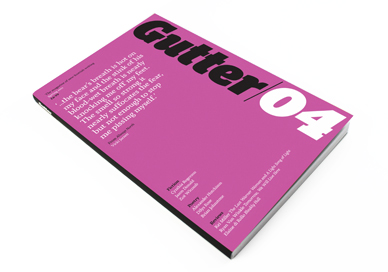
I have a story in the new issue of Gutter, as does Jane Flett, my colleague at Forest Publishing. It also features a review of Ryan Van Winkle‘s excellent book of poems, Tomorrow, We Will Live Here. My story is called ‘I am not Gary, She is not Gwen’- this is how it starts:

After a hard day’s ride we arrived on the outskirts of Plate. We fed the horses and pitched the tent; after a frugal supper, we slept. It was a deep, refreshing sleep. In my dream the President shook my hand after pardoning us. He said, “O my son and daughter! How greatly you have suffered!” Then he hung gold medals round our necks and named a park after us.

In the morning we put on our masks and rode into town. When we passed someone, I said, “Hello,” and after they returned my greeting, I added, “We’re on our honeymoon!” Then I waved my beak, and Ethel waggled her horn, and after we’d gone through this a few times, it was more or less true.

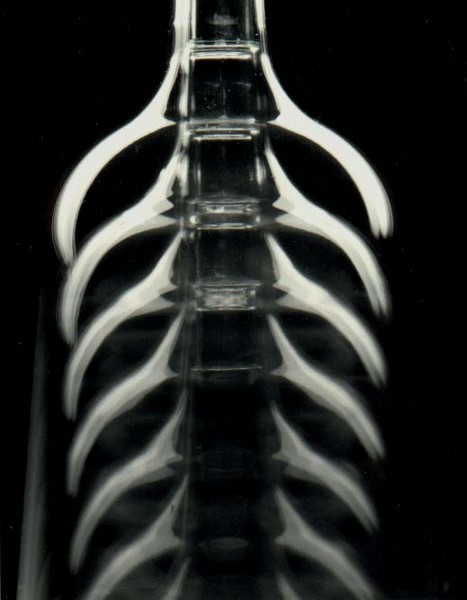
Backbone

There’s a new David Foster Wallace story in the latest New Yorker. It begins

Every whole person has ambitions, objectives, initiatives, goals. This one particular boy’s goal was to be able to press his lips to every square inch of his own body.

The story has a plain, dry descriptive tone in places, as it lists muscle groups and bones, that then switches to one of direct emotional appeal. After only one reading, I hesistate to draw conclusions, but there was a wonderful openness to the way that the boy’s painful attempt of the impossible is put alongside holy equivalents from history (or ‘facts’ that are presented as such) without any direct linkage. The boy, for some unspecified reason, seems more contained and focusessed than his father who makes a living out of selling motivational material of his own devising. The boy seems to have no capacity for boredom- he pays attention to everything, and functions well socially, but is also wholly detatched. The first line’s mention of the ‘whole person’ can be taken to mean that what the boy’s father, and many of us have, are not ‘ambitions, objectives, initiatives, goals’ but something more twisted by doubt and fear. These are what push us through life, not the clear synonyms mentioned.

I’m guessing this is from The Pale King, but greedily hope that it’s not.
UPDATE: I think it is. DFW read an early version of it back in 2000- here’s the differences between that version and the New Yorker story- interesting, in terms of the emphasis added to the holy figures. http://bit.ly/i8iajY

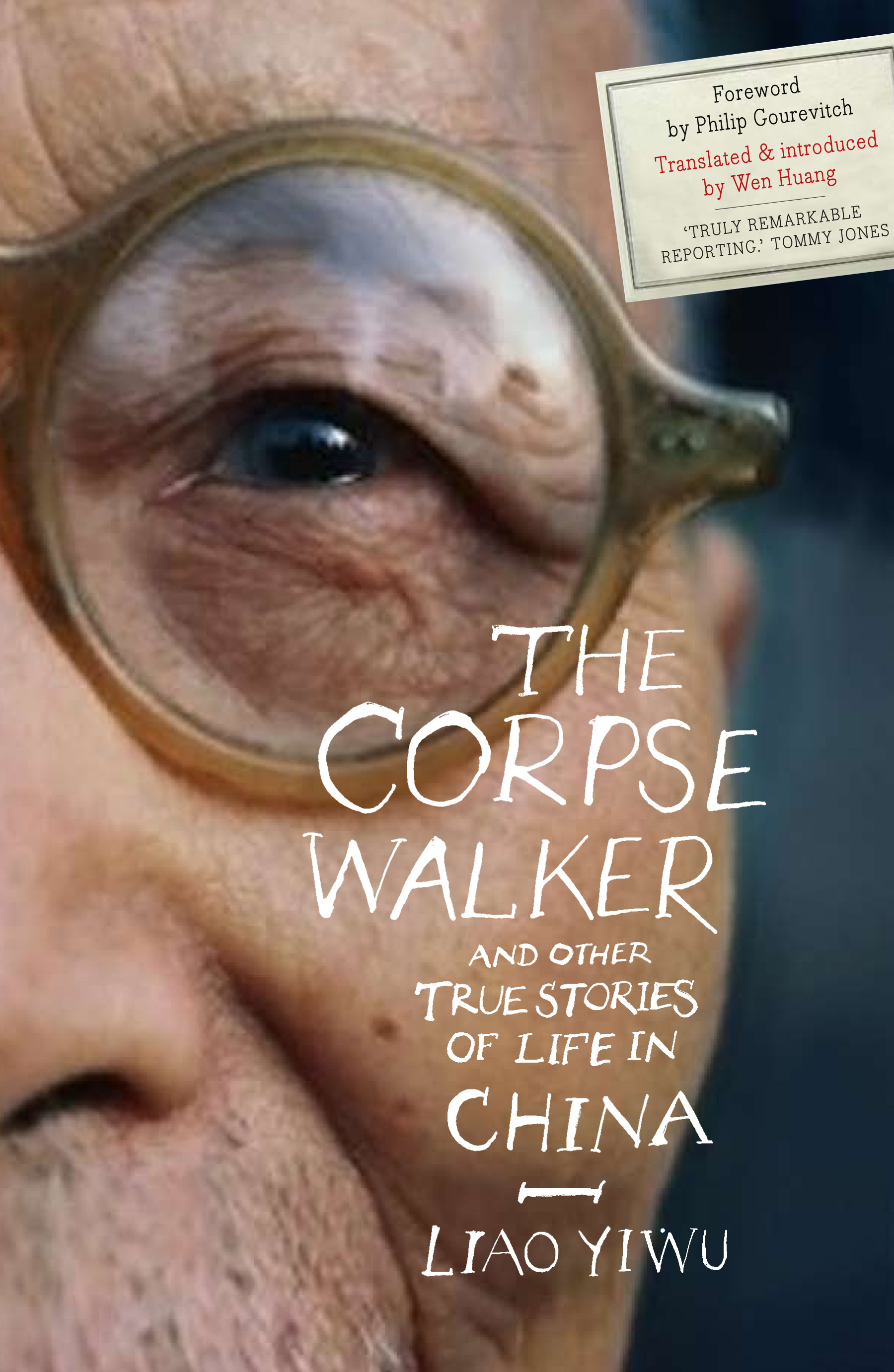
The Corpse Walker

Liao Yiwu’s book is a collection of interviews with people on the margins of Chinese society. This is an extract from an interview with a man in prison for human trafficking.

LIAO: You sent your daughters to a faraway place and married them off to strangers for money?

QIAN: What do they know about happiness? My daughters are the children of a poor peasant. As long as their husbands have dicks, that’s all I care. The more often women get laid, the prettier they look. Of course with some women, after they give birth to a couple of kids, their looks are gone forever.

LIAO: How did you manage to expand your business?

QIAN: I realized that I could be pretty charming.

His other interview subjects include a professional mourner, a murderer, a beggar, a fortune teller, a thief, a dissident, a homosexual, a pimp, a former landlord and a school teacher. Most were cast out of mainstream society during the various political purges of the Mao era or are products of the tumultuous generational changes sweeping China.

Much of Liao’s work is banned in China and he is forbidden to publish. In the spring of 1989 he was given a five year sentence for publishing two poems deemed to be anti-Communist.  He was released early in 1994 for ‘good behaviour’ (though with only fifty days left of his sentence. In 1998, he compiled an anthology of underground poems of the 1970s that included or made references to numerous Chinese dissidents. One of China’s vice-premiers ordered an investigation into the book, calling it a ‘premeditated attempt to overthrow the government, and… supported by powerful anti-China groups’. Liao was again detained. He currently lives in Chengdu, in Sichuan province (where many of these interviews took place).

Another reason these interviews are banned in China is that they feature people speaking candidly about the injustices of the past, and being critical of the Communist party. Here’s an interview with ‘a Rightist’

FENG: …We joined the Communist revolution so we could live a better life, have enough to eat, marry a beautiful woman and raise a family. This basic concept was totally distorted in the Mao era. All we talked about were the abstract ideas such as the Party and the People. Private lives were considered something disgraceful. You can’t marry the Party or the People, can you? We used to hear phony stuff like “So-and-so has been nurtured by the Party and the People.” What do the Party’s breasts look like?

Liao’s book is full of the kind of rich, detailed, revealing stories that don’t seem to count as ‘news’. It was perhaps for this reason that many of these first appeared in English in The Paris Review. Their site has a few extracts, some of them quite long, from interviews they’ve run. My only qualm is with the English translation, which at times is overly idiomatic (e.g. the use of words like ‘phony’ and ‘jerk’)- I would have preferred something less region specific. But this doesn’t diminish the value of these pieces, which offer perspectives on Chinese life that are seldom otherwise heard,

Extracts from interviews with The Public Toilet Manager and The Peasant Emperor here.

“There is great chaos under heaven – the situation is excellent.”

Tharir Square in Cairo, this morning

Here’s Zizek’s take on the protests in Egypt:

Why fear the Arab revolutionary spirit? | Slavoj Žižek | Comment is free | guardian.co.uk

And here’s my summary of In Defense of Lost Causes


Rabbits vs. Tigers

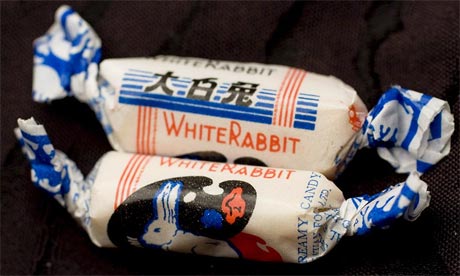
I have a new piece on the London Review of Books Blog about a vicious South Park-style cartoon that has been banned in China. WARNING: some animated rabbits get hurt.

Their sullen adoration

Right wing of the diptych Virgin and Child Surrounded by Angels by Jean Fouquet, c.1450. Wood, 93 x 85 cm Royal Museum of Fine Arts, Antwerp.

Yukio Mishima once wrote about a picture of St. Sebastian whose ‘only purpose had been to lie in wait for him’. Whilst I disagree with Mr Mishima about many things- for example, the irrelevance of women, the need for emperor worship, the advisability of staging a coup -I did feel ambushed when I saw this on the cover of a book about 15th Century European painting. The angels’ faces are sullen, threatening. I don’t know if the angels are red and blue because they represent different types, or if this is just for visual impact. As for the enthroned Virgin, she is said to be modelled on Agnès Sorel, mistress of Charles VII, who died of mercury poisoning aged 28, and whose cousin took her place after her death.

As for Mr Fouquet (1420–1481), he is thought to have been the inventor of the portrait miniature.

How to play a tiger

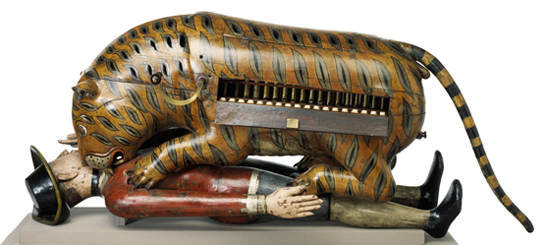
‘Tippoo’s Tiger’ is a life-size tiger of carved and painted wood, seen in the act of devouring a prostrate man in the costume of the 1790s. Concealed in the bodywork is a mechanical pipe-organ with several parts, all operated simultaneously by a crank-handle emerging from the tiger’s shoulder. Inside the tiger and the man are weighted bellows with pipes attached. Turning the handle pumps the bellows and controls the air-flow to simulate the growls of the tiger and cries of the victim.

Tipu (Tippoo Sahib to his European contemporaries) was Sultan of Mysore in South India from 1782-99. He was the implacable enemy of the East India Company, a commercial enterprise with its own armies and civil administration, which during the late 18th century was engaged in extending British dominion in India. Tigers and tiger symbols adorned most of his possessions, from his magnificent throne to the uniforms of his guards.His armoury included mortars shaped like sitting tigers, cannon with tiger muzzles, and hand weapons decorated with gold tiger heads, or inlaid in gold with tiger masks formed by an arrangement of Arabic letters meaning The Lion of God is the Conqueror.

The tiger is currently in the V & A in London, and if you don’t think it’s scary enough, listen to them play the organ inside it.

A heart-shaped face

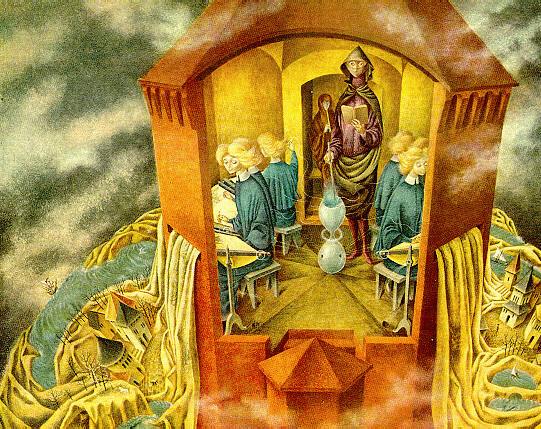
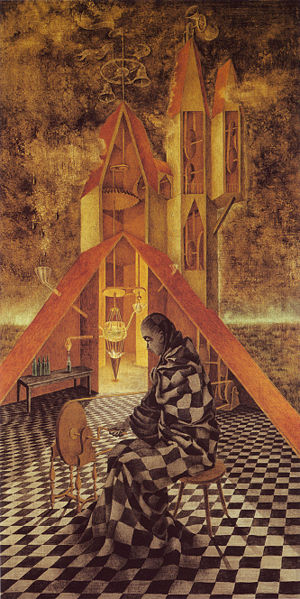
At the end of the first chapter of Thomas Pynchon’s The Crying of Lot 49, Oedipa Maas looks at a painting and cries. The painting is by the exiled Spanish artist Remedios Varo and depicts

a number of frail girls with heart-shaped faces, huge eyes, spun-gold hair, prisoners in the top room of a circular tower, embroidering a kind of tapestry which spilled out the slit windows and into a void, seeking hopelessly to fill the void. (CL 13).

What upsets Oedipa is that she identifies with these girls, not only their sense of captivity, but also their impotence. It is with terror she thinks that

what really keeps her where she is magic, anonymous and malignant, visited on her from outside and for no reason at all… if the tower is everywhere and the proof of deliverance no proof against its magic, what else? (CL 13)

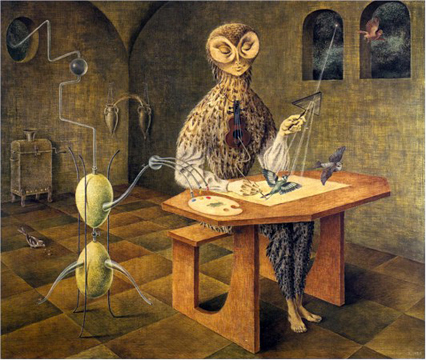
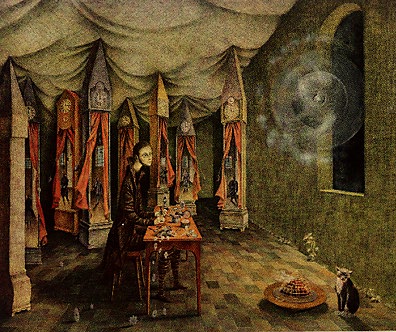
But when I look the painting above, I don’t see anything to justify this kind of fear or paranoia. It’s something Oedipa brings to the painting. The rest of Varo’s work doesn’t have this tone either. It’s more playful, more interested in the surreal than in being allegorical.

Please note the cat in the floor.

Remedios Varo (1908-1963) was born in Spain and educated in Spanish convent schools. Her father was a hydraulic engineer, which had a recurring influence in her work. Her artistic training was strict and academic, from which she fled into Barcelona’s bohemian artistic circle. She was married to the poet Benjamin Peret, and her widower, publisher Walter Gruen. She moved to Paris where she became involved within the Surrealist movement. Forced into exile by the Nazis, she settled in Mexico City where she died of a heart attack at 55. There only seems to be one biography of her in English, Unexpected Journeys: The Art and Life of Remedios Varo (1988) by Janet Kaplan, and I have a feeling she isn’t that well critically thought of (there’s a lot of snobbishness about ‘fantasy’ art, sometimes with good reason). But to me there’s something distinctive about these pictures that elevates them from a lot of stuff that’s come since. The trouble is that the waters have been muddied so much.

‘Not enough smoke, and the snow is too loud.’

A few obscure Wes Anderson clips, the first from the 1999 MTV Movie Awards, where the Max Fischer players from Rushmore stage some popular films.

This second is a 2004 American Express commercial that’s a homage to Truffaut’s Day for Night. My advice: click on the YouTube bit on the right hand corner of the screen, and it will get bigger.

In Defense of Lost Causes

After my conversation with the organisers of the July 2009 Urumqi protests, I’ve been thinking a lot about protest, in all its forms. Slavoj Zizek’s In Defense of Lost Causes is a book that aims to convince the reader that the ills of the world will not be solved peacefully. What is needed, he argues, is revolutionary terror. The book is a sustained attack on the idea that tolerance and democratic debate are going to effect meaningful change (which for Zizek means the end of capitalism). It’s a complicated book whose argument wanders at times, and occasionally gets lost in score-settling, or Hegelian nitpicking, but it is always readable, provocative and entertaining, not least because for Zizek everything- whether it be Shakespeare or a Jennifer Anniston film -can be illustrative.  As a Pynchon scholar I was particularly interested in how he deals with alternative communities, whether or not these are genuinely subversive, or just a form of escape which does nothing to threaten that which they are fleeing from. If I rely heavily on Zizek’s quotes to summarise some of the book’s main arguments, it’s because it seems a safer way to avoid any ‘violence’ to his ideas.

The book’s aim “is not to defend Stalinist terror, and so on, as such, but to render problematic the all-too-easy liberal-democratic alternative… the misfortunes of the fate of revolutionary terror confront us with the need- not to reject terror in toto, but- to reinvent it” (6-7).

In terms of the accepted ideas about which to put a human face to capitalism, he argues that “When one confronts a world which presents itself as tolerant and pluralist, disseminated, with no center, one has to attack the underlying structuring principle which sustains this atonality- say, the secret qualifications of “tolerance” which excludes as “intolerant” certain critical questions, or the secret qualifications which exclude as a “threat to freedom” questions about the limits of the existing freedoms. (30)

He goes on to critique the idea of opting out of the system:

“Postmodernity” as the “end of grand narratives” is one of the names for this predicament in which the multitude of local fictions thrives against the background of scientific discourse as the only remaining universality deprived of sense. Which is why the politics advocated by many a leftist today, that of countering the devastating world-dissolving effect of capitalism modernization by inventing new fictions, imagining “new worlds”… is inadequate or, at least, profoundly ambiguous: it all depends on how these fictions relate to the underlying Real of capitalism- do they just supplement it with the imaginary multitude, as the postmodern local narratives do, or do they disturb its functioning? (33)

Zizek is withering about the way in which many of our ‘ethical’ choices involve choosing how we consume:

True freedom is not a freedom of choice made from a safe distance, like choosing between a strawberry cake and a chocolate cake; true freedom overlaps with necessity, one makes a truly free choice when one’s chouice puts at stake one’s very existence- one does it because one simply “cannot do otherwise.” When one’s country is under foreign occupation and one is called by a resistance leader to join the fight against the occupiers, the reason given is not “you are free to choose,” but: “Can’t you see this is the only thing you can do if you want to retain your dignity?” (70-71)

At times the worldview he presents veers towards a form of Gnosticism (much like Pynchon’s):

The fact that God created the world does not display His omnipotence and excess of goodness, but rather his debilitating limitations. (153)

Many of the book’s best lines belong to Robespierre. This is his riposte to the moderates who deplored the excesses.

Citizens, did you want a revolution without a revolution? What is this spirit of persecution that has come to revise, so to speak, the one that broke our chains? But what sure judgement can one make of the effects that follow these great commotions? Who can mark, after the event, the exact point at which the waves of popular insurrection should break? (163)

Robespierre addressing those who complained about the innocent victims of revolutionary terror: “Stop shaking the tyrant’s bloody robe in my face, or I will believe that you wish to put Rome in chains”. (471)

On the anti-globalisation movement:

This movement also succumbs to the temptation to transform a critique of capitalism itself (centred on economic mechanisms, forms of work organization, and profit extraction) into a critique of “imperialism”… with the (tacit) idea of mobilizing capitalist mechanisms within another, more “progressive” framework. (181)

On the power of ‘failed’ revolutionary Events:

The ultimate factual result of the [Chinese] Cultural Revolution, its catastrophic failure and reversal into the recent capitalistic transformation, does not exhaust the real of the Cultural Revolution: the eternal Idea of the Cultural Revolution survives its defeat in socio-historical reality, it continues to lead an underground spectral life of the ghosts of the failed utopias which haunt the future generations, patiently awaiting their next resurrection. (207)

With reference to Pynchon and the failed Utopias that appear in his work (such as Lemuria in Inherent Vice), it makes me think that though it can be a form of escape, to posit some form of Utopia is always an essentially hopeful act.

For Zizek, the real problem is what happens after a revolutionary Event, how one keeps revolutionary momentum.

The problem is thus: how to regulate/institutionalize the very violent egalitarian democratic impulse, how to prevent it being drowned in democracy in the second sense of the term (regulated procedure)? If there is no way to do it, then “authentic democracy” remains a momentary utopian outburst which, on the proverbial morning after, has to be normalized. The harsh consequence to be accepted here is that this excess of egalitarian democracy over the democratic procedure can only “instituinalize” itself in the guise of its opposite, as revolutinary democratic terror. (266)

One of Zizek’s main strengths is overturning conventional wisdom about what rhetorical positions we should occupy:

The influx of immigrant workers from the post-Communist countries is not the consequence of multiculturalist tolerance- it is indeed part of the strategy of capital to hold in check workers’ demands… the lesson the Left should learn from it is that one should not…  merely oppose populist anti-immigration racism with multiculturalist openness, obliterating its displaced class content (267)

Given how much of Pynchon’s work deals with delusion and escape, I was interested in what Zizek has to say about fetishes:

They can be our inner spiritual experiences (which tell us that our social reality is mere appearance which does not really matter), our children (for whose good we do all the humiliating things in our jobs) and so on and so forth (298)

Fetishists are not dreamers lost in their private worlds, they are thoroughly “realist”, able to accept the ways things effectively are- since they have their fetish to which they can cling in order to canel the fall impact of reality. (296)

Zizek on how democracy has its own constraints:

When Rosa Luxembourg wrote that “dictatorship consists in the way in which democracy is used and not in its abolition” her point was not that democracy is an empty framework which can be used by different political agents (Hitler also came to power through- more or less -free democratic elections), but that there is a “class bias” inscribed into this. (379)

Zizek then goes on to offer what looks like an argument in favour of some kind of revolutionary faith, without which one cannot see the potential for change.

Liberals claim that capitalism is today so global and all encompassing they they cannot “see” any serious alternative to it… The repy to this is that, in so far as this is true, they do not see tout court: the task is not to see the outside, but to see in the first place (to grasp the nature of contemporary capitalism)- the Marxist wager is that, when we “see” this, we see enough, including how to go beyond it. (393)

The following seems to be a fairly clear endorsement of ‘violence’ (though what that means is not yet clear, i.e. is it literal violence or symbolic?)

One should not renounce violence ; one should rather reconceptualise it as defensive violence, a defense of the autonomous space created by subtraction (408)

Zizek also offers a way of evaluating subtraction (e.g. the alternative communities that occur throughout Pynchon, especially in Vineland).

Is it a subtraction/withdrawl which leaves the field from which it withdraws intact (or even functions as its inherent supplement , like the “subtraction” from social reality to one’s true Self proposed by New Age meditation); or does it violently shake up the field from which it withdraws? (412)

It’s only in the afterword that Zizek starts to signal what he might mean by ‘violence’. Unfortunately, this seems to shift, initially from a kind of eye-of-the-beholder definition of violence (that differentiates between “radical emancipatory violence against the ex-oppressors and the violence which serves the continuation and/or establishment of hierarchical relations of exploitation and domination” (471)) to talk of violence that is really non-violence. He calls for

a passive revolution which, rather than directly confronting power , gradually undermines it in the manner of the subterranean digging of a mole, through abstaining from particiapation in the everyday rituals and practices that sustain it. (474)

However, Zizek concludes by arguing that the distinction between literal violence and non-violence is less important than whether the “violence” is “divine violence”.

What is and what is not divine violence?… it can appear in many forms: from “non-violent” protests (strikes, civil disobedience) through individual killings to organized or spontaneous violent rebellions and war proper. (483)

As for evaluating such acts, these are said to be

located ‘beyond good and evil’, in a kind of politico-religious suspension of the ethical. Although we are dealing with what, to an ordinary moral consciousness, cannot but appear as “immoral” acts of killing, one has no right to condemn them, since they are the reply to years, centuries even, of systematic state violence and economic exploitation. (478)… If a class is systematically deprived of their rights, of their very dignity as persons, they are eo ipso also released from their duties toward the social order, since this order is no longer their ethical substance. (479)

This is about as unambiguous as it gets:

Sometimes one has to kill in order to keep one’s hands clean; not as a heroic compromise of dirtying one’s hands for a higher goal. (484)

However, in the final pages, Zizek again muddies the waters by suggesting that no one is able to pass judgement on whether an act of violence is ‘divine’ or not, which if he means it, to some extent undermines many of the judgements he passes on the value of various failed revolutions.

There are no “objective” criteria enabling us to identify an act of violence as divine: the same act, that to an external observer, appears merely as an irrational outburst of violence, can be divine for those engaged in it. (485)

The subtleties of this may be lost on me. But to me this seems dangerously close to denying us the right to condemn the killings by a lynch mob, the suicide bomber in a school, or acts of ethnic cleansing.

An unremembered dream

I rarely remember my dreams. But I am assured that they still happen. Or at least the same patterns of electrical activity that correlate with waking reports of a dream. Though this is fine for my brain, it leaves me feeling a bit cheated. Thankfully I own a copy of The World Doesn’t End by Charles Simic, which has many fine short pieces I can recite and pass off as my own whenever the conversation during the party/train ride/hostage situation turns the sad corner to ‘Dreams’. This is one of my current mainstays, which you may of course feel free to appropriate, should you also suffer from the same deficit, and are at a different party or bank to myself.

My thumb is embarking on a great adventure.

“Don’t go, please,” say the fingers. They try to hold

him down. Here comes a black limousine with a

veiled woman in the back seat, but no one at the

wheel. When it stops, she takes a pair of gold

scissors out of her purse and snips the thumb off.

We are off to Chicago with her using the bloody

stump of my thumb to paint her lips.

The Year of the Metal Tiger: A review.

I review some of the main events this year in China at n+1, along with contributions from Yelena Akhtiorskaya, Siddhartha Deb, Eli S. Evans, Keith Gessen, Chris Glazek, Emily Gould, Elizabeth Gumport, Alice Gregory, Charles Petersen, Nikil Saval, Jonathan Watson, and Emily Wit.

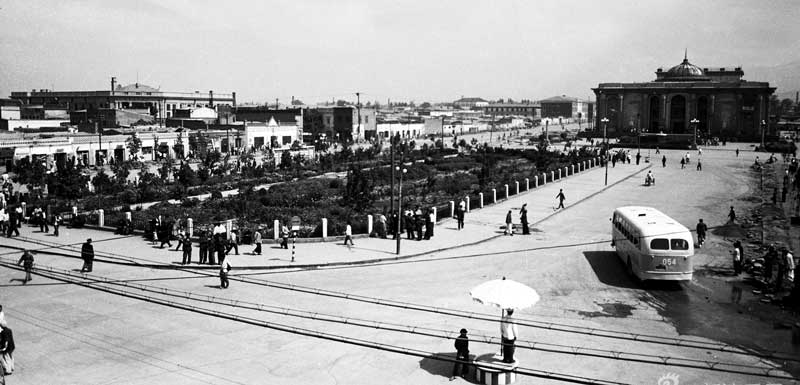
Street Scene, Urumqi, 1957

Urumqi's Nan-Men (south gate) in 1910


Richard Hughes was a journalist who spent most of his life as a correspondent in Asia for  The Times, The Economist, and the Far Eastern Economic Review. During World War 2 he was thought by some to be a spy, and possibly a double agent. Given these suspicions, it is unsurprising that he ended up being fictionalised twice: Ian Fleming based the character of Dikko Henderson in You Only Live Twice on him; in John Le Carre’s The Honourable Schoolboy he appears as Craw. This is his from book Foreign Devil, a memoir. I quote this because a) it suggests how relations (not to say manners) have worsened in the city known as ‘beautiful pastureland’ and b) I have a weakness for this kind of prose.

It happened in ‘The Street of the Grey-Eyed Men’ during the tranquil noontime traffic ‘rush’. The inexpert Chinese driver of a bus loudly tooted his horn and frightened a nervous, highstepping white mare, ridden by a tough Kazakh tribesman. The horse reared, neighing, and fell. The horseman skillfully sprang clear, raised and soothed the mare, handed the reins with a bow to the chairman of a council of dignified nomads seated in converse in the gutter, walked calmly over to the halted bus, and, with deliberation but no visible anger, fetched the apologetic driver a fearful backhand clout over the nose. He then remounted, saluted his quietly approving audience in the gutter, and rode off. The Chinese driver wiped his nose, bowed first to the seated gallery, arose, turned and bowed next to the amused but friendly passengers, and drove off, without tooting.

Urumqi's South Gate in the 1960's

New photos from Yining

Hui shepherd in a Han graveyard

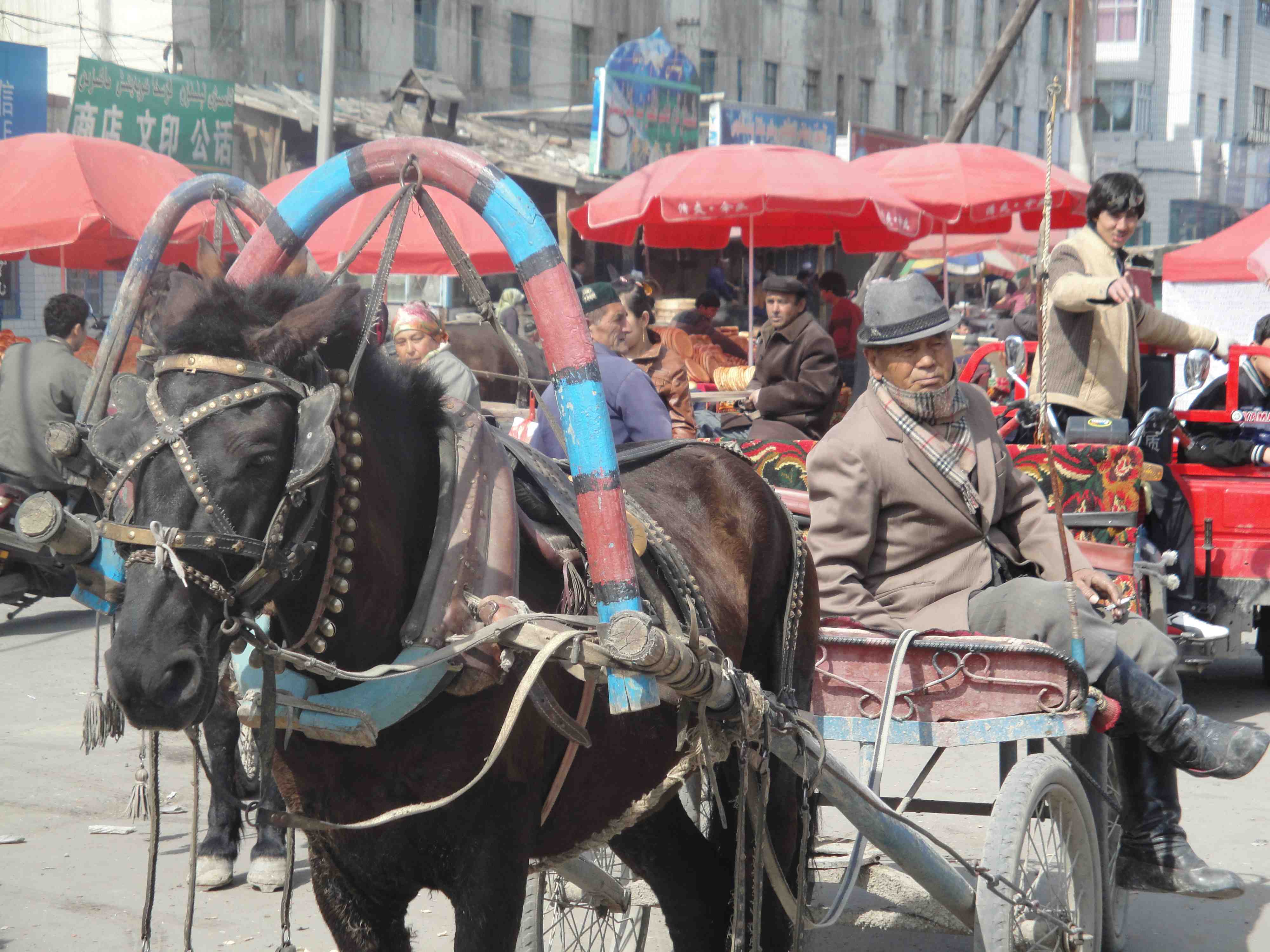
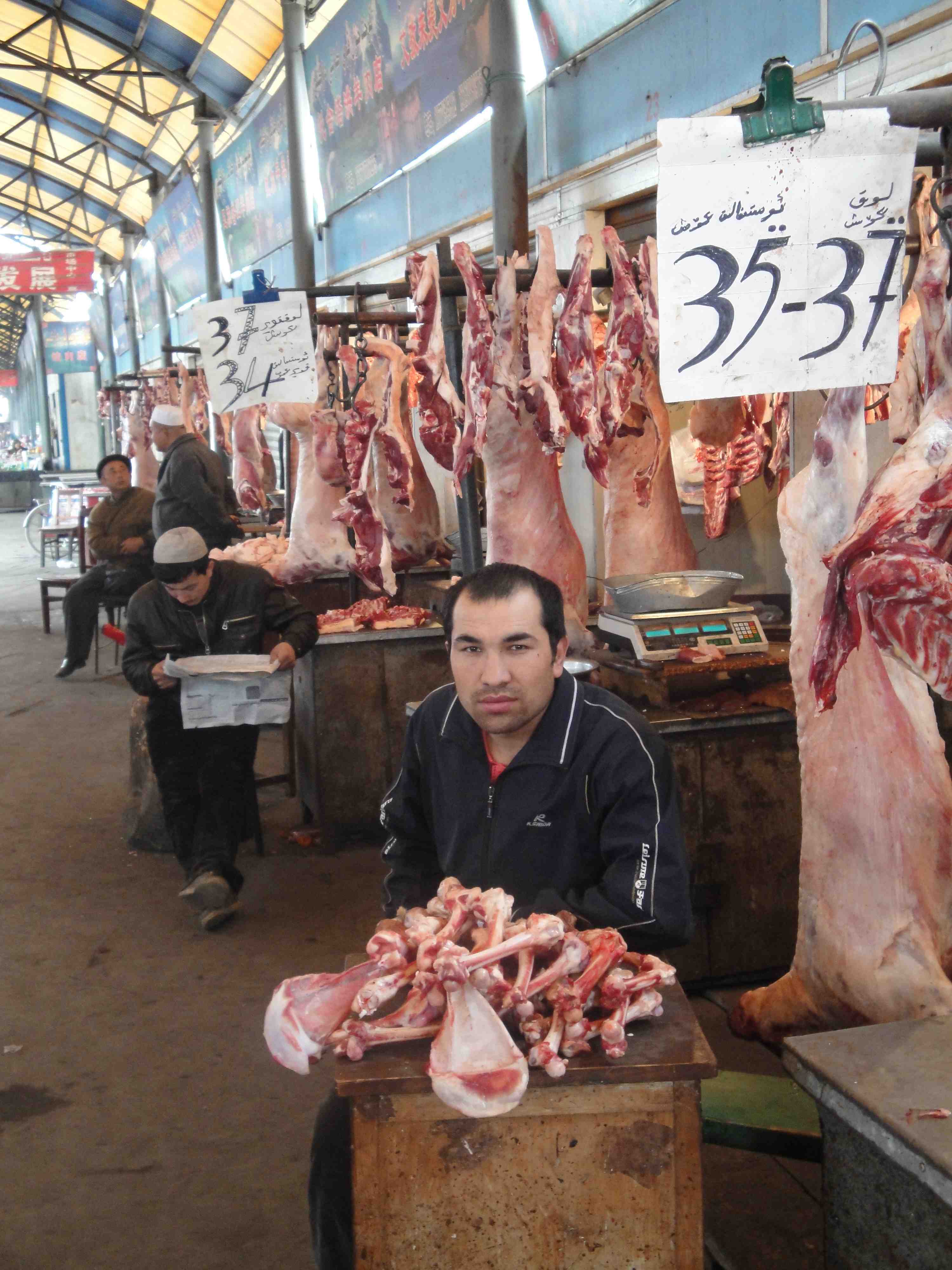
Some photos of the market and back streets in Yining, where I used to live. These were taken in April 2010- there are more up on my Flickr site.

Horse taxi

Traditional Uighur house

Meat

Snake-oil salesman

Old Hui mosque, new Uighur mosque

When to stop reading

I used to finish every book I began, no matter how bad it seemed. To stop reading would only compound the sense of failure the book had already inspired. I suppose that the failure, on my part, was in thinking that the book was worth reading in the first place; that a scan of its opening pages had not alerted me to the fact that it was misconceived/ cliched/badly plotted/ pretentious/narrated by a rabid dog that thought it was a hippo. There was also the fear that the book was not to blame, especially if it was part of the canon, or even just well-reviewed. Because we should always acknowledge the possibility that the fault lies with us, not the book (or at least that we share blame). We can ruin good books for ourselves by reading them last thing at night, when we are tired, or on a train where someone is talking too loudly, or simply by reading the book too quickly. And there are definitely great books that are very uneven, that have both wonderful and mediocre sections (e.g. Lanark and Ulyssess), and that the latter must be endured. Even with some of the very worst books, there is the increasingly desperate hope that the last 25 pages, when the spaceship lands, will turn out to be a tour de force that contains ‘some of the finest passages written in the English language since the end of the War’ (or some other hyperbole).

But a few years ago, after 120 pages of Memoirs of a Geisha, I decided to stop. The narrative premise was unconvincing, the writing was leaden, and there were hundreds of  books in my room. For me, this last point has become increasingly crucial. I will only be able to read a small fraction of the books I would like to read, and so to waste time on something that is less than wonderful seems ridiculous.

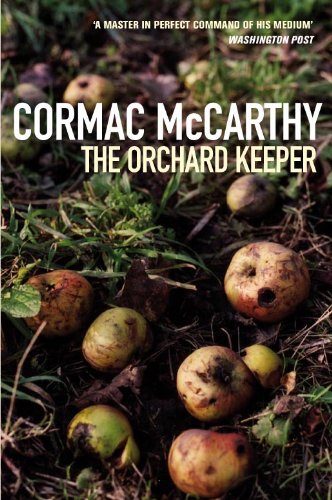
These days the difficulty is in deciding when to stop. I don’t, for example, read 50 pages and think ‘Shall I continue?’ If something is enjoyable, this question never arises. Usually it takes longer, especially if I think that the fault is partly mine, that I am just being obtuse. In the case of the book I most recently stopped- The Orchard Keeper (1965) by Cormac McCarthy -it was because I had read 5 or 6 other books by the author, and felt that I knew what to expect. This passage was decisive.

The boy followed him for a few paces, then quartered off to the creek again and the man watched him go, his legs disappearing in the mist, then the rest of him, so that he seemed to be gliding away  toward the line of willows marking its course like some nightwraith fleeing the slow reaching dawn until the man wasn’t sure that he had really been there at all. Then he came back with the pole and handed it to him.

Thanks, the man said.

They moved on across the field, through vapors of fog and wisps of light, to the east, looking like the last survivors of Armageddon.

(103-104 UK Picador edition)

Though this probably doesn’t seem bad (especially out of context), after reading 5 or 6 books written in this style, it now seems incredibly overblown, an attempt to make every event in the book into some portentous event. I’ve managed to deal with this kind of thing before, for example in All the Pretty Horses

The browsing horses jerked their heads up. It was no sound they’d ever heard before. In the gray twilight those retchings seemed to echo like the calls of some rude provisional species loosed upon that waste. Something imperfect and malformed lodged in the heart of being. A thing smirking deep in the eyes of grace itself like a gorgon in an autumn pool.

Why it should be a ‘gorgon’ is beyond me- it doesn’t fit any character’s point of view, not even the authorial voice, with its King James cadences. As a result it seems comical rather than resonant. In terms of the passage from The Orchard Keeper, I could probably have dealt with ‘nightwraith’ on its own, but the subsequent description a paragraph later of them being like ‘survivors of Armageddon’ was too much faux-epic for me.

And the other thing about ceasing to read is that it need not be a judgement on the author- I’ve enjoyed several of McCarthy’s books, and realise  this was his first novel. It’s just that I also have 2666, The Man Without Qualities, The Recognitions, In Search of Lost Time, Wolf Hall, and too many others staring at me from the shelf, and I don’t know what they contain.

Trailer for new Terence Malick film

If you didn’t like The Thin Red Line, Badlands, Days of Heaven, or The New World, judging from this trailer, you won’t like The Tree of Life either.

I happen to like the aforementioned films very much.

This comes out in May.

p.s. If the film runs slow or is pixellated, go here and watch it in HD. Which you probably should do anyway.

Summer in Baden-Baden

Summer in Baden-Baden by Leonid Tsypkin is a novel about what it means to love literature. The novel recreates the life of Dostoevsky, focussing mainly on the summer of 1867 when he and his wife Anna visited Baden-Baden. It is also an account of the narrator’s journey to Moscow, during which he visits places Dostoevsky lived and wrote about. The novel switches between these without warning, but the boundaries between these are quickly blurred, not only because the narrator, in the novel’s present, is so preoccupied with Dostoevsky, but also because both are written in the same style. Each paragraph, whether several lines, or five or six pages, is only a single sentence, full of diversions, qualifications, evasions, and digressions. Here is Dostoevsky’s reaction to Christ in the Sepulchre by Holbein the Younger, a painting that ‘was enough to make you lose your very faith’.

He stared at the picture with renewed intensity- and for a few moments it faded, even seemed to dissolve, and in its place there appeared the familiar faces: the red one with the lynx eyes, the squashed one with the protruding eyes, and then the faces of those performing the round-dance, before positioning themselves in a semi-circle at the summit of the mountain, and begining to point their fingers at him, sniggering and winking at each other, making him want to get down from the chair, but the next moment they all disappeared and he saw clearly once again the face and body of the dead Christ and heard the words about loss of faith spoken by someone else- and this idea was to become the focus of the novel, and then there began to emerge from the mist a few still indistinct objects, scenes and images: a gleaming knife- one peasant stabbing another and raising his eyes to the sky with the words: ‘God, forgive me for the sake of Jesus Christ’; then a soldier selling his pewter cross, pretending it is a silver one; words about God uttered by a simple peasant woman as she sees her baby smile for the first time; an exchange of crosses between the two main characters of the novel; then an unusually deserted Summer Garden with storm clouds thickening over the Petersburg side; a knife gleaming again somewhere in a dark corridor in one of the cheap Petersburg hotels near Liteiny Propsect and the quick glance of tiny, fiery murderous eyes, and a knife gleaming again in the darkness as it is driven in beneath the white breast of the proud and fallen woman.

The effect of these single-sentence paragraphs is to trap the reader within the flights of association that Dostoevsky is portrayed as being subject to, many of which revolve around climbing or descending a mountain, at the summit of which is a Crystal Palace (there is an irony here, in that Dostoevsky frequently mocked this image, which appeared in Chernyshevsky’s 1862 novel What is to be done?, as an idealised communal living spacein Notes from Underground it is likened to a ‘chicken coop’).

The book also raises an interesting question as to why the narrator , who is Jewish, should be so interested in a writer was made no secret of his anti-semitism. This is from A Writer’s Diary:

the whole activity of the Jews in these border regions of ours consisted of rendering the native population as much as possible inescapably dependent on them, taking advantage of the local laws. They have always managed to be on friendly terms with those upon whom the people were dependent. Point to any other tribe from among Russian aliens which could rival the Jew by his dreadful influence in this connection! You will find no such tribe. In this respect the Jew preserves all his originality as compared with other Russian aliens, and of course, the reason therefore is that status of status of his, that spirit of which specifically breathes pitilessness for everything that is not Jew, with disrespect for any people and tribe, for every human creature who is not a Jew…

However, it is more in bafflement, than anger, that the narrator considers this question; at no point does the reader get the sense that it impinges on his love for Dostoevsky’s work.


Escape from Spiderhead

Two excellent, and very different stories, from the New Yorker, one by George Saunders, the other by David Means. I particularly like the way the Saunders story starts in such an unintelligible manner.


“Drip on?” Abnesti said over the P.A.

“What’s in it?” I said.

“Hilarious,” he said.

“Acknowledge,” I said.

Abnesti used his remote. My MobiPak™ whirred. Soon the Interior Garden looked really nice. Everything seemed super-clear.

I said out loud, as I was supposed to, what I was feeling.

“Garden looks nice,” I said. “Super-clear.”

Abnesti said, “Jeff, how about we pep up those language centers?”

“Sure,” I said.

“Drip on?” he said.

“Acknowledge,” I said.

He added some Verbaluce™ to the drip, and soon I was feeling the same things but saying them better. The garden still looked nice. It was like the bushes were so tight-seeming and the sun made everything stand out? It was like any moment you expected some Victorians to wander in with their cups of tea. It was as if the garden had become a sort of embodiment of the domestic dreams forever intrinsic to human consciousness. It was as if I could suddenly discern, in this contemporary vignette, the ancient corollary through which Plato and some of his contemporaries might have strolled; to wit, I was sensing the eternal in the ephemeral.

‘Whether you have a boy or girl, it is still a blossom’

Whether you have a boy or girl, it is still a blossom

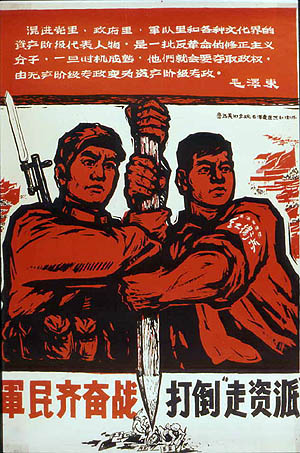
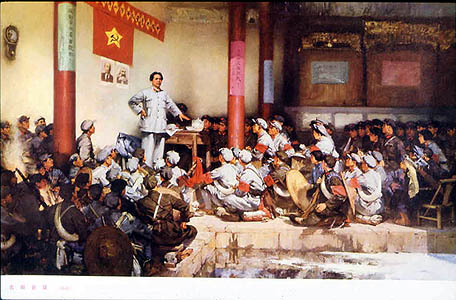
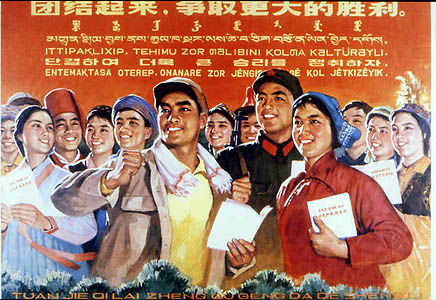
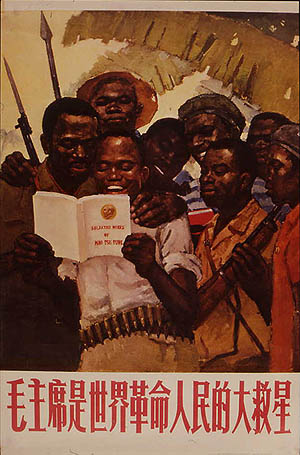
More Chinese Propaganda Posters, this time from the large collection at the University of Westiminster (thanks to Jeff Wasserstrom for making me aware of the collection).

The collection spans the period between the late 1960s and the late 1980s. John Gittings,  then Senior Lecturer of the Chinese Section, began the collection in 1979 as the China Visual Arts Project for  research and teaching purposes.  Over the years it grew, with the contributions of other colleagues, students and friends who studied and travelled in China.There are over 500 images in the collection, which is organised thematically.

Hold High the Revolutionary Banner of Proleterian Criticism

Mao addressing troops of the fourth red army at Gutian, Dec 1929

Unite to win still greater victories- April, 1975

Chairman Mao is the saviour of the world's revolution, 1968

'Man Must Conquer Nature'- Miner with "Tangshan" on his vest, with doctors, soldiers and peasants carrying spades, bringing aid to the July 1976 Tangshan earthquake

How David Lynch sells a handbag

This is David Lynch’s film for the Lady Dior Handbag. It was written, directed, shot, and edited by David Lynch,and stars Marion Cotillard and Gong Tao. I will now make 5 announcements.

FIRST ANNOUNCEMENT: THIS IS A LONG COMMERCIAL, RATHER THAN A SHORT FILM, AND SHOULD BE VIEWED ACCORDINGLY. I.E. WITH SOME DEGREE OF LENIENCY GIVEN THE CONSTRAINTS THAT THIS INVOLVES.

SECOND: I STILL FOUND IT WORTHWHILE.

THIRD: I”M FAIRLY SURE LYNCH ONLY DID THIS FOR THE MONEY. BUT EVEN SAINTS HAVE TO EAT/BUY NEW WHITE SHIRTS/OPEN NEW CENTRES FOR TRANSCENDENTAL MEDITATION.

FOURTH: APOLOGIES FOR IT BEING TWO CLIPS, NOT ONE.

FIFTH: GOOD LUCK.

W.S. Merwin interview

There’s a half hour interview with W.S. Merwin, U.S. Poet Laureate, at the Kenyon Review.

Here’s a poem of his:

Thanks
Listen
with the night falling we are saying thank you
we are stopping on the bridges to bow from the railings
we are running out of the glass rooms
with our mouths full of food to look at the sky
and say thank you
we are standing by the water thanking it
smiling by the windows looking out
in our directions 

back from a series of hospitals back from a mugging
after funerals we are saying thank you
after the news of the dead
whether or not we knew them we are saying thank you

over telephones we are saying thank you
in doorways and in the backs of cars and in elevators
remembering wars and the police at the door
and the beatings on stairs we are saying thank you
in the banks we are saying thank you
in the faces of the officials and the rich
and of all who will never change
we go on saying thank you thank you

with the animals dying around us
our lost feelings we are saying thank you
with the forests falling faster than the minutes
of our lives we are saying thank you
with the words going out like cells of a brain
with the cities growing over us
we are saying thank you faster and faster
with nobody listening we are saying thank you
we are saying thank you and waving
dark though it is

“Let’s extensively raise goats in all families!”

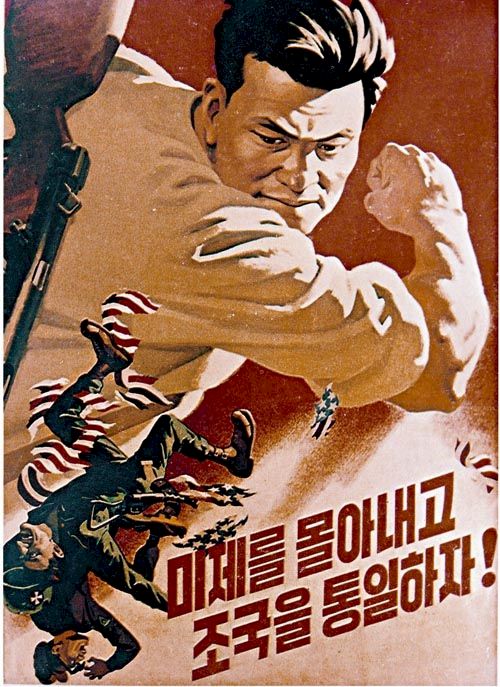
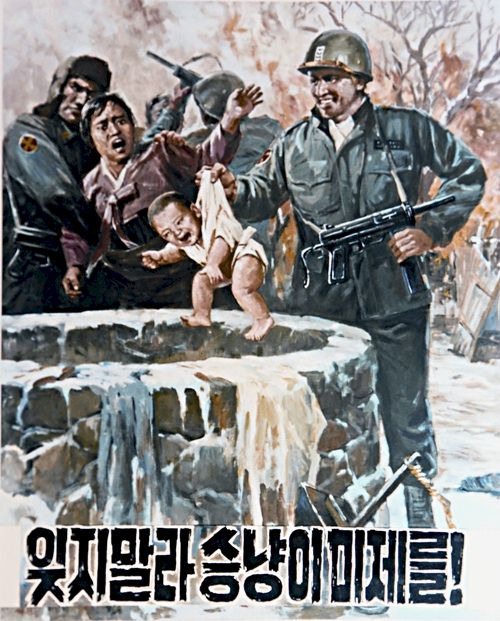
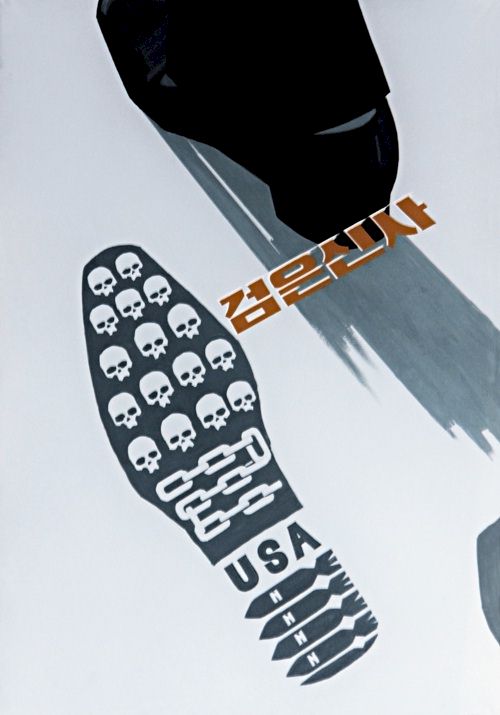
Some propaganda posters from North Korea, more of which can be found here.

"Let's drive the US imperialists out and reunite the fatherland!"

"Let's extensively raise goats in all families!"

"Do not forget the US imperialist wolves!"

"Though the dog barks, the procession moves on!"

"The US is truly an Axis of Evil."

"Wicked Man."